Why a perfume box does more work than people think
A perfume box is never just a container. For fragrance brands, it is the first physical cue a customer gets before the bottle is even seen. That matters because perfume is sold on atmosphere as much as on formula: the outer package has to suggest character, price position, and care in a split second. A weak perfume packaging box can make a decent product feel ordinary. A well-built one does the opposite; it slows the shopper down, frames the bottle, and makes the purchase feel deliberate.
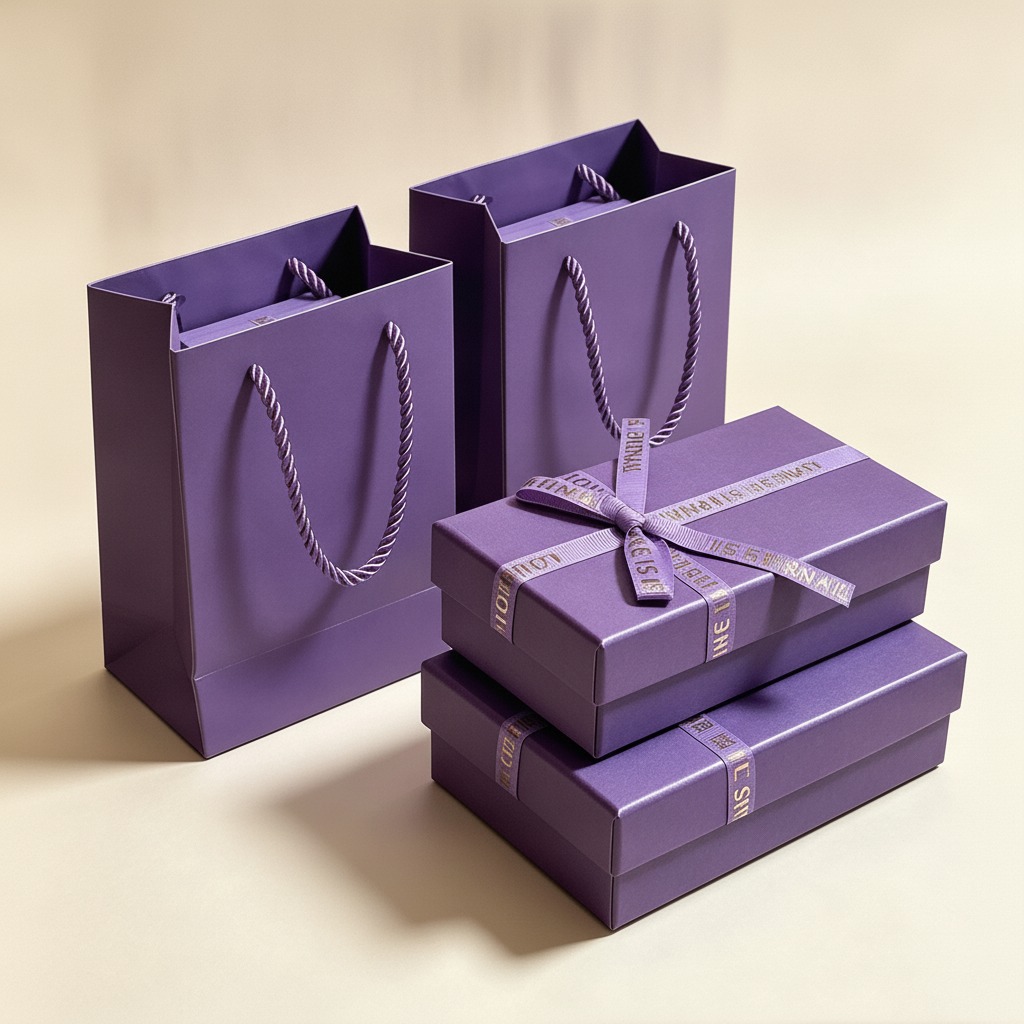
The packaging set in front of us shows that clearly. Two upright paper shopping bags and two rigid gift boxes are coordinated in a strong purple palette, with matching rope-style handles and ribbon accents. That kind of visual consistency is not accidental. In retail, it tells the buyer that the brand understands presentation, whether the product is going across a counter, into a gift bag, or out the door as a seasonal promotion.
What buyers should look for in fragrance packaging
When sourcing a fragrance box or related gift packaging, the practical question is not only “Does it look good?” It is “Will it protect the product, support the brand story, and survive handling?” A rigid box holds its form better than a soft folding carton, which is why it is often chosen for luxury items, premium cosmetics, jewelry, and gifting sets. The box should feel stable in the hand, close cleanly, and open without looking flimsy. That sensory impression matters.
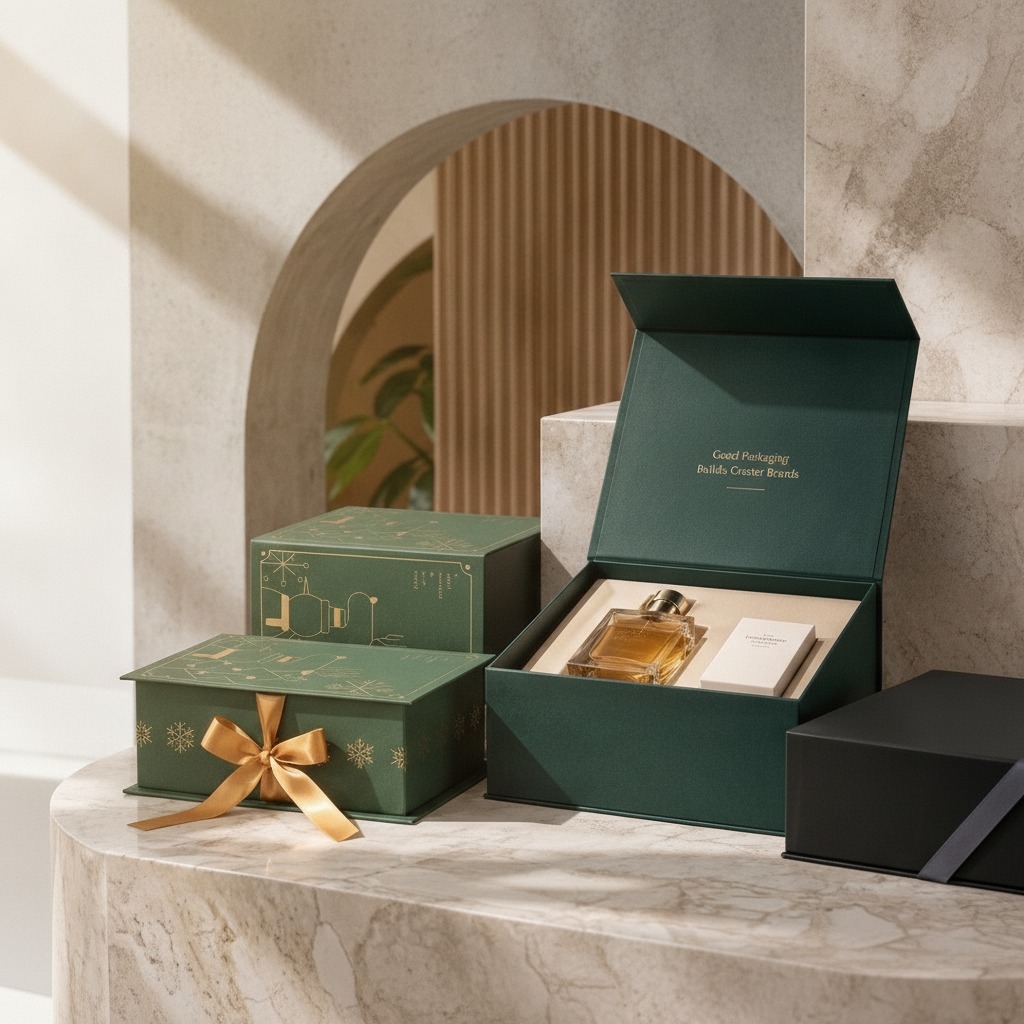
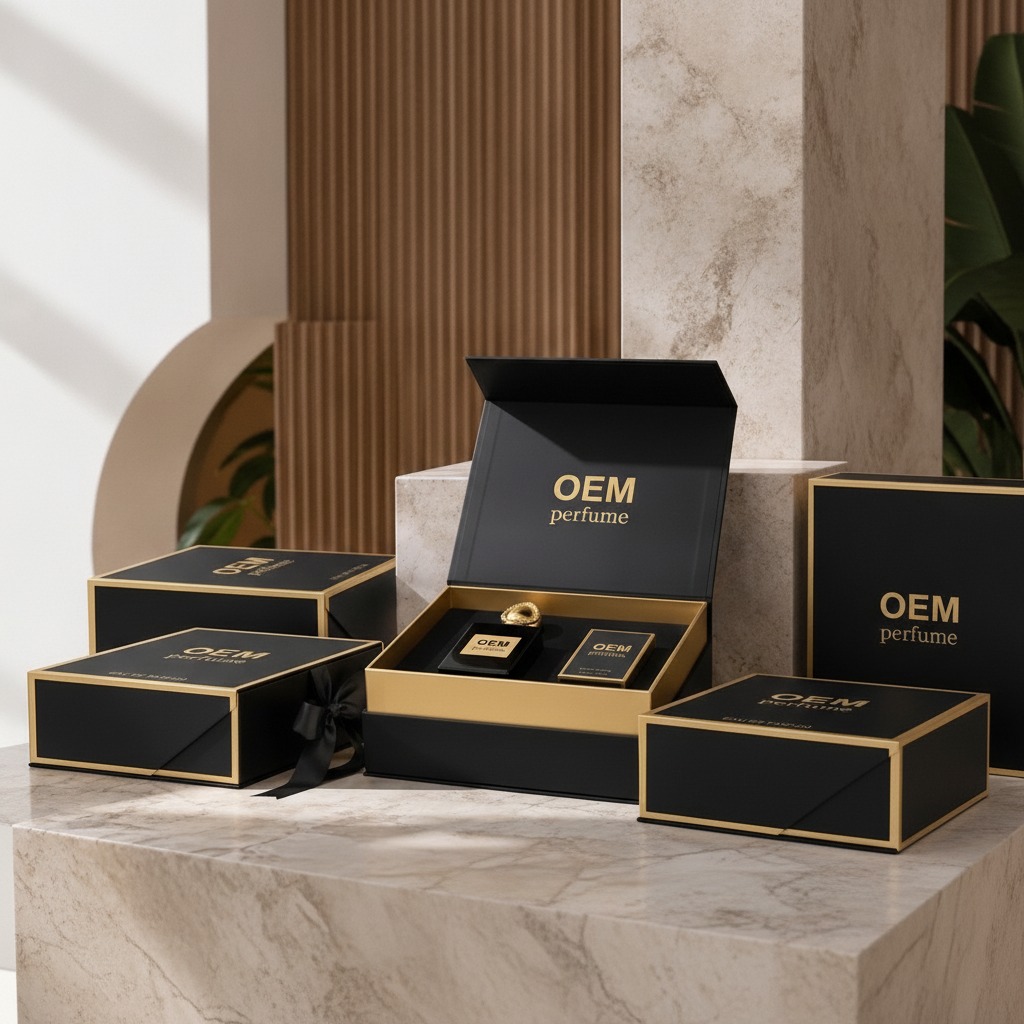
The purple boxes shown here appear to use a rigid setup structure with fitted lids. That is a familiar choice for a luxury perfume box because it creates a more substantial unboxing moment. The ribbon closure adds another layer of ceremony, though buyers should be careful not to let decoration overwhelm usability. If the ribbon is awkward to untie or weakly attached, the experience quickly turns from elegant to annoying. In packaging, small inconveniences are remembered.
How this kind of packaging is typically built
Based on the visible features, the boxes and bags likely sit in the category of custom printed paper packaging. In practical manufacturing terms, that often means surface printing, coating or lamination for finish, and assembly of separate components such as cord handles and ribbon ties. The bags appear to be a matte paperboard or coated paper construction with twisted cord handles, which is a common format for boutique retail use. The result is neat, upright, and easy to brand.
The rigid boxes seem to use a wrapped board structure, which gives them a crisp edge and a more premium profile than ordinary carton packaging. For a custom perfume box, this matters because shape retention signals quality. Even before any embossing, foil, or spot treatment is added, the tactile weight of the box is doing part of the selling.
Luxury cues that actually influence buying decisions
Color is one of the strongest cues in fragrance packaging. Purple, especially in a deep matte finish, often reads as rich, expressive, and slightly ceremonial. It is not neutral, and that is the point. A luxury perfume box does not need to disappear on shelf; it needs to create a small pause. Coordinated bags, boxes, and ribbons reinforce that pause by making the whole purchase feel considered rather than assembled.
For brands planning promotions or launch kits, matching outer bags with the main fragrance box can also reduce visual friction across channels. A shopper may encounter the product in-store, at an event, and later online. If the packaging language stays consistent, the brand becomes easier to remember. That is a subtle advantage, but a real one.
Common sourcing mistakes
One common mistake is treating the fragrance box as a final artwork problem instead of a structural one. Beautiful graphics cannot rescue a box that scuffs too easily, bends at the corners, or opens poorly. Another is over-specifying decorative features without thinking about assembly time. Ribbons, cords, and custom wraps can improve perceived value, but they also add labor and inspection points.
Buyers should also avoid assuming every premium-looking package is suitable for every product. A perfume gift box for retail presentation may not be the best choice for shipping unless secondary protection is added. If the package is meant for e-commerce inserts or direct mail, the inside structure deserves as much attention as the outside finish.
Quick buyer checklist
Before approving a custom perfume box
Ask whether the box will be used for shelf display, gifting, or transit. Confirm the closure style and whether the lid fits securely enough for handling. Review the print surface under real lighting, not just on screen. And if the project includes bags, check that the handles, gussets, and box proportions work together so the set feels coordinated rather than forced.
It is also worth requesting a physical sample if the program is premium. Packaging decisions are made with the eyes, but they are confirmed by the hands.
When a coordinated set makes the most sense
A coordinated perfume packaging box, gift box, and shopping bag set is most useful when the packaging itself is part of the customer experience. That includes boutique launches, holiday programs, premium cosmetics, and special-edition fragrance releases. In those settings, the box is not simply protecting the bottle; it is helping the brand communicate restraint, quality, and a certain confidence.
If you are comparing options for your next fragrance line, start with the box structure, then move to finish, branding, and accessory components. A strong package should look composed from three feet away and still feel considered when someone opens it at arm’s length. If you need that balance in a custom perfume box program, the next step is usually to request sample structures and compare them in hand, not just in renderings.