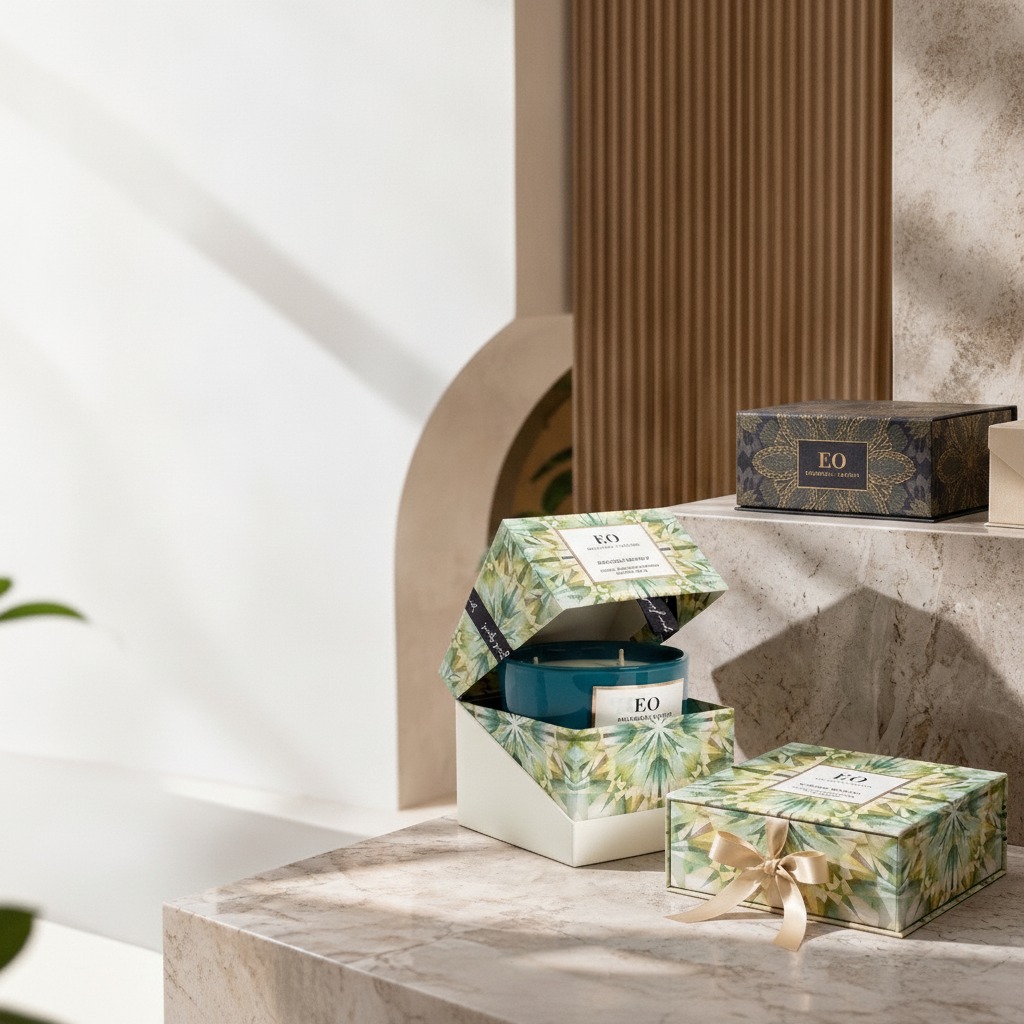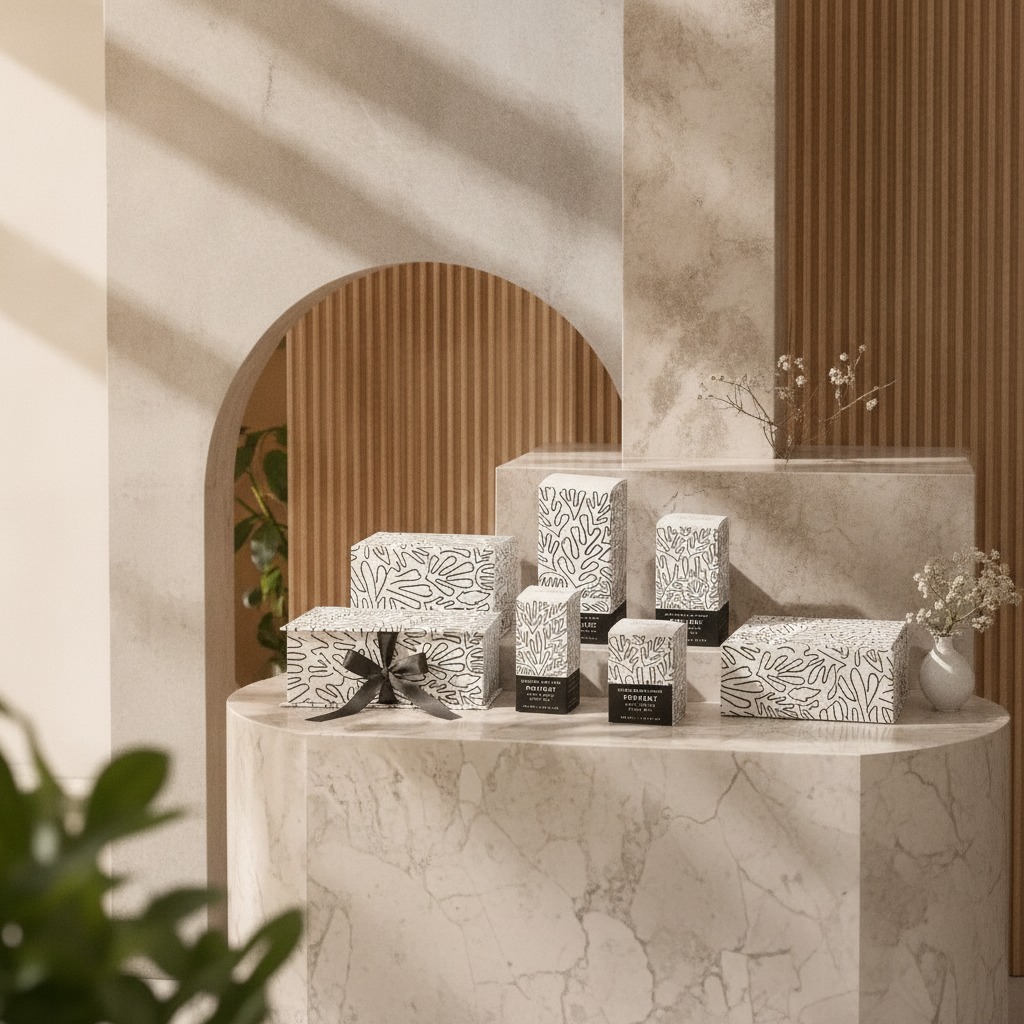
A heavy glass flacon rarely meets the consumer unchaperoned. The sensory journey of scent actually begins with touch—specifically, the tactile resistance of dense paperboard and the smooth glide of a rigid perfume box sliding open to reveal the product nestled within. For packaging engineers and brand sourcing managers, crafting this physical encounter is a careful balancing act between architectural stability and luxury presentation. Glass bottles are unforgivingly rigid, prone to thermal shock, and fragile under impact, which makes the structural integrity of secondary packaging just as critical as its visual polish.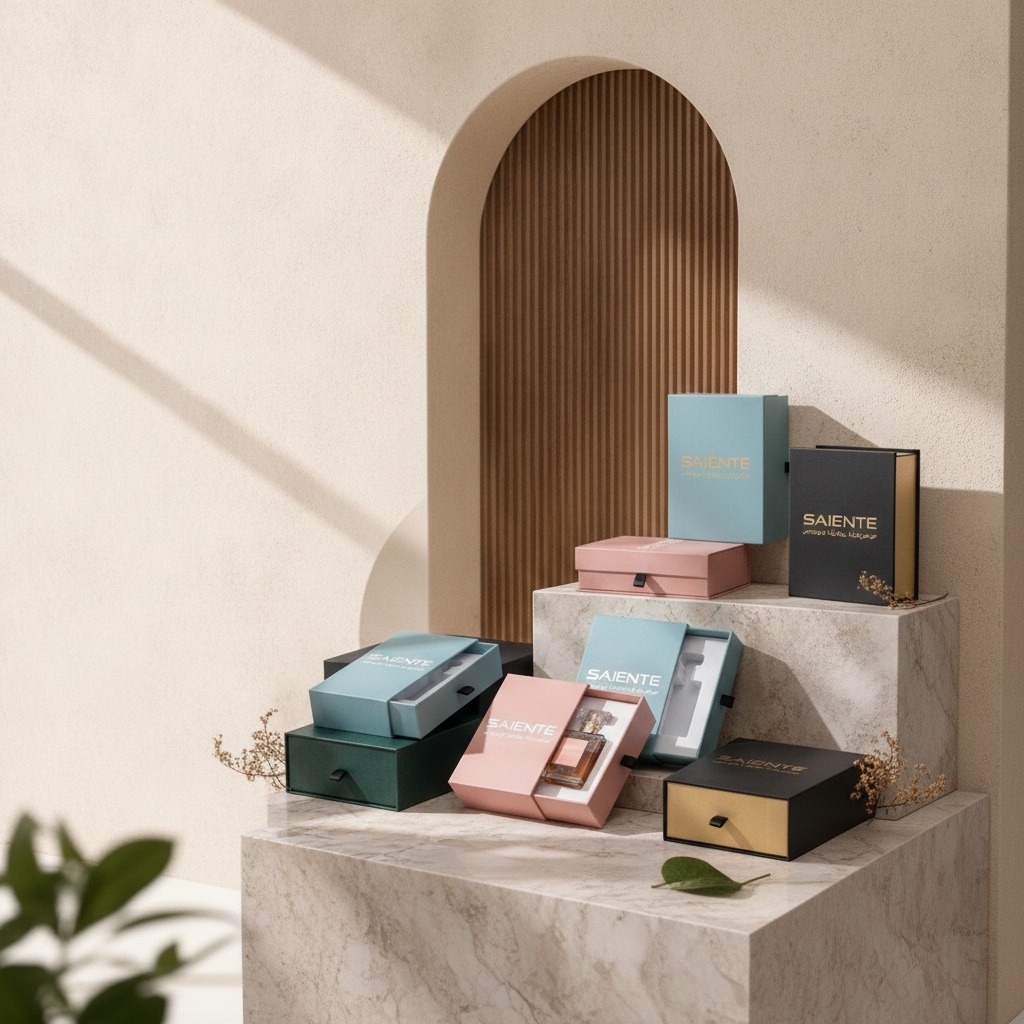
The Architecture of the Drawer-Style Fragrance Box
Among presentation formats, the rectangular drawer-style box—often referred to in paper conversion as a slide or matchbox construction—has become a cornerstone for high-end retail lines and limited-edition releases. This structure pairs an exterior five-panel sleeve with a sliding interior tray, creating a controlled, deliberate opening sequence.
In well-executed custom perfume box designs, the outer shell relies on a solid paperboard or chipboard core. This core provides beam strength to resist compressive stacking forces in secondary cartons. The exterior is wrapped in coated or specialty dyed art paper, frequently treated with a soft matte finish that softens studio lighting on retail shelves and resists fingerprint transfer during handling.
A discreet detail that often determines user perception is the pull tab anchored at the front face of the inner tray. Fabric ribbons, grosgrain bands, or folded cotton cords give the consumer an intuitive mechanical grip. If the tolerances between the sleeve and tray are too tight, pulling the ribbon will cause the entire box to lift; if too loose, the interior slides out prematurely. Sourcing teams must ensure the friction-fit is dialed in during white-sample prototyping, especially when accounting for paper coatings that might increase surface drag.
Internal Fitment: Securing Glass Inside the Tray
A luxury perfume box is only as secure as the internal cavity holding the bottle. While the exterior commands shelf presence, the inner insert absorbs shock and maintains bottle alignment during drop impacts and shipping transit. In premium packaging runs, inserts generally take one of three paths:
- Precision Die-Cut Paperboard: Folded kraft or white lined board with bottle-shaped cutouts. It offers a fully recyclable profile and crisp visual geometry, though it provides less continuous cushioning against heavy drop impacts.
- High-Density Molded Fiber: Formed pulp inserts engineered with recessed chambers. These have gained ground for brands pursuing post-consumer waste metrics without completely surrendering tailored fit.
- Fabric-Faced or Flocked Foam: Dense EVA or polyurethane cores die-cut to the bottle’s exact contours. This approach offers superior shock mitigation for heavy glass bases and delicate atomizer stems, holding the flacon flush against any turbulence.
Regardless of the chosen substrate, the cutout must accommodate the bottle’s widest diameter, the neck collar, and the actuator cap. Glass bottles often have minor manufacturing tolerances of their own; an insert cavity cut too tight against nominal bottle dimensions will cause line workers to struggle during manual fulfillment.
Sourcing Perfume Boxes Wholesale: Specification Nuances
When scaling from boutique pilot batches to perfume boxes wholesale production, procurement teams must look past the graphic proofs and examine converter capabilities. A standard drawer box involves multiple conversion stages: precision board slitting, automated or semi-automated grooving, tight corner wrapping, ribbon insertion, and insert assembly.
When ordering at scale, watch out for paper wrap tension. If a converter runs adhesive too wet on thin wrap papers, the exterior can experience subtle shrinkage, causing the sleeve walls to bow inward. Inward bowing constricts the inner tray, resulting in stuck drawers. Request pre-production assembly samples using the exact board caliper and paper wrap intended for the production run, rather than relying solely on flat digital mockups.
Similarly, evaluate the ribbon anchoring method. The pull tab should be reinforced behind the interior board face—either through mechanical eyelets, high-tack hot melt, or glued flaps sandwiched beneath the inner liner—to prevent the tab from tearing free when a customer pulls a heavy glass presentation set open.
Common Pitfalls in Perfume Packaging Development
A frequent misstep in custom perfume box engineering is neglecting the mass distribution of the bottle. High-end flacons frequently feature ultra-thick bottom glass, concentrating weight at the base. If the inner insert does not provide counterbalanced support near the shoulder and neck, the bottle can lever itself free from the insert cavity during rough courier transit.
Another hidden issue lies in surface scuffing. Matte dark papers—such as deep greens, charcoal, or midnight navy—look striking under showroom lighting, but unvarnished matte inks can mark easily during bulk pack-out. Buyers should discuss anti-scratch matte films or protective aqueous overcoats with their packaging partner to ensure dark tones survive palletized transit.
Frequently Asked Questions
Can a drawer box style serve as a perfume gift box for retail sets?
Yes. The drawer structure naturally expands to accommodate broader footprints. By widening the inner tray, engineers can incorporate multiple die-cut recesses to seat a main fragrance bottle alongside travel atomizers, body oils, or branded testing strips, turning a single-bottle unit into an integrated perfume gift box.
What details should be verified before signing off on wholesale perfume packaging?
Key items include the exact board caliper, the anchoring strength of the ribbon pull tab, the clear clearance surrounding the atomizer cap, and scuff-resistance testing on matte dark wraps. It is also prudent to request a fit test using production-run glass rather than early acrylic model bottles.
How do paper wraps affect the structural performance of the box?
While the rigid chipboard provides structural rigidity, the outer wrap paper carries the hinge stress on the edges and governs exterior friction. High-gloss wraps slide easily but show handling marks; soft-touch matte papers feel luxurious but can increase friction against the inner sliding tray if not properly cleared.
Next Steps for Your Fragrance Packaging Line
Before locking in high-volume production for your next fragrance release, conduct a physical fit trial using your finished, filled glass bottles. Measure how the unit sits, test the ribbon pull under real room conditions, and review physical drawer clearance samples from your packaging manufacturer to ensure your presentation matches the quality of the scent inside.