Engineering the First Impression: Specifying the Modern Perfume Box
Before an eau de parfum ever atomizes against warm skin, the consumer evaluates it with fingertips and eyes. A well-constructed perfume box does far more than enclose a fragile glass flacon; it establishes perceived value, conveys scent architecture through graphic restraint, and protects delicate liquid formulations through supply chain turbulence. For fragrance houses, brand founders, and procurement specialists, selecting the proper packaging format requires balancing tactile allure with structural rigidity.
Walk through any high-end boutique or department store floor, and the variety of silhouettes is striking. From slender, towering rectangular prisms engineered for 100 mL sprays to squat, architectural cubes housing heavier glass bases, perfume packaging must feel substantial in the hand without ballooning transport freight. Translating a creative brief into mass production, however, demands clear communication on paper stock, structural die-lines, and closure dynamics.
The Architecture of Surface: Monochrome Graphics and Tactile Finishes
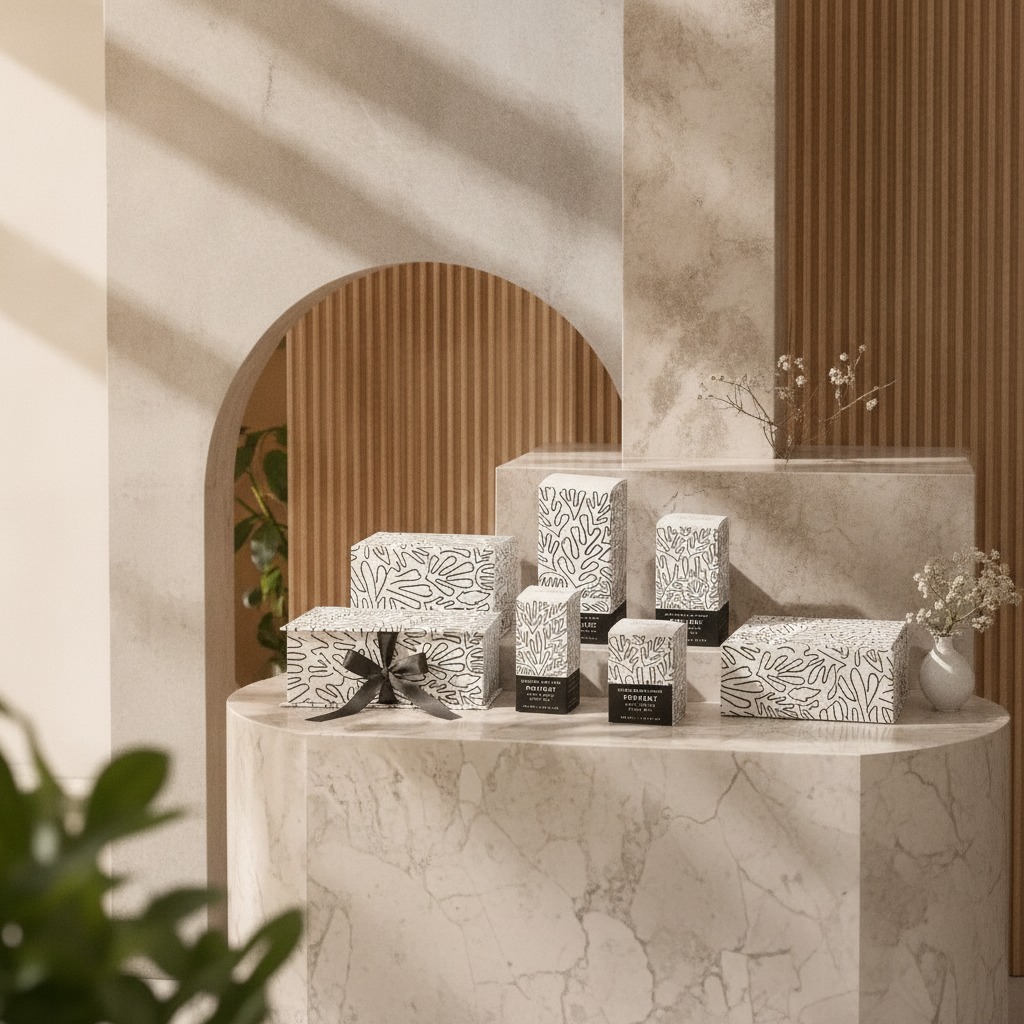
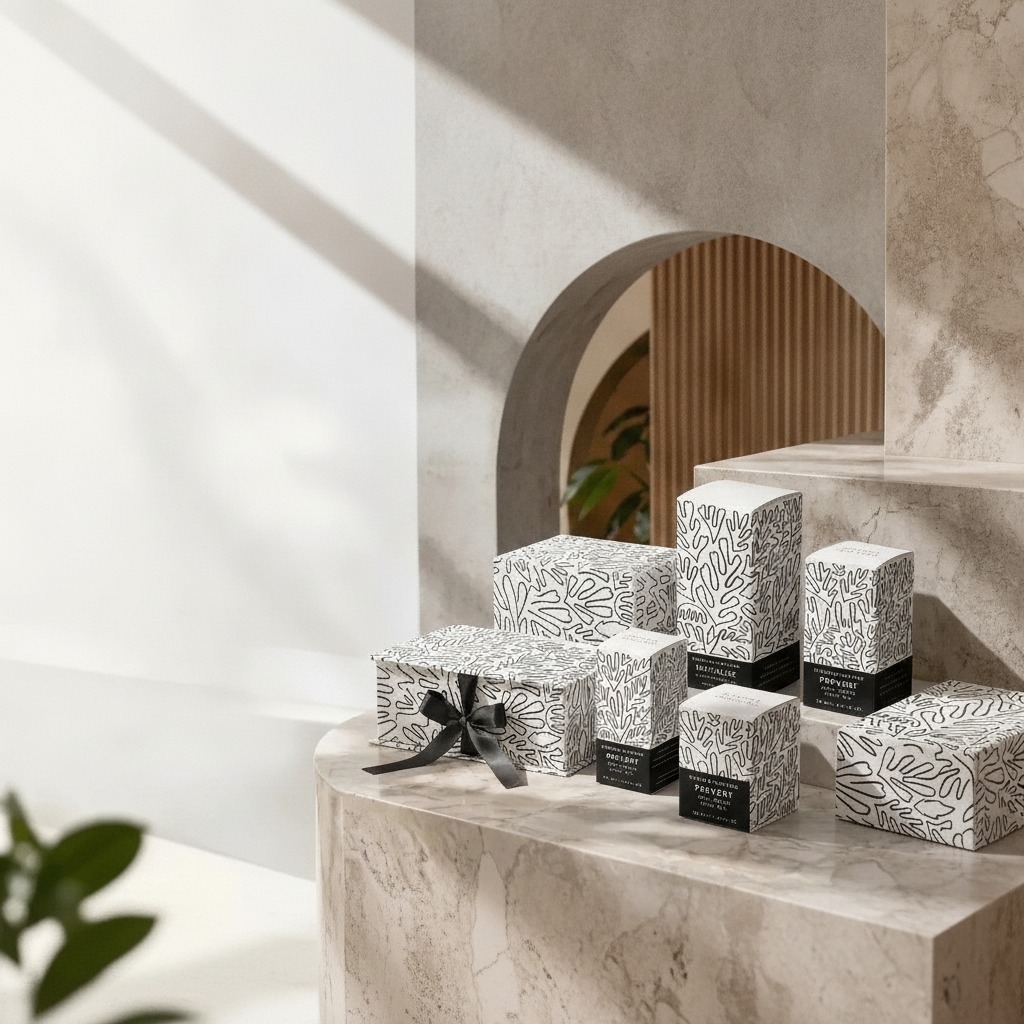
Visual impact often thrives on disciplined simplicity. High-contrast monochromatic palettes—such as dense, charcoal-black botanical line illustrations sweeping across an unblemished white substrate—remain a signature motif in niche perfumery. The stark black-and-white treatment forces the buyer to focus on texture and composition rather than colorful distraction.
To achieve this aesthetic successfully on a custom perfume box, print managers must scrutinize the paperboard surface. A smooth, coated folding boxboard (FBB) or virgin fiber SBS (solid bleached sulfate) provides the ink holdout needed to keep fine organic linework sharp, preventing ink feathering along delicate floral veins or intricate typography. While an unvarnished board can feel pleasantly organic, luxury perfume box development usually calls for an overprint varnish, low-sheen aqueous dispersion, or soft-touch matte lamination. This invisible barrier guards against fingerprint oils, scuffing during transit, and edge cracking along folded scores.
The contrast between stark white fields and solid black lower panels—often reserved for scent family names, concentrations, and fluid volume declarations—requires exceptional black optical density. Sourcing teams should always verify ink formulations on press, ensuring carbon blacks read as deep, velvety voids rather than faded charcoals under harsh store spotlights.
Structural Formats: Everyday Cartons vs. Presentation Formats
Fragrance programs generally split into two production avenues: unit cartons intended for single-flacon retail rotation, and secondary presentation packaging built for seasonal gifting or high-ticket collector editions.
1. Precision Folding Cartons
For high-volume retail lines, folding cartons fabricated from folding boxboard represent the industry benchmark. They arrive flat, saving warehouse volume, and feed smoothly into automated or semi-automated packaging lines. The critical engineering detail here lies in the die-cutting and creasing. Score lines must be deeply defined without rupturing outer fibers, allowing the carton to square up crisply with sharp 90-degree corners. A sloppy fold ruins the geometry and introduces friction when sliding the inner flacon into place.
2. The Ribbon-Tied Perfume Gift Box
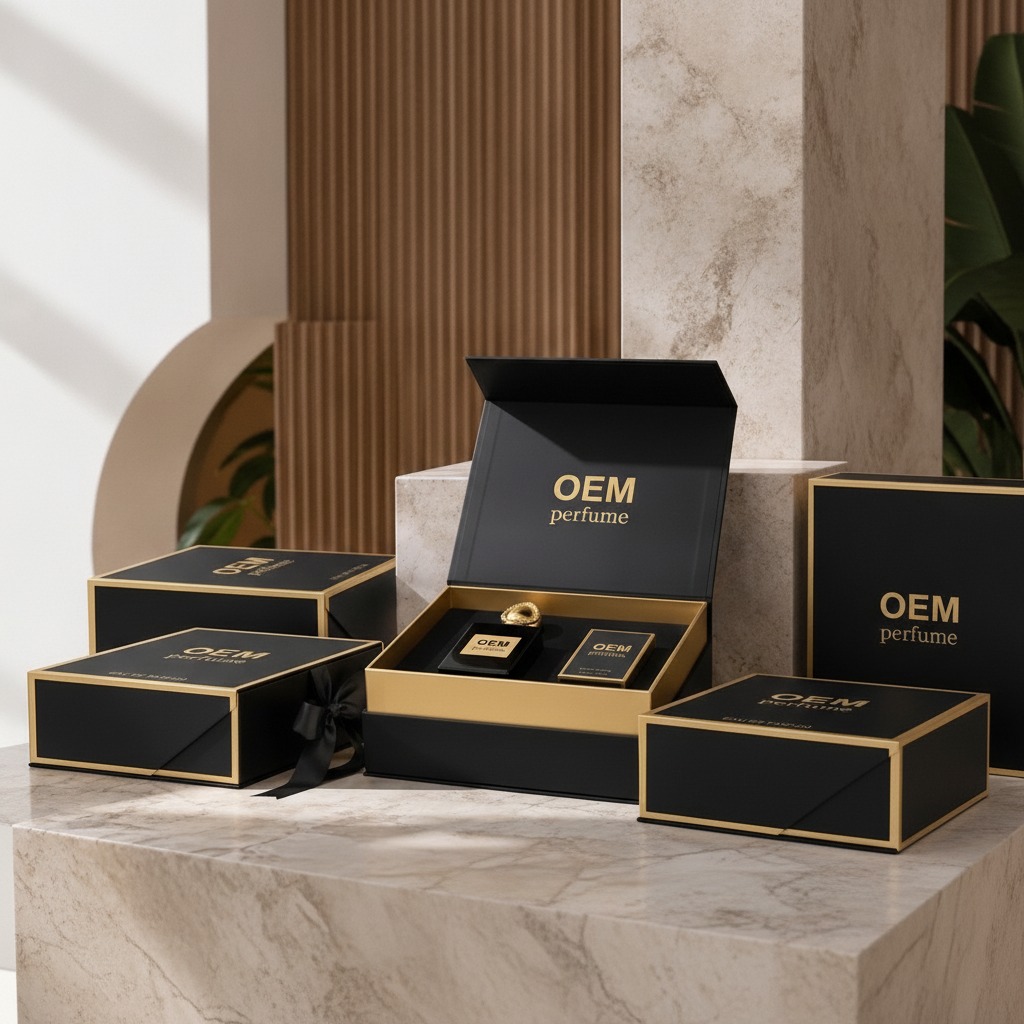
When curating limited editions, discovery sets, or festive promotions, brands frequently pivot to a horizontal perfume gift box. These formats often bridge the gap between folding structures and setup boxes, incorporating woven textile accents like black satin or grosgrain ribbon closures. A ribbon-tied lid elevates unboxing from a routine mechanical motion into a deliberate ritual. Procurement teams must confirm whether such ribbons are manually threaded as secondary accessories or adhered cleanly between paperboard plies, as this drastically affects hand-assembly labor costs at the contract packager.
Internal Fitments: The Invisible Protective Core
External decoration means very little if the glass vessel rattles inside. Because perfume bottles use thick glass bottoms that shift center-of-gravity, perfume box packaging requires carefully engineered internal inserts. While standard cosmetics might rely on simple corrugated flutes, fine fragrance typically specifies color-matched folding card inserts or precision-cut EVA foam cores wrapped in paperboard.
The internal fitment must stabilize the bottle shoulder and cap, isolating the glass from direct impacts on all six sides. A practical rule of thumb: when inverted and gently shaken, the carton should emit zero internal movement. Any shift indicates that drop tests will likely translate shock directly into the glass neck, risking leakage or atomization pump failure.
Practical Buyer Guidance: Sourcing Without Surprises
Navigating quotes for custom perfume packaging requires looking past rendered concept artwork. Suppliers frequently display sample cartons bearing slogans like wholesale readiness, FSC certification, or eco-friendly credentials. While promising, procurement teams should actively clarify production parameters before issuing purchase orders:
- Verify Caliper and Substrate: Always inspect unprinted physical mockups using the proposed board caliper (thickness). A board weight suitable for a 30 mL vial will feel unacceptably flimsy when supporting a 100 mL heavy-bottomed bottle.
- Request Uncut Drawdowns: Evaluate custom blacks and fine typography on the actual production paper stock under standard D65 retail lighting, not purely on digital proofs.
- Evaluate Drop Performance: Conduct transit drop tests with filled, production-weight dummy bottles rather than empty glass. A structural design that cradles empty glass may tear its internal die-cut tabs when exposed to 250 grams of liquid momentum.
- Clarify Finishing Realities: If integrating accessories such as ribbon ties, establish whether the manufacturer supplies pre-cut, sealed-edge ribbons that prevent fraying during assembly line packing.
Frequently Asked Questions
What substrate is standard for an individual retail perfume box?
SBS (Solid Bleached Sulfate) and high-density FBB (Folding Boxboard) ranging between 300 to 400 gsm are standard for primary unit cartons. For rigid luxury setup formats, a heavy greyboard core wrapped in laminated art paper is customary.
How do matte coatings impact printing on dark panels?
Matte aqueous coatings and soft-touch laminates diffuse light, which enriches the depth of solid black panels. However, soft-touch laminates can occasionally be susceptible to fingernail scuffing if high-slip additives are not incorporated into the coating formulation.
Can high-end fragrance boxes be recycled easily?
Folding paperboard cartons finished with standard aqueous varnishes or thin film laminations can generally re-enter conventional paper recycling streams. However, incorporating mixed components—such as glued synthetic ribbons, metallic foil layers, or dense foam inserts—requires consumers to separate materials prior to disposal.
Refining Your Packaging Program
Building a memorable fragrance launch starts at the intersection of print craftsmanship and structural integrity. Take the time to sample raw structural blanks, test closure tensions, and confirm that your artwork aligns cleanly with score lines. Engaging your manufacturing partners early with clear dimensional parameters ensures your packaging stands resolute and elegant on the boutique shelf.