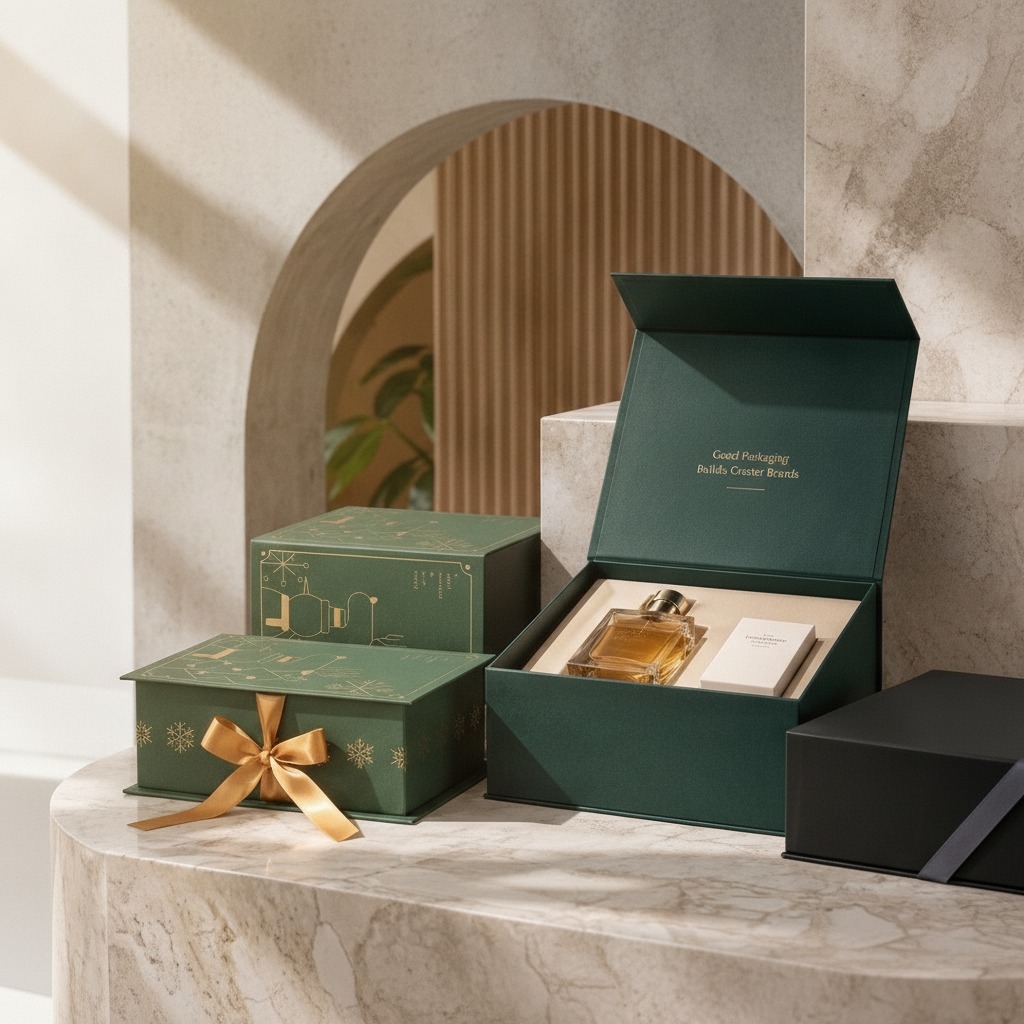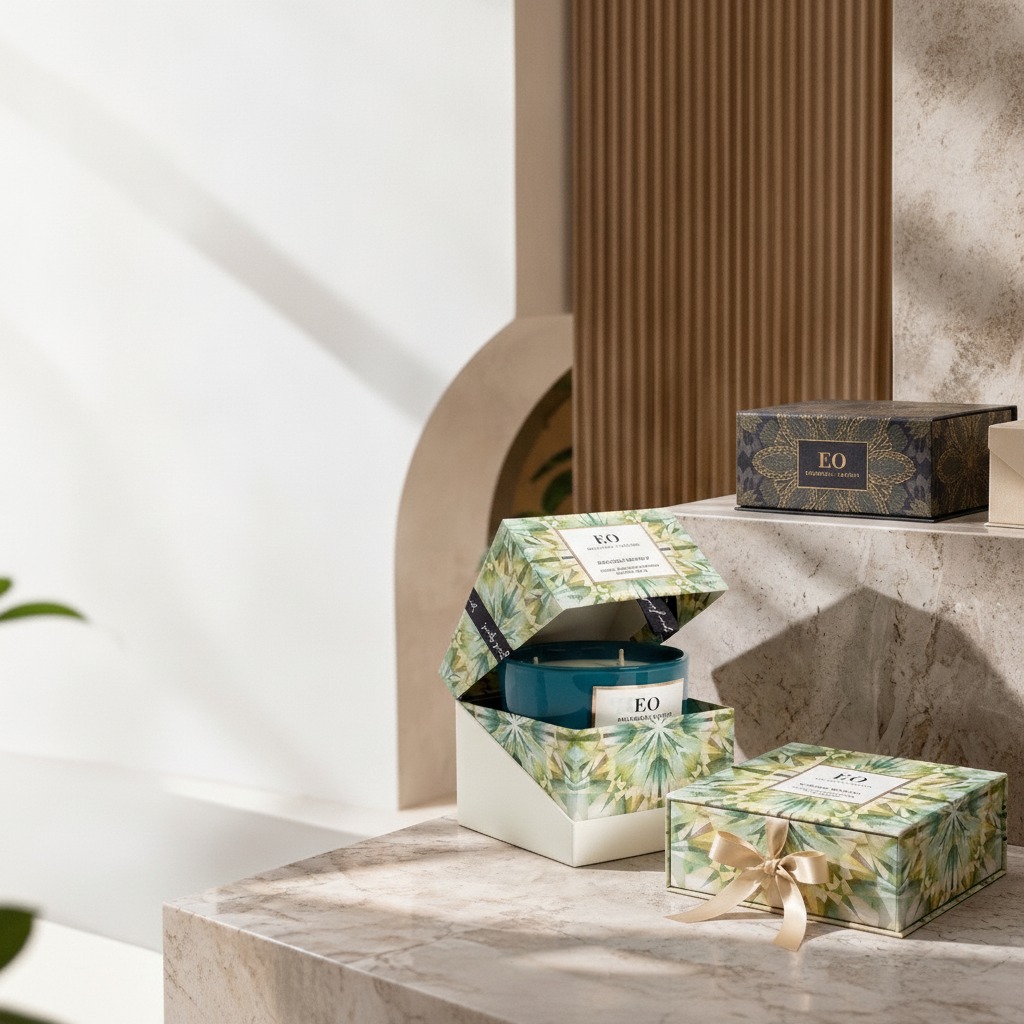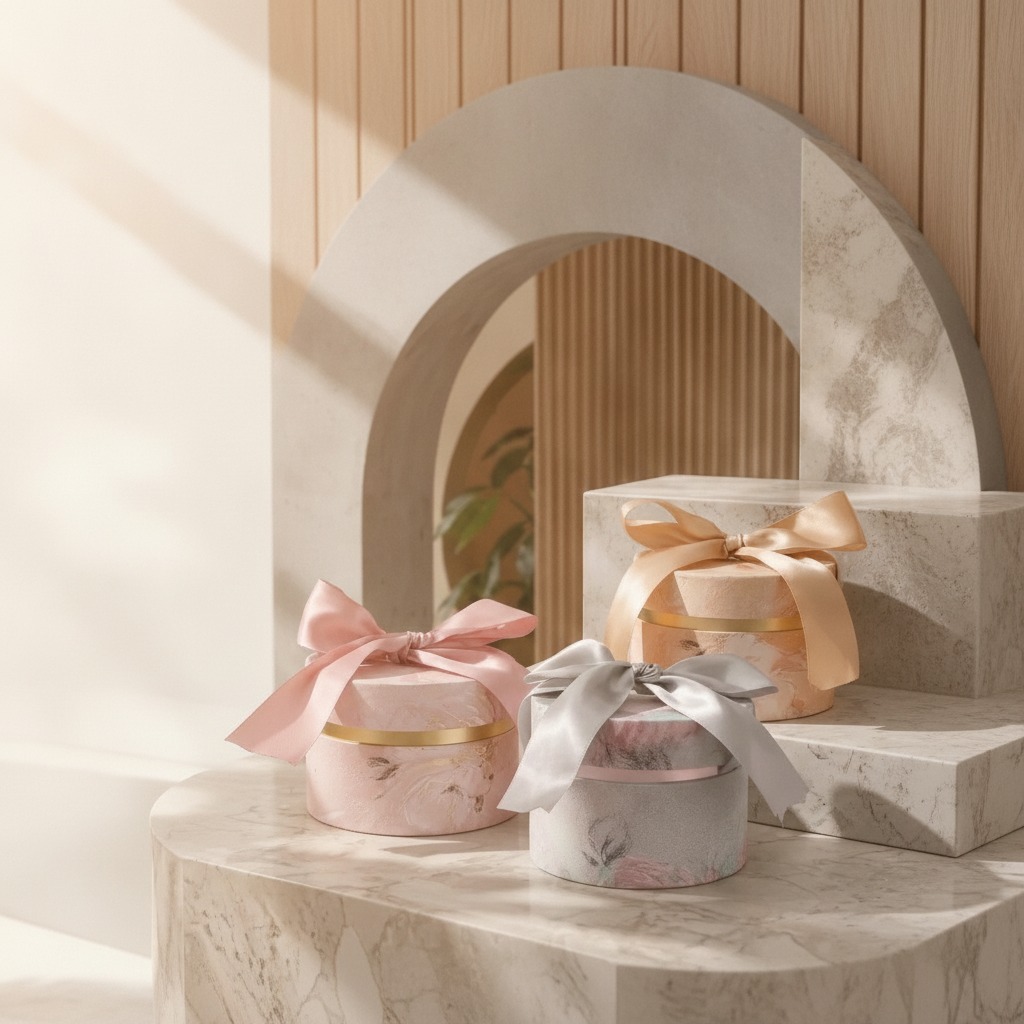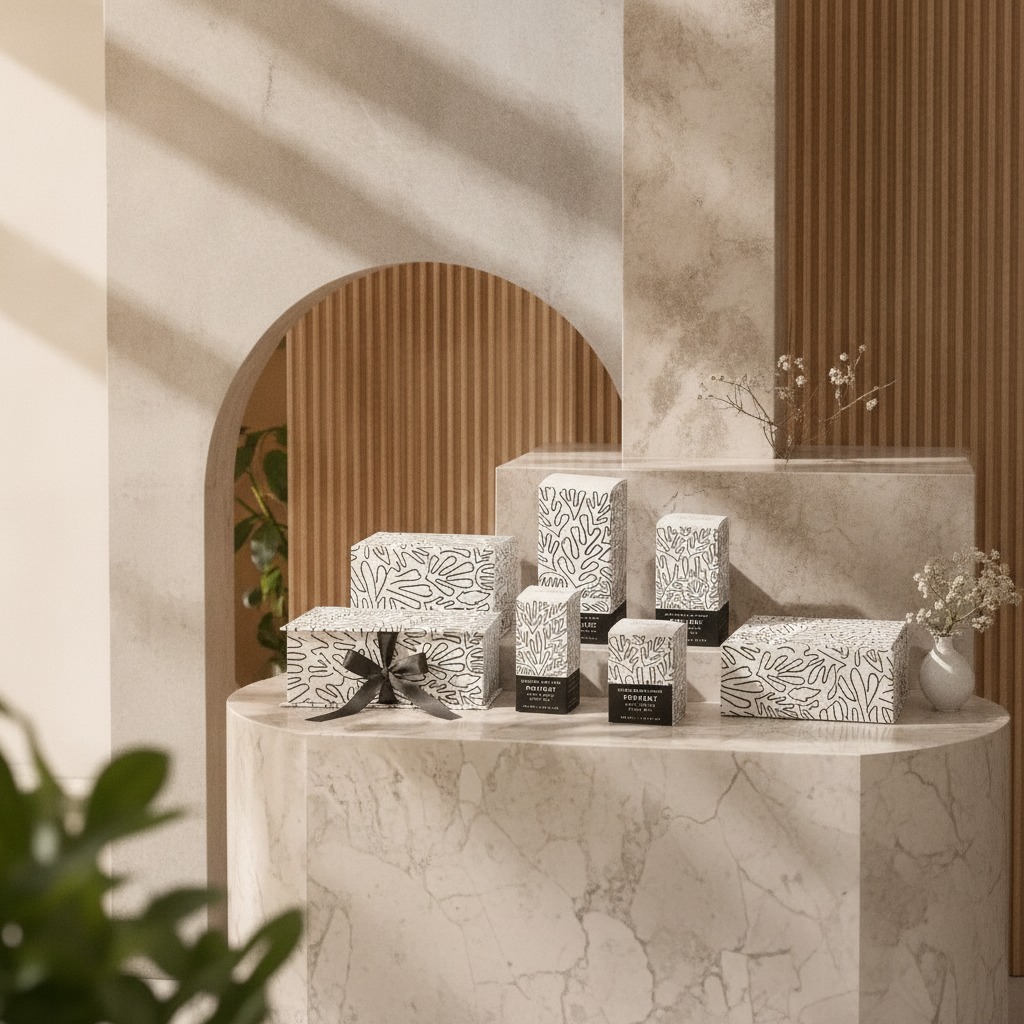
In luxury cosmetics and perfumery, secondary packaging does far more than shepherd a glass bottle from an assembly line to a vanity table. It sets the baseline value of the scent inside. When a buyer encounters a premium paper packaging box on a retail display shelf, the weight, the tactile resistance of the wrap, and the sharpness of the structural corners communicate brand equity before the atomizer is ever depressed. For packaging engineers and private-label procurement managers sourcing across high-volume production runs, striking the balance between theater, protection, and repeatable manufacturing requires a granular look at how these rigid containers are engineered.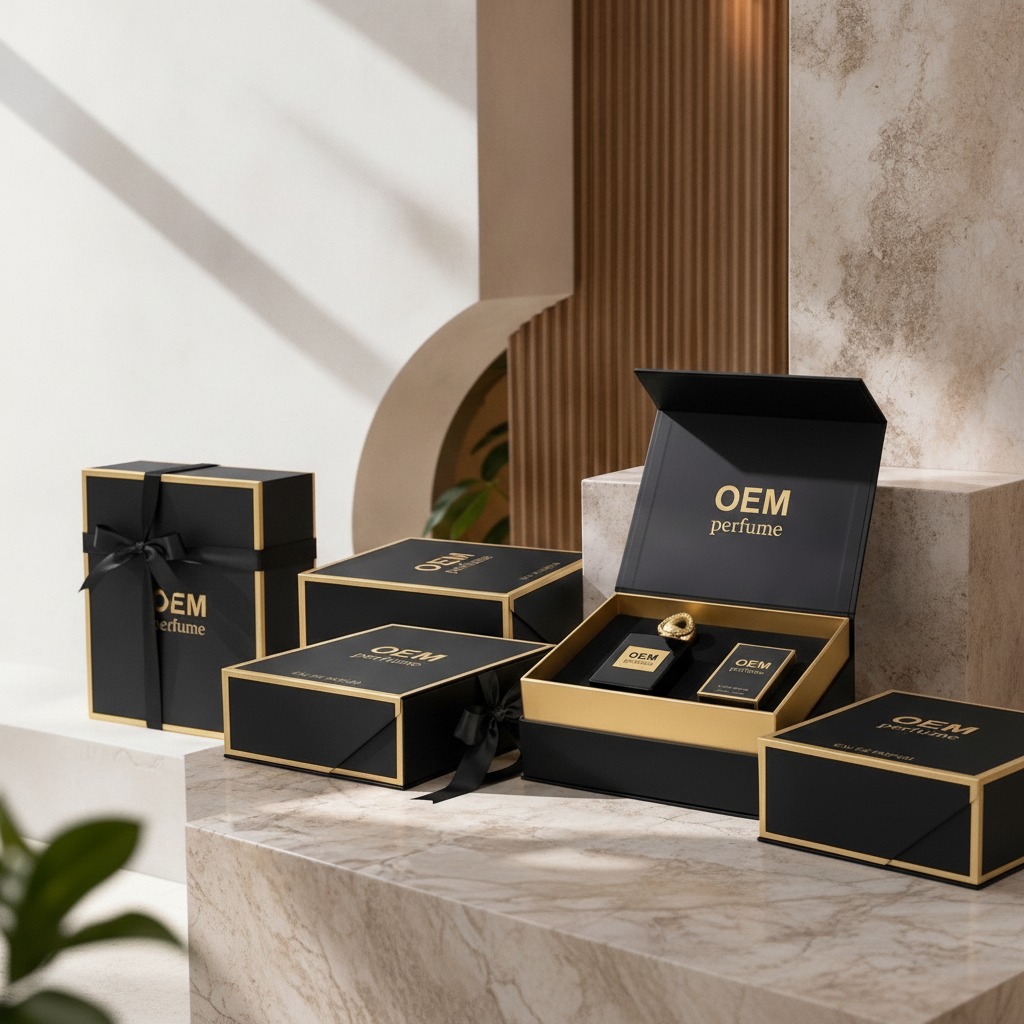
The Architecture of Rigid Fragrance Presentation
Unlike lightweight folding cartons that collapse flat under finger pressure, high-end fragrance packaging leans heavily into rigid box mechanics. At its core, this format relies on a dense interior core—typically thick recycled chipboard or greyboard—wrapped tightly in a lightweight decorative sheet. The result is a substantial cardboard paper box that provides genuine structural containment, resisting compression during transit while offering a solid, furniture-like heft in hand.
In high-end perfume gift sets, two primary silhouette formats dominate the landscape:
1. The Upright Hinged Presentation Chest
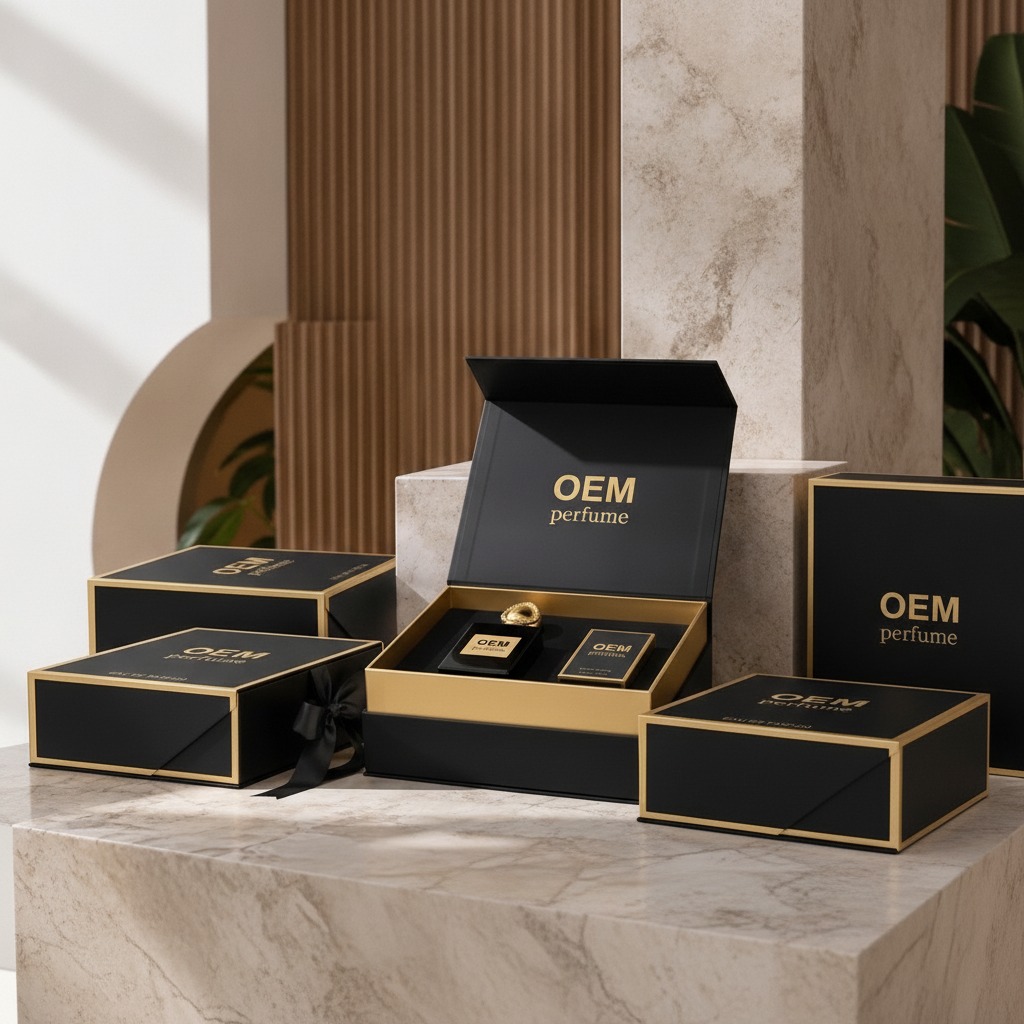
This format uses a vertical, book-style spine or an attached upright lid that swings backward to present the contents like an exhibition piece. A discreet black grosgrain or satin ribbon often anchors the lid to prevent it from hyperextending, or functions as a delicate pull tab at the front lip. When opened, the bottles remain upright or tilted slightly, creating an immediate focal point for retail displays and influencer unboxing sequences.
2. The Multi-Piece Telescoping Lid
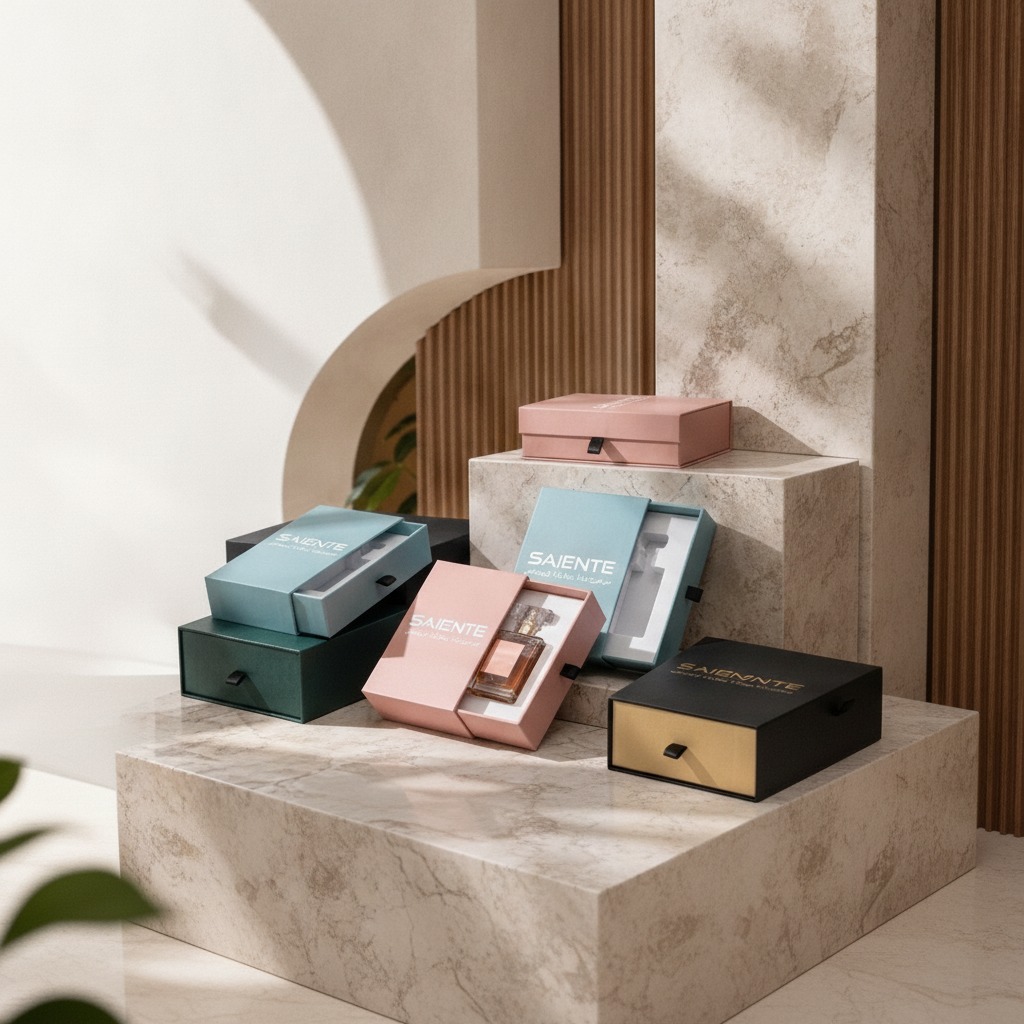
For individual fragrance flagships or tiered collections, a two-piece or three-piece custom paper box format offers a controlled, air-cushioned opening sensation. Sourcing managers frequently specify close-tolerance friction fits where the lid slowly glides off the base collar, adding an audible and tactile layer of anticipation to the customer journey.
Surface Aesthetics: Dark Textures and Metallic Accents
The visual impact of high-end perfume packaging often relies on deliberate contrast. Deep, low-gloss black wrap papers—whether untreated fine uncoated stock, soft-touch film laminations, or fine-grain buckram textures—create a light-absorbing backdrop that makes gilded ornamentation pop.
On premium presentation sets, perimeter borders and typography are rendered in bright metallic gold. While this is typically achieved through hot-foil stamping—a process where heated brass dies press pigment foils into the paper fibers—some printed paper box variants leverage metallic screen inks or specialized spot UV coatings. Hot stamping produces a perceptible debossed indentation that feels rich beneath the fingers, but it demands strict temperature control on the factory floor: too hot, and fine serif fonts bleed; too cool, and the foil flakes across the perimeter edges.
The Critical Role of Internal Inserts
A rigid exterior shell is half the battle; the interior compartment determines whether heavy glass perfume flacons arrive intact or dislodged. A well-designed paper box must seat glass bottles, travel atomizers, or body lotions without rattling.
Engineers generally evaluate three insert categories based on fragility, presentation style, and brand sustainability mandates:
- Precision Die-Cut Cardboard Platforms: Made by folding and stepping dense cardstock into custom cavities. This maintains a uniform material profile for those seeking a recyclable paper box program, though it can show stress creases if the bottle has irregular geometry.
- High-Density EVA Foam: Often capped with a black paper faceplate or lined with flocking. Foam delivers superior shock absorption and a seamless, bespoke fit around curved glass flacons, though it requires separate waste-stream sorting.
- Molded Fiber Pulp Trays: Increasingly finished with smooth-surfaced thermoformed techniques. When tinted matte black, molded pulp offers an earthy, high-end profile with strong cradle-to-cradle appeal.
Evaluating Supplier Claims: FSC Certifications and Recyclability
OEM and ODM packaging suppliers frequently highlight claims like wholesale pricing, rapid customization, and FSC certification across their product catalogs. For procurement teams, auditing these statements during the quoting stage is essential.
If a project brief calls for a verified recyclable paper box, the sourcing team must scrutinize every layer of the bill of materials. A core greyboard may be certified, but covering it in non-biodegradable soft-touch laminates, heavy plastic-backed hot foils, and solvent-based adhesives can disqualify the finished unit from municipal paper recycling streams. Similarly, claims of FSC certification require an unbroken Chain of Custody (CoC) code that matches the production facility; always request certificate registration numbers prior to issuing purchase orders rather than relying on promotional graphics.
Manufacturing Quality Checks for Fragrance Buyers
Before committing to bulk freight runs, quality assurance teams should subject pre-production prototypes to several non-negotiable packaging checks:
- Vapor and Odor Neutrality: Animal glues and cheap synthetic adhesives used in paper wrapping can off-gas inside sealed boxes. If an adhesive smell clings to the perfume bottle or cap, it degrades the olfactory experience before the customer even samples the fragrance.
- Corner Sharpness and Seam Adhesion: Examine the wrapped turn-ins at the internal corners. Bubbling, fraying paper edges, or visible white core lines along mitered edges indicate improper die tension or uneven glue spreading.
- Bottle Retention Under Vibration: Place the fully loaded presentation box through basic vibration and inverted drop testing. Bottles must remain seated in their custom cavities without migrating or striking secondary accessory bottles.
Frequently Asked Questions
Can high-volume rigid boxes achieve a truly matte, fingerprint-resistant finish?
Yes, by specifying a matte anti-scratch thermal lamination film or an aqueous soft-touch coating over the printed wrap sheet. Standard matte varnish often scuffs during packing line handling and readily shows finger oils from retail staff.
What is the typical trade-off between paperboard inserts and foam inserts for heavy bottles?
Paperboard inserts provide clean, monomaterial disposal, but they require precise structural scoring to hold bottles above 100ml securely without buckling. Foam provides predictable dampening for heavy glass bases during transport drops, but it complicates environmental compliance declarations.
How do custom ribbon pulls affect assembly labor?
Ribbons glued directly to the greyboard base require manual alignment and manual anchoring before the interior lining paper is applied. This adds minor assembly labor per unit, but the pull loop significantly reduces box opening wear by preventing users from prying open tight-fitting lids with their fingernails.
Refining Your Next Sourcing Cycle
Developing an elevated presentation carton is a continuous calibration between visual drama, production tolerances, and budget limitations. When planning your next custom paper box line, start with structural white-dummy prototypes to verify flacon fit and cavity spacing before locking down foil dies or surface finishes. Clear dimensional tolerances and documented material specifications will always be your strongest defense against line delays and assembly surprises.