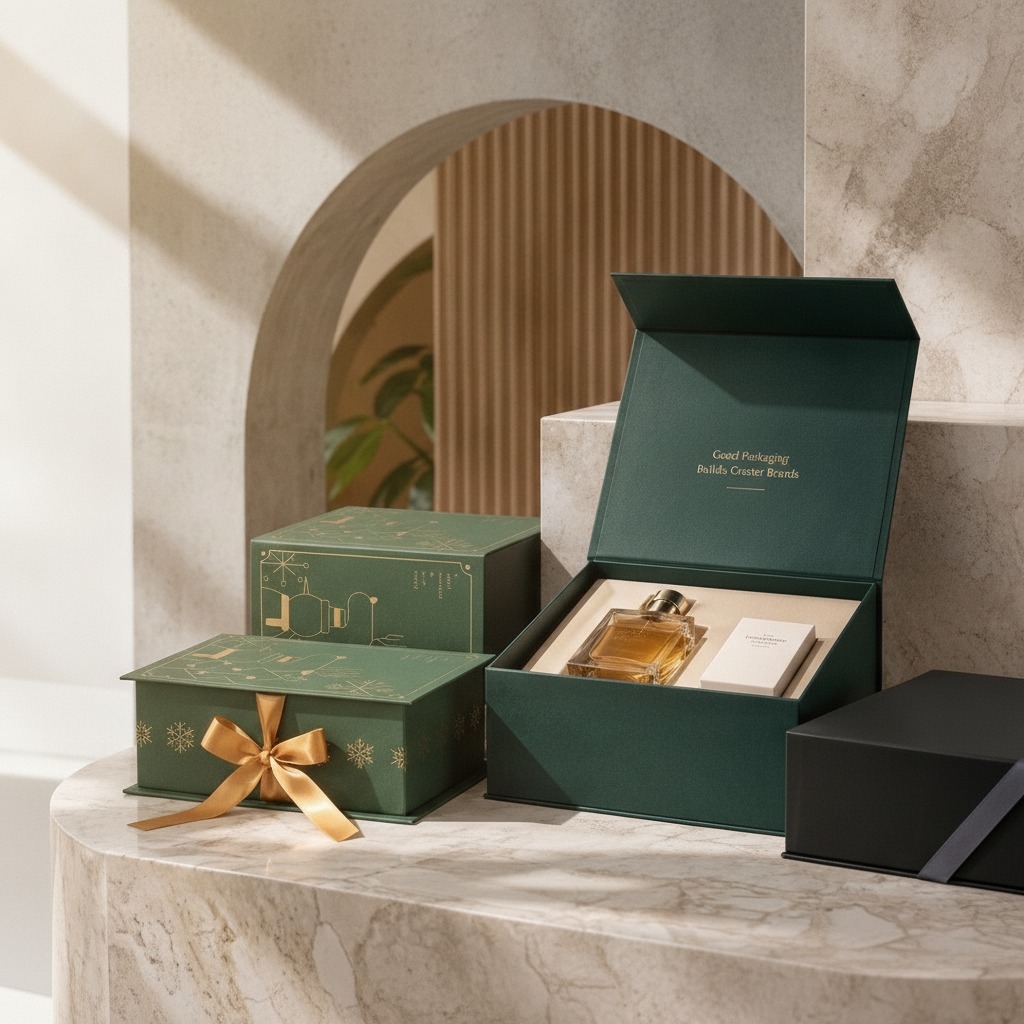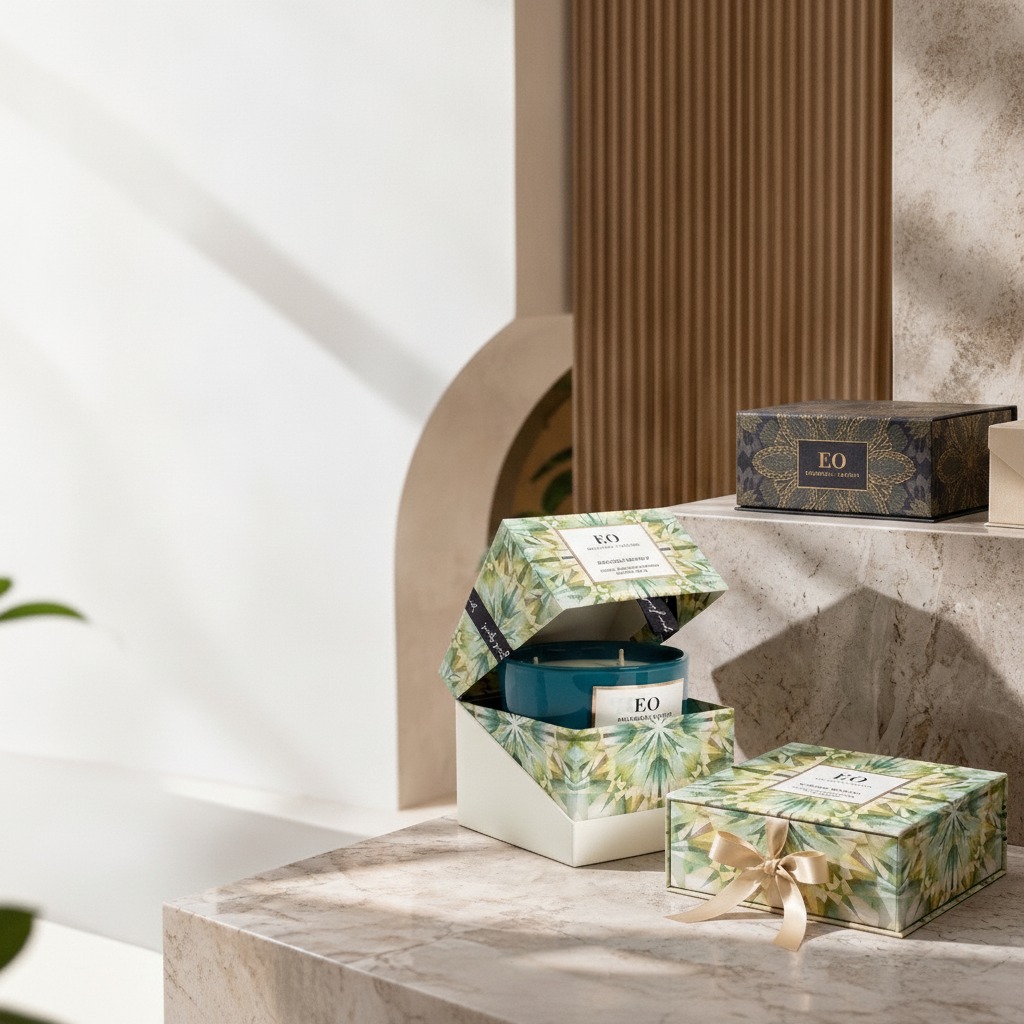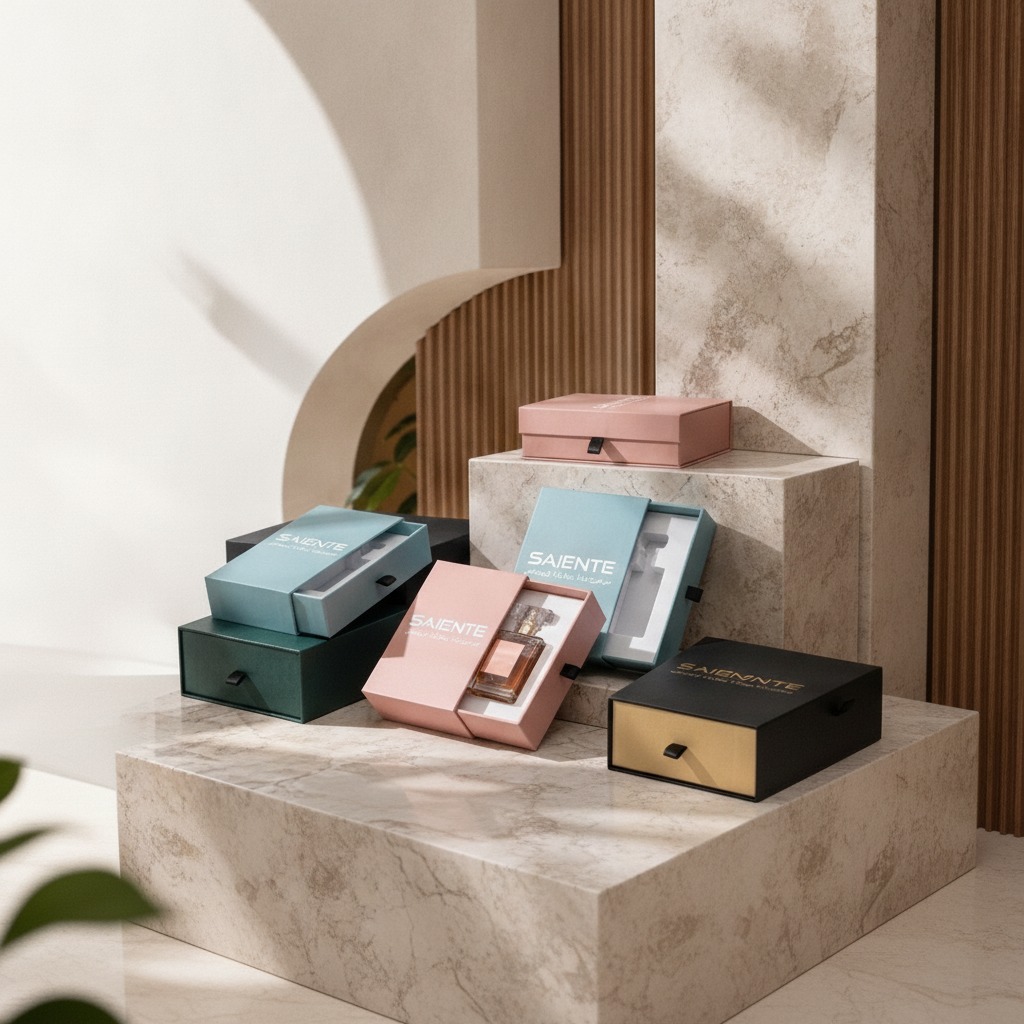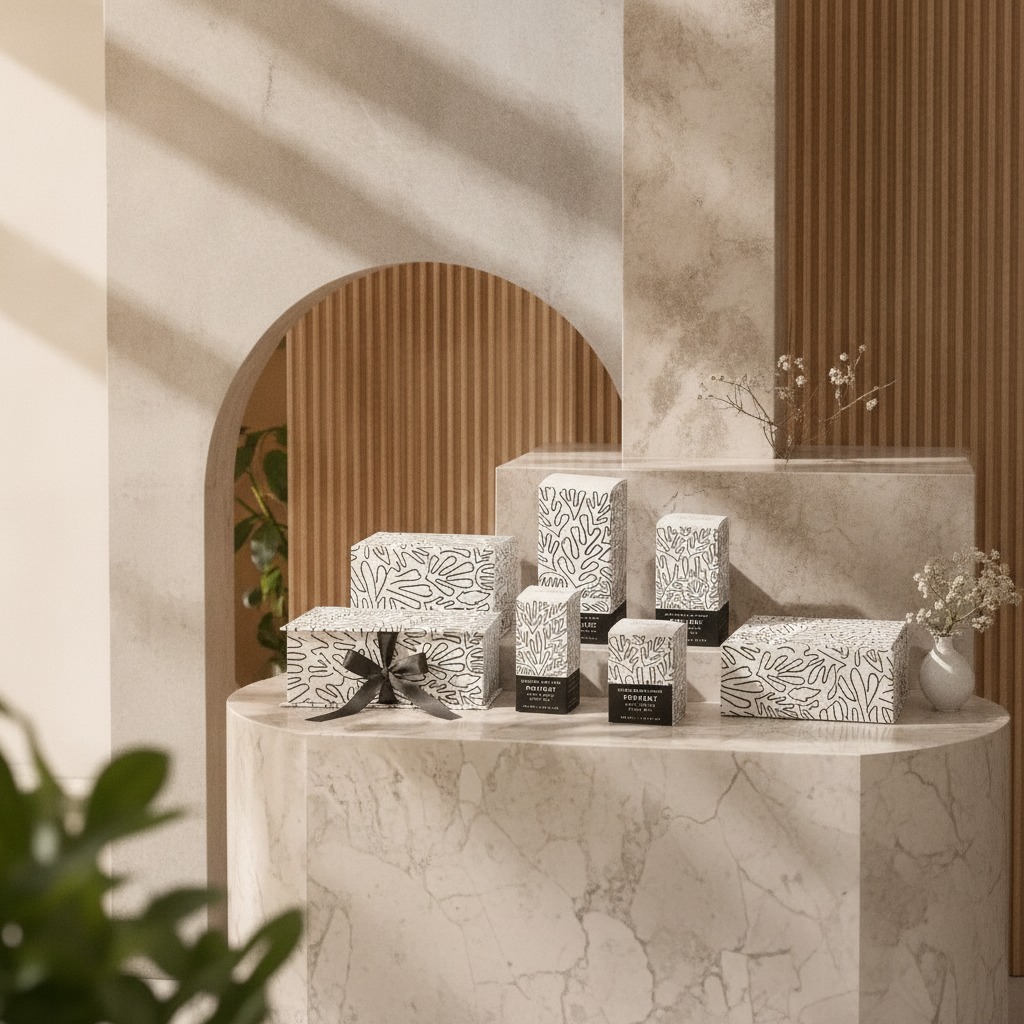
A high-end retail presentation often comes down to friction, sound, and surface texture. When a customer reaches for a rigid gift box, the tactile feedback of the outer wrap and the glide of a fitted lid set expectations before the product inside is ever revealed. For brand managers and merchandise buyers, stepping away from the standard rectangular folding carton toward cylindrical presentation packaging is a deliberate visual statement. Cylindrical formats immediately feel bespoke, evocative of vintage hat boxes, artisanal confections, and curated boutique collections.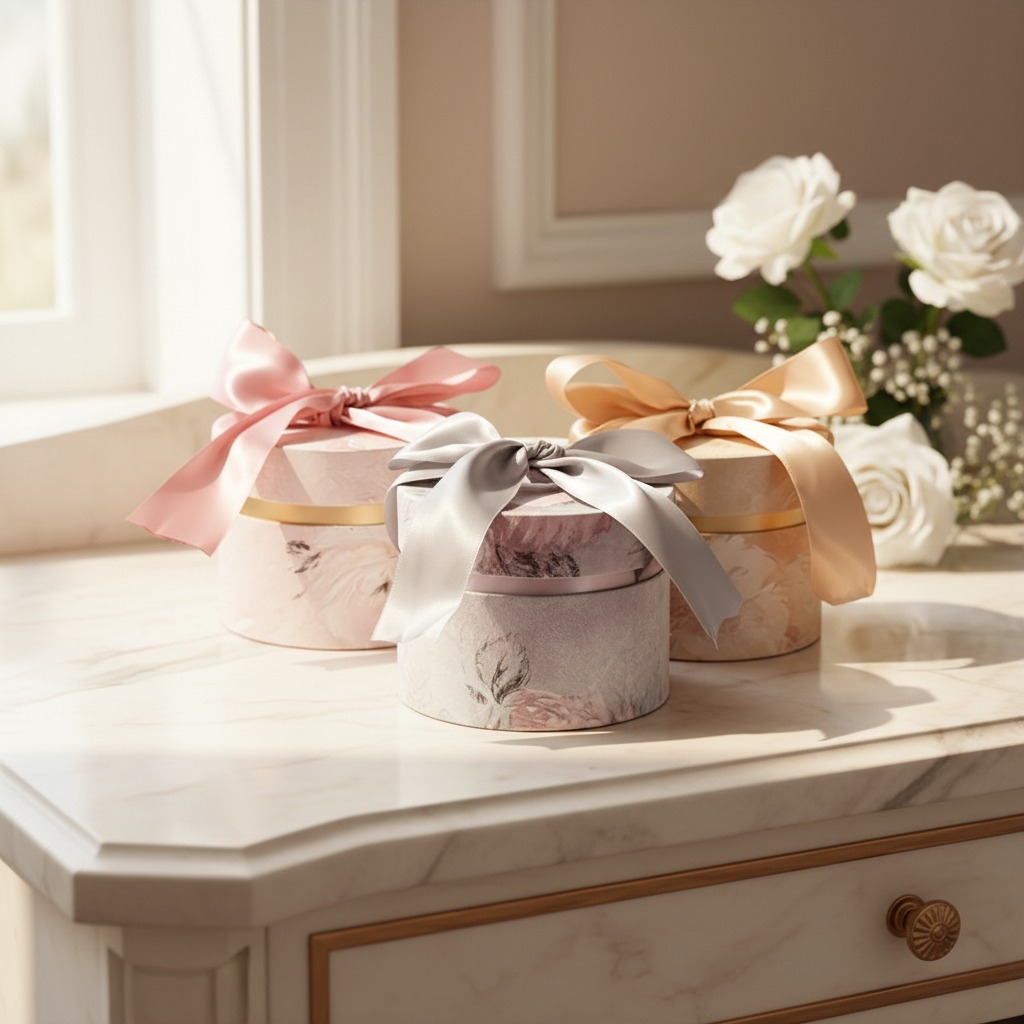
Yet transitioning from standard cartons to decorative round rigid containers introduces specific sourcing dynamics that go beyond mere aesthetic appeal. Balancing delicate surface wraps with structural rigidity requires a clear eye for assembly details, nesting logistics, and the specific merchandising role the packaging must perform.
The Anatomy of Decorative Cylindrical Packaging
Unlike flat-pack cartons that rely on crease scoring and auto-bottom folds, cylindrical gift boxes rely on rigid tubular cores. The visual impact comes from layering decorative treatments over this curved geometry, where minor imperfections in alignment become instantly noticeable.
In high-finish presentation sets, several design components work together:
1. The Substrate and Outer Wrap
The structural body functions like a miniature drum—stiff, unyielding, and topped with a flat lid. The outer wrap, often a printed or laminated specialty paper featuring pale marbled veins or soft watercolor motifs, must be drawn smoothly across the curve. Sourcing teams should look closely at how the wrap meets the rim and base. Any puckering or bubbling along the curved perimeter telegraphs poor adhesive distribution or paper that couldn't handle the rotational tension during wrapping.
2. Metallic Accent Bands
Encompassing the cylinder with a contrasting gold-colored or metallic-finish band adds visual weight and grounding. In multi-piece sets, this band often sits near the base or the lid interface of the larger vessels. The primary production concern here is seam alignment. If the band wraps around a cylinder, the overlap seam should ideally align with the paper wrap’s vertical seam at the designated 'back' of the container to preserve a pristine display face.
3. Ribbon Work and Finishing Accents
Wide textile ribbons—whether in soft blush, metallic gold, or muted slate-gray—dramatically alter the perception of the package. A generous bow tied across the top lid elevates the container from simple retail packaging to an intact keepsake. However, packaging buyers should clarify whether bows are hand-tied in assembly or supplied as pre-formed, glued rosettes, as hand-tied bows yield natural variance while pre-formed trims guarantee visual uniformity across pallet loads.
Translating Nested Formats into Retail Concepts
One of the most practical commercial advantages of round rigid sets is their ability to nest inside one another during transport, saving critical cubic volume before being unpacked into tiered visual displays. Retailers can use these graduated sizes to build tiered gift box ideas across different customer segments.
For personal care, fragrance, or fine jewelry, a small or mid-sized vessel styled with soft marble and dusty rose ribbons naturally fits the profile of a boutique gift box for her. The enclosed space keeps delicate items nestled tightly without rattling.
Conversely, shifting to neutral stone wraps and cool silver ribbons lets brands configure an understated, masculine grooming set or premium accessory kit, functioning smoothly as a gift box for him.
For hospitality, anniversary promotions, or celebratory retail bundles, pairing nested containers creates an instant gift box for couples, allowing complementary items—such as his-and-hers keepsakes or shared luxury treats—to be presented as a cohesive duo. While delicate ribbon bows and pale paperboard wraps are rarely appropriate as a heavy-duty gift box for kids due to handling wear and ribbon safety, smaller sizes can still serve as keepsake memory containers for nursery or commemorative gifts.
Practical Buyer Checks for Rigid Cylinders
When evaluating physical prototypes or pre-production samples of wrapped round boxes, sourcing managers should look beyond the initial visual charm and test the mechanical realities:
- Tolerances and Lid Resistance: A cylindrical lid should slide off smoothly without dropping freely due to gravity, nor should it create an airtight vacuum that forces the consumer to wrestle the box open.
- Seam Integrity: Inspect where the cylindrical wrap joins. The overlap should be smooth, fully bonded to the core, and straight down the vertical axis.
- Ribbon Retention: Check how the ribbon is affixed. If it is threaded through die-cut slits in the lid, ensure the edges are clean; if glued, test whether standard handling or temperature shifts pull the ribbon free from the paper wrap.
- Edge Finishing: Where the decorative wrap rolls over the top lip and into the interior, the turn-in should be clean and consistent around the entire 360-degree rim.
Frequently Asked Questions
How do cylindrical rigid boxes ship compared to square cartons?
When sourced as individual sizes, rigid cylinders take up significant shipping volume because they cannot be knocked down flat. Sourcing them as nested sets—where smaller sizes fit snugly inside the larger ones—dramatically improves pallet density and shipping economics.
Can ribbon trims withstand standard freight handling?
Dimensional ribbon bows are prone to crushing if cartons are stacked directly against interior lids. Packaging specifications should include custom corrugated dividers or top-layer void fill to protect the bows from being flattened during international transit.
Are marbled paper wraps suitable for direct food packaging?
Generally, no. Decorative paper wraps, laminated finishes, and rigid cores are designed for secondary packaging. Any direct-contact contents, like baked goods or loose confections, require a certified inner barrier liner or primary food-grade pouch.
Take the Next Step in Your Packaging Development
Balancing delicate surface aesthetics with durable assembly is essential for high-impact presentation packaging. Review your target dimensional requirements, evaluate nesting clearances, and request physical boundary samples to assess lid friction and wrap adhesion before committing to volume production.