Few packaging interactions rely quite as heavily on tactile weight and micro-tolerances as unboxing a fragrance. Before a customer ever depresses an atomizer, the primary sensory impression happens at the threshold: the deliberate pull of a lid, the faint sound of paper-wrapped edges parting, and the way a dense glass flacon sits nestled inside its cavity. Sourcing a rigid perfume box for a commercial launch requires balancing this sensory weight against shipping cubic volume and factory assembly speeds. For brand directors and packaging procurement teams, moving from a visual render to a mass-produced, store-ready unit involves decisive choices regarding box architecture, board stiffness, and internal fitments.
The Architecture: Rigid Walls and Magnetic Closures
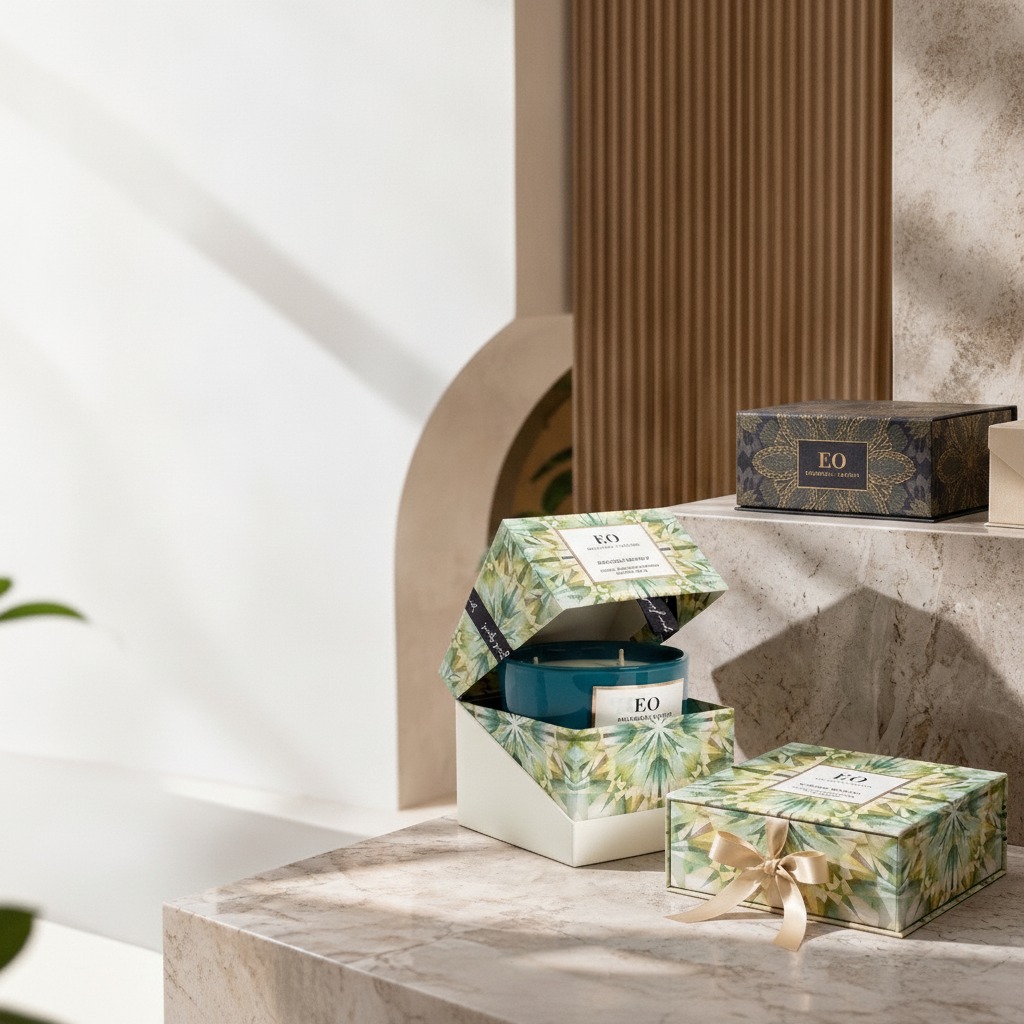
Visually, an upscale fragrance pack lives or dies by its lines. A well-constructed custom perfume box relies on a dense greyboard core, typically scored to sharp, ninety-degree exterior corners without unsightly soft rounding at the folds. In premium executions, the exterior is often wrapped in a dark, dyed-through paper—perhaps a deep midnight navy or charcoal—bearing an embossed, textile-like surface grain that hides fingerprints and resists scuffing during floor handling.
Lid closures are equally deliberate. A magnetic-flap format utilizes small magnets embedded directly into the structural board before the outer wrapping sheet is applied. When executed properly, the magnets disappear beneath the lining paper, leaving only a subtle, clean snap when the front panel meets the box base. Paired with exterior accents—such as a brushed metallic logo plate or a contrasting woven ribbon—the package signals value without demanding excessive visual noise.
Flat-Pack vs. Pre-Assembled Setup Boxes
When specifying a luxury perfume box program, one of the earliest structural forks is whether to source traditional pre-assembled setup boxes or collapsible flat-pack rigid formats. Both serve specific operational environments:
Pre-Assembled Rigid Boxes
Pre-formed boxes arrive at your contract filler ready for immediate bottle loading. The perimeter joints are permanently bonded at the packaging plant, giving the container an unmistakable structural heft and immobility. The trade-off is freight: you are essentially paying to transport ocean containers and warehouse pallets of empty air. For high-velocity, centralized filling lines, the labor saved on the line often justifies the elevated logistics spend.
Collapsible Magnetic Formats
Collapsible rigid boxes arrive completely flat, using scored perimeter walls and diagonal corner tape or magnetic locking tabs that snap into a rigid rectangular frame during final assembly. This reduces inbound freight footprints and warehouse storage demands dramatically. However, a collapsible format requires careful auditing of the hinge lines. If the outer wrap is brittle, repeated bending at the retail counter can cause hairline cracking along the dark printed creases.
Internal Fitments: Securing the Flacon
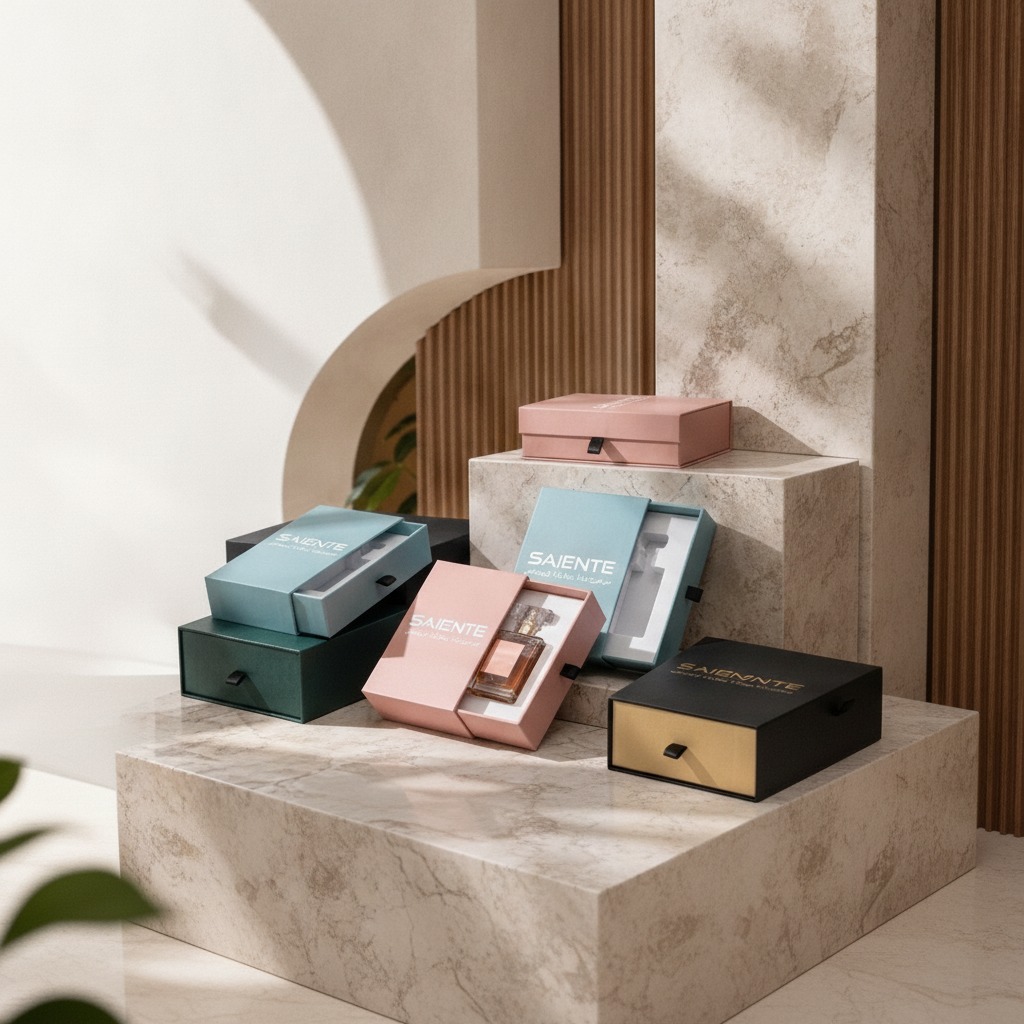
A perfume gift box has a dual responsibility: it must protect heavy, fragile glass through transport drops while presenting the bottle upright, squarely aligned to the opening panel. Fragrance bottles carry irregular centers of gravity, often pairing thick glass bases with tall metal caps.
Common cavity strategies include:
- Die-cut High-Density Foam: Frequently laminated with a top layer of paper or velour matching the interior tray. Foam offers reliable impact absorption for fragile glass, though it requires exact cutting dies to prevent the bottle from twisting inside the recess.
- Molded Pulp or Paperboard Inserts: A visually clean, single-material option that appeals to brands striving for simpler material streams. Achieving deep, crisp recesses for square-shouldered bottles can be challenging, meaning tool design must account for draft angles and corner radii.
- Secondary Component Compartments: In fragrance sets or promotional boxes, an auxiliary recess is often cut alongside the bottle to host a travel atomizer, a scented lotion, or an embossed informational card. Maintaining balanced visual margins between these unequal items is crucial for shelf balance.
Practical Realities in Perfume Packaging Sourcing
A common failure point in perfume box design involves wrap tension and adhesive telegraphing. When a heavy board is wrapped with a fine-textured paper, solvent-based or water-based glues can occasionally cause the paper to stretch unevenly. If cured too rapidly or exposed to warehouse humidity shifts, the exterior walls can experience slight inward cupping—just enough to throw magnetic closure polarity slightly out of alignment.
Additionally, claims surrounding paper sustainability, such as FSC-certified boards and covers, are widely presented in manufacturing catalogs. Procurement teams should always verify the chain of custody and the specific certification scope for their selected material lot, ensuring the core board, wrap, and lining papers all comply with their brand's regional compliance mandates.
Frequently Asked Questions
Can collapsible rigid boxes hold heavy glass perfume bottles safely?
Yes, provided the structural board weight and corner locking mechanism are engineered to handle the flacon's mass. The internal insert—not the outer box wall—absorbs the lateral shifting during drop and transit.
What is the most secure closure for a retail fragrance gift set?
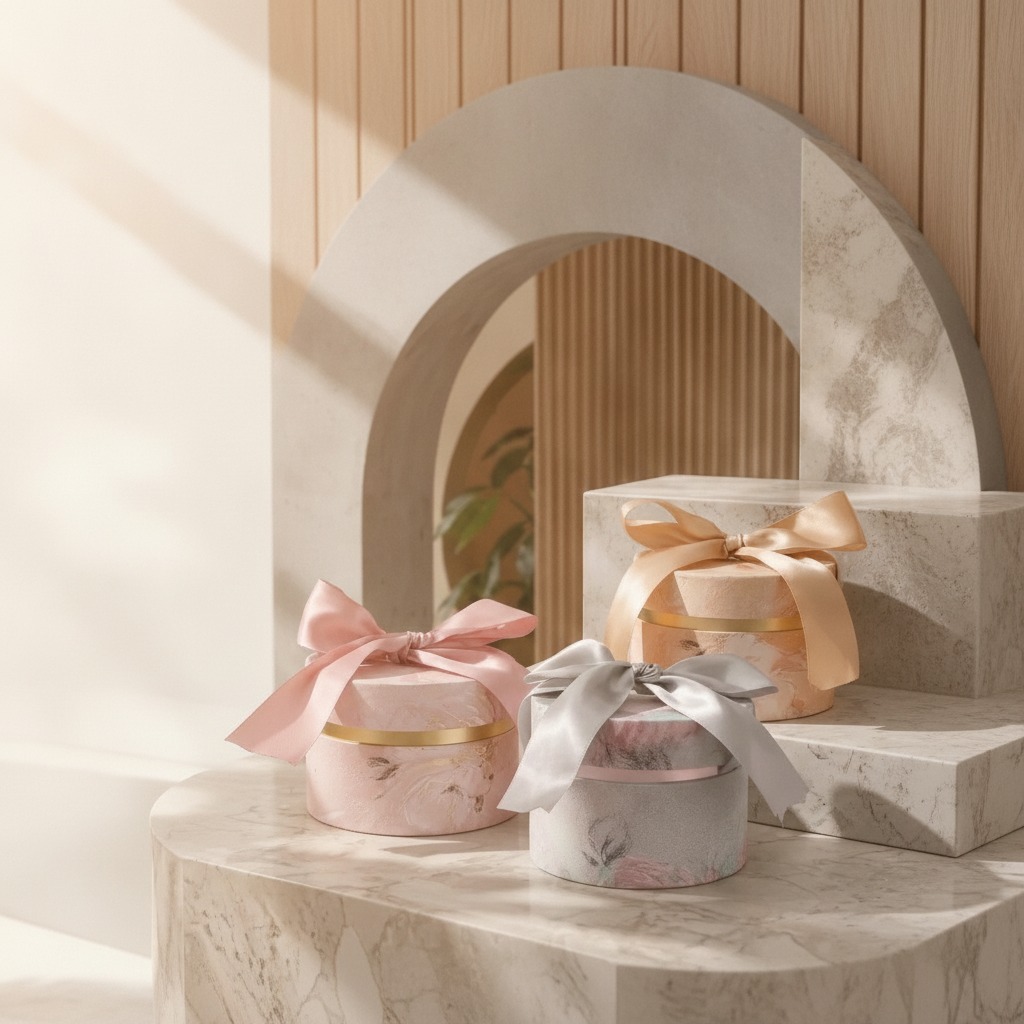
Concealed dual magnets embedded in the front lip provide reliable closure for standard retail handling. For heavier travel sets or seasonal editions, supplementing magnetic panels with a grosgrain or satin closure ribbon prevents accidental opening if the box is inverted.
How do I prevent dark textured paper wraps from scuffing?
Dark, heavily dyed papers often show scuffs along folded edges if uncoated. Specifying an anti-scratch matte lamination or selecting through-dyed pulp papers with abrasion-resistant top sizing helps preserve pristine surfaces across distribution.
Refining Your Packaging Program
Balancing luxury presentation with transit viability requires testing physical packaging mockups with your exact bottle geometry, net fluid weight, and chosen closure hardware. When planning your next product run, establish sample runs that evaluate hinge strength, insert retention, and magnetic pull directly on the assembly floor.