Engineering the Tactile Fragrance Experience
Before a consumer ever registers the bergamot top notes or the amber dry-down of a fragrance, they register weight, surface resistance, and the mechanical snap of a lid. In the fragrance sector, the primary container is an inert glass vessel, but the physical perfume box serves as the tactile gateway to the brand. Sourcing managers and cosmetic packaging developers must bridge the gap between fragile glass protection and an opulent shelf presentation that commands retail space.
Securing the right perfume packaging requires balancing production craftsmanship against cold logistical realities. A package that sags on a boutique shelf or fails to absorb transit vibration can devalue even the most complex formulations. Sourcing teams today must evaluate the core structure, surface wrapping techniques, internal fitments, and supply chain trade-offs before committing to volume runs.
Anatomy of a Rigid Setup Box: Board, Wraps, and Finishes
Most luxury fragrance presentations rely on rigid setup boxes rather than standard folding cartons. The construction begins with a dense paperboard or greyboard core, providing architectural stiffness that resists bending under palletized stacking loads. This structural core is subsequently laminated with specialized outer wrapping papers.
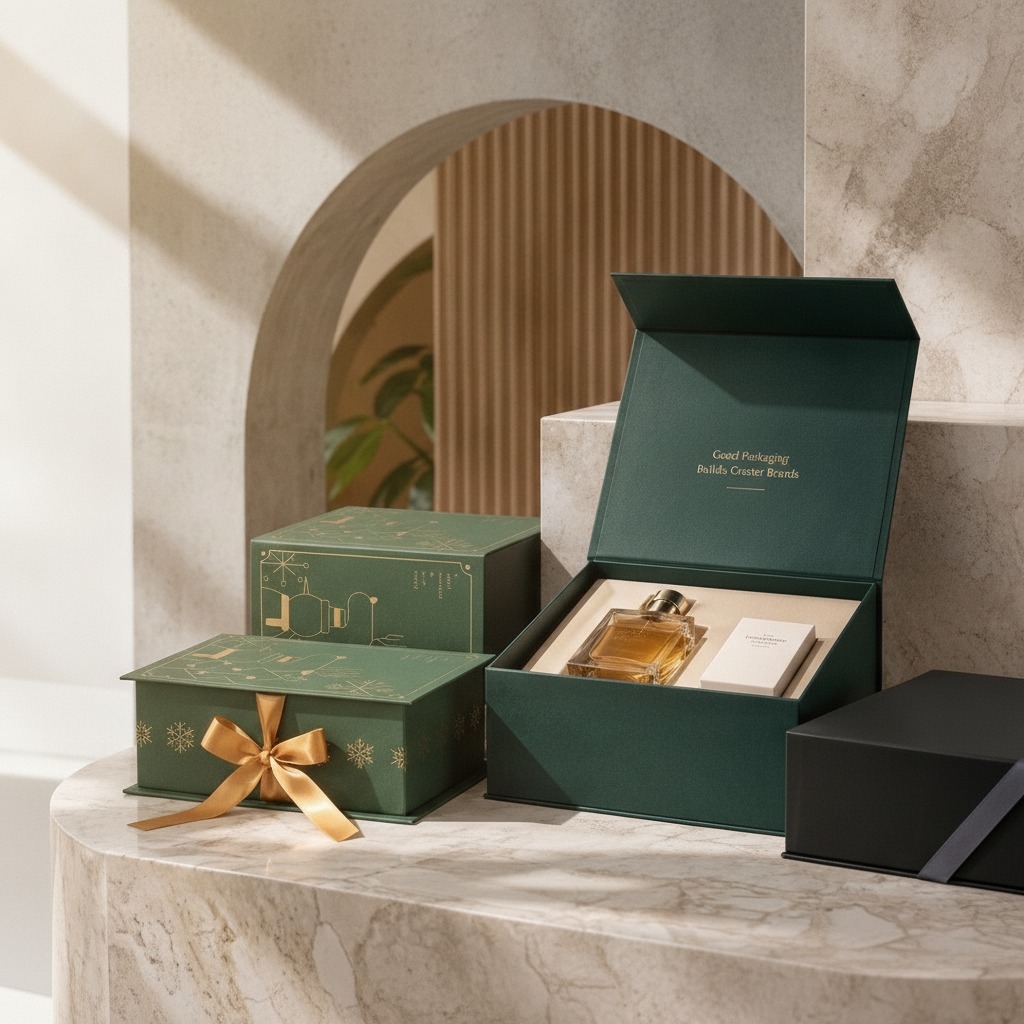
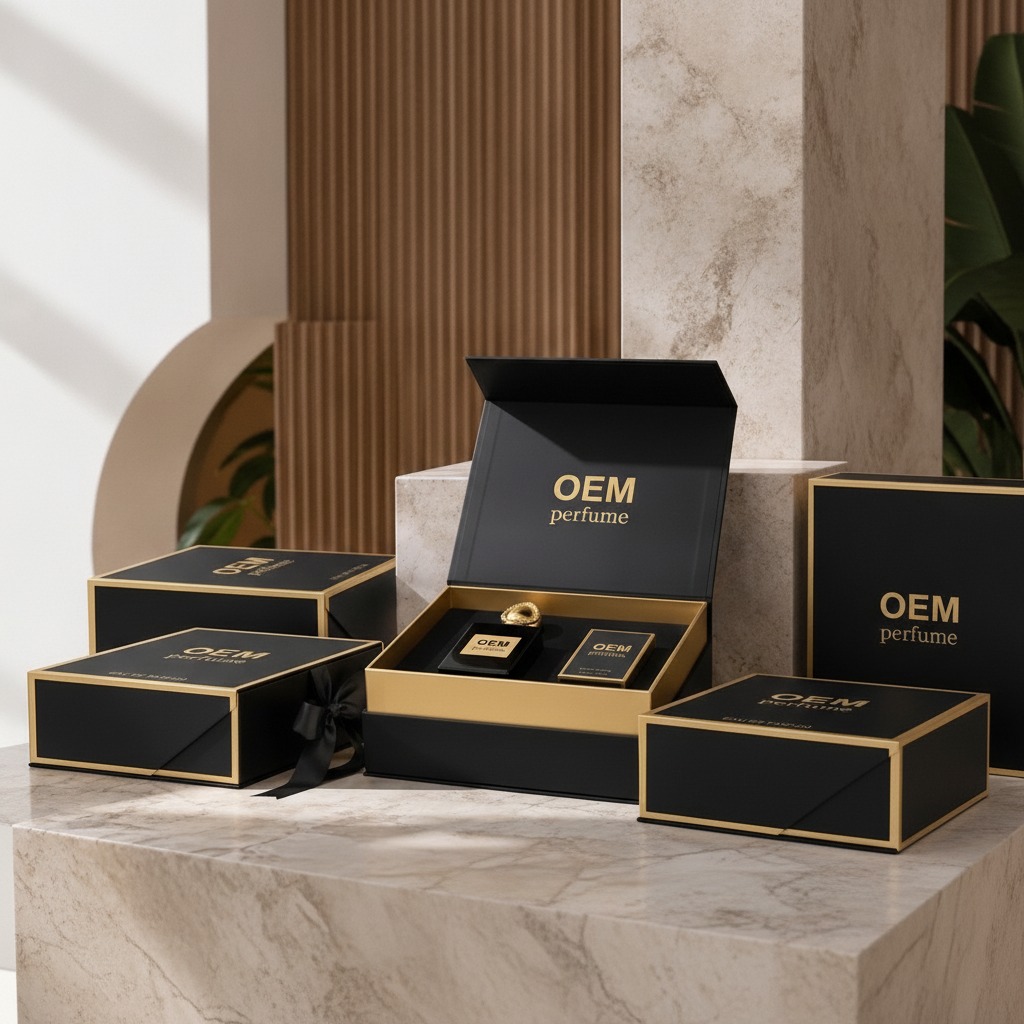
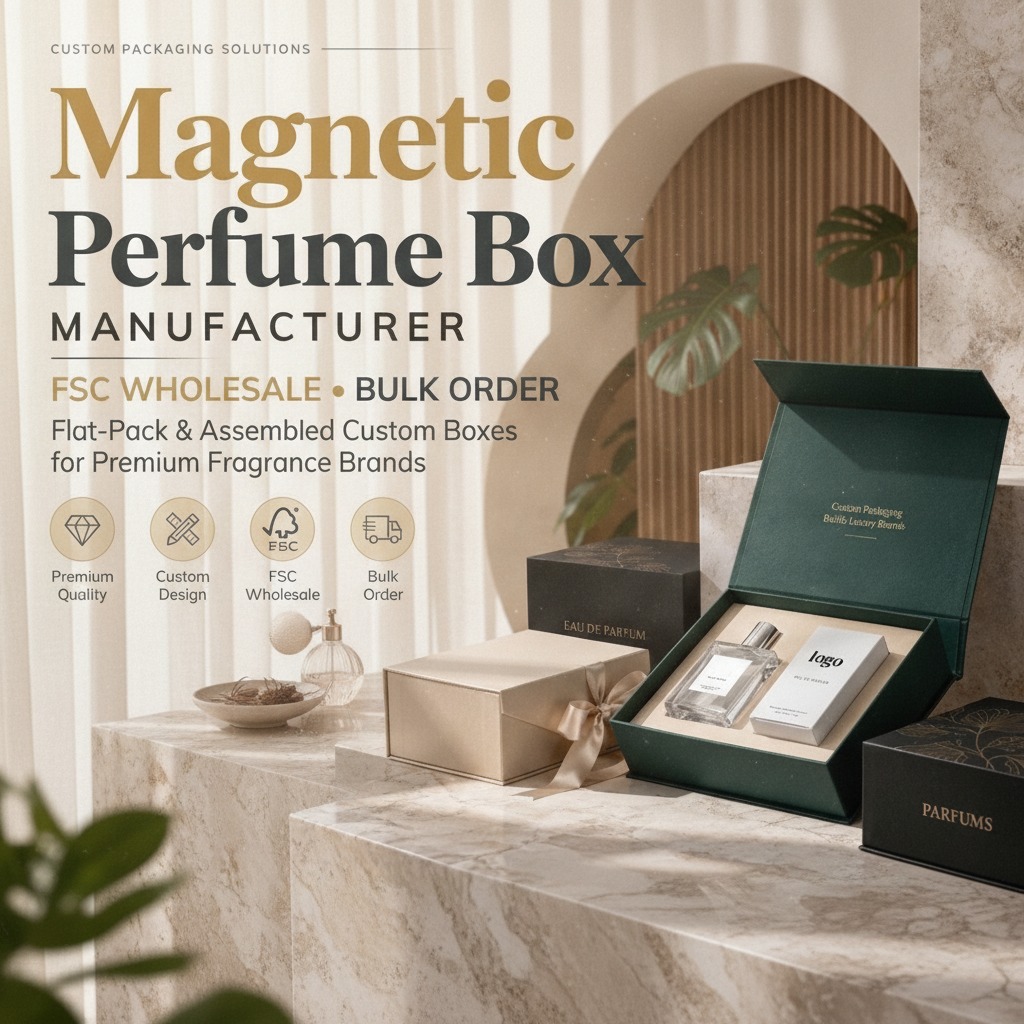
The visual impact of a luxury perfume box comes down to how light interacts with its exterior wrap. A deep forest-green matte wrap absorbs glare, drawing attention directly to fine metallic details, while midnight-black wraps serve as an opaque backdrop for reflective accents. Applying hot foil stamping—such as shimmering gold botanical illustrations or crisp typographic designations like EAU DE PARFUM—demands precise temperature control to avoid foil flaking or haloing along fine serifs.
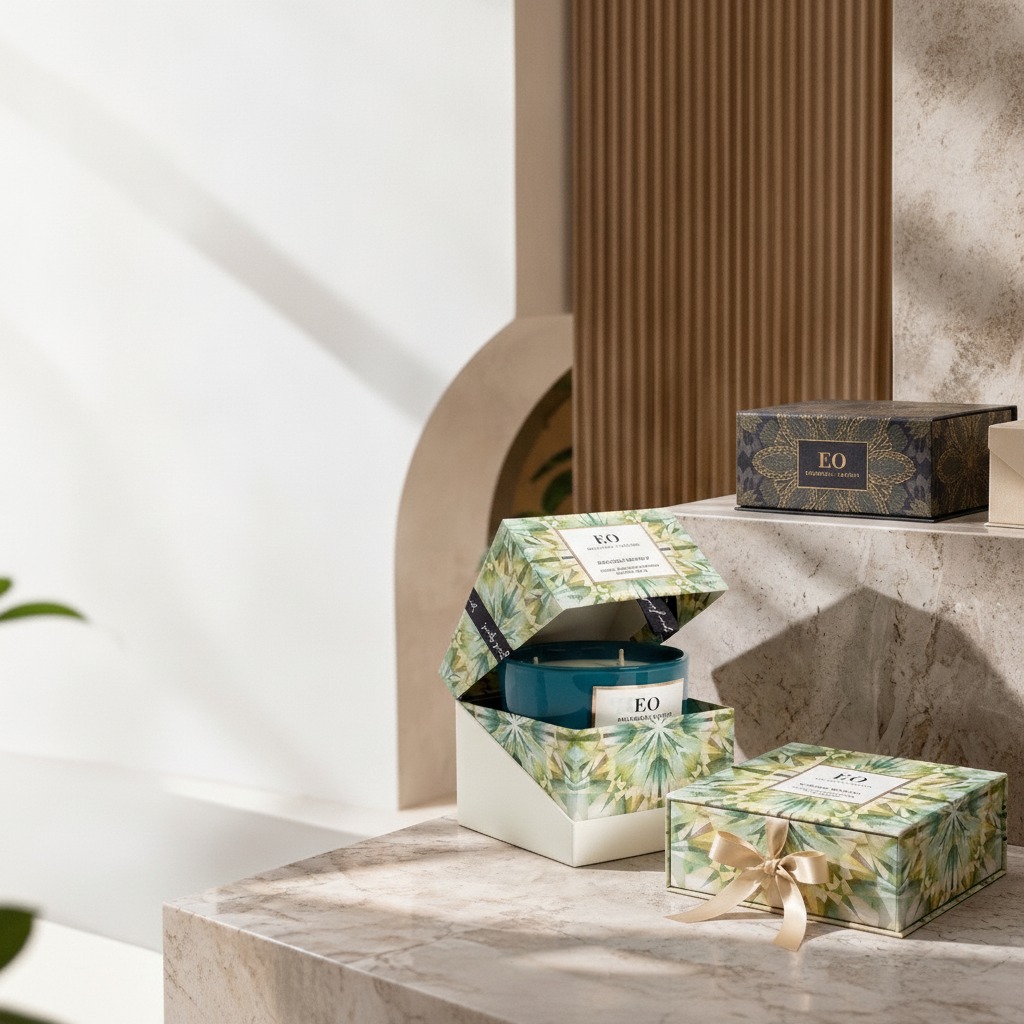
Closure mechanisms also alter the consumer interaction. A book-style hinged lid that incorporates concealed magnets offers a deliberate, muted click upon closure, conveying engineering precision. Alternatively, natural kraft or textured paperboard wraps fastened with an integrated satin ribbon shift the narrative toward artisanal or seasonal gift editions, transforming the container into a collectible perfume gift box.
Fitment Mechanics: Securing Glass and Inner Cartons
A fragrance bottle is an awkward cargo: top-heavy, slick-surfaced, and prone to shattering if subjected to sudden shear forces. Empty perfume boxes must therefore be engineered with tight interior cavities that mechanically grip the bottle neck and base.
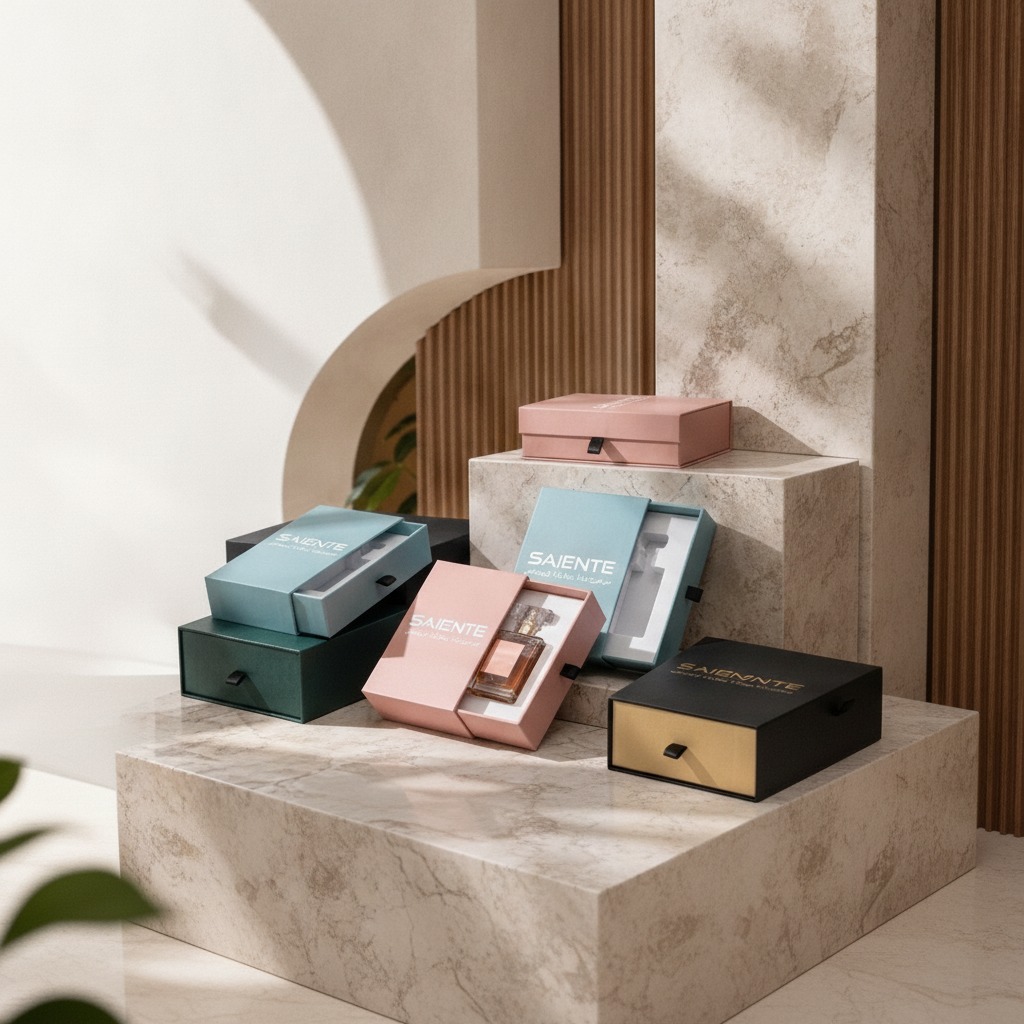
Manufacturers typically use multi-cavity inserts to stabilize the product. In comprehensive presentation sets, the insert often houses both the primary glass vessel and a secondary white inner folding carton designed for travel or retail display. The insert itself—often constructed from die-cut EVA foam, flocked substrates, or molded paperboard—must offer just enough compliance to allow effortless extraction by the customer while preventing any lateral movement during shipping.
Procurement Comparison: Flat-Pack vs. Pre-Assembled Rigid Boxes
When sourcing custom perfume boxes, one of the most critical operational decisions involves the shipping state of the packaging. Rigid boxes can be delivered either pre-assembled or in collapsible, ship-flat configurations.
| Packaging Format | Freight & Warehousing Impact | Fulfillment Line Labor | Structural Rigidity & Fit |
|---|---|---|---|
| Pre-Assembled Rigid Box | High cube volume; ships substantial empty air, driving up ocean and truck freight costs. | Zero assembly required; packing line drops the bottle and insert directly into the tray. | Maximum structural integrity; corners are permanently taped and wrapped at the factory. |
| Collapsible (Flat-Pack) Box | Drastically reduced shipping volume; optimizes warehouse pallet space. | Requires manual or semi-automated fold-and-lock assembly before bottling lines can pack. | Relies on corner adhesive strips or magnetic lock tabs; requires strict QC on fold tolerances. |
For brands distributing through direct-to-consumer (DTC) channels with localized assembly partners, flat-pack formats can slash landed costs. However, high-volume automated bottling plants often prefer pre-assembled containers to preserve packing line throughput.
Specifying Finishes and Sustainability Claims
A well-designed perfume box packaging program frequently extends the brand story inside the package. Applying custom interior lid printing—such as subtle monochrome brand mottos or decorative border patterns—surprises the customer precisely when the magnetic seal breaks.
At the sourcing stage, sustainability certifications require strict diligence. If a manufacturer offers FSC-certified material sourcing for paper wraps or board cores, procurement teams should request the exact certification tier (FSC 100%, FSC Mix, or FSC Recycled) along with a valid chain-of-custody license code. A generalized eco-friendly claim without documentation introduces compliance risks for brands retailing in regulated markets.
Common Pitfalls in Fragrance Box Sourcing
- Neglecting insert clearance: Bottle glass thicknesses fluctuate across furnace runs. If an insert cavity is cut to nominal dimensions without accommodating glass tolerances, bottles will either rattle or become wedged tight.
- Ignoring wrap grain direction: Running paper grain perpendicular to the hinge fold on a book-style box causes unsightly cracking along the spine over repeated opening cycles.
- Underestimating foil tooling costs: Intricate botanical artwork covering multiple box faces requires expansive brass or copper stamping dies, which significantly influence sampling and setup budgets.
Frequently Asked Questions
Can I source inner folding cartons alongside the outer rigid box from the same vendor?
Yes. Many packaging manufacturers provide coordinated suites, die-cutting the primary glass-holding carton alongside the heavier outer presentation box to ensure consistent paper grain, ink density, and foil registration across both layers.
What information is required to get an accurate quote for custom rigid packaging?
Suppliers need exact inner dimensions (length, width, depth), your choice between flat-pack or pre-assembled delivery, wrap paper stock (weight and finish), foil stamping surface area, and precise physical samples or CAD files of your bottle to model the interior insert.
Next Steps for Fragrance Brands
Developing dependable custom perfume boxes begins long before final artwork is approved. Sourcing teams should start by commissioning white unprinted structural dummies with functional inserts. Testing these prototypes with production-run glass bottles ensures that magnetic closures hold fast, inserts retain their grip, and the finished presentation meets retail expectations.