There is a distinct acoustic signature when a customer opens a well-crafted perfume box: the faint, friction-free lift of a wrapped flap, followed by the quiet snap of hidden magnets seating back into place. For fine fragrance brands, this interaction is not merely an unboxing ceremony. It is the primary tactile bridge between an intangible scent and the tangible object sitting on a dressing table. When sourcing managers evaluate secondary packaging, the mandate goes beyond aesthetics. The box must shelter a dense, fragile glass flacon, prevent internal movement during freight, and communicate brand equity before the first mist is sprayed.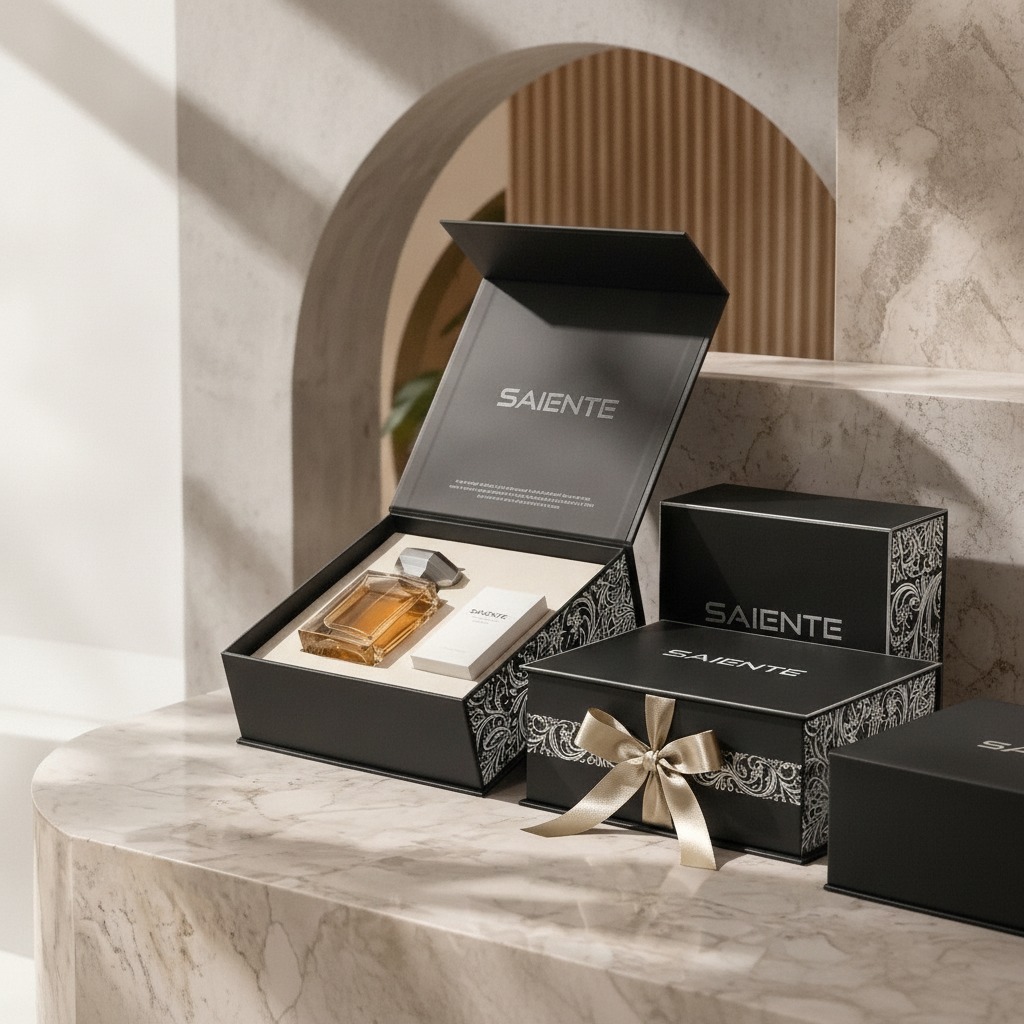
Developing a custom perfume box requires balancing structural rigidity with refined surface finishing. Fragrance bottles carry unusual center-of-gravity challenges—they are bottom-heavy, slick, and easily scuffed if packaging tolerances wander by even a millimeter. Understanding how board grades, closure systems, and internal fitments interact saves brands from costly fulfillment delays and damaged retail stock.
The Anatomy of the Magnetic Presentation Box
High-end fragrance presentation often relies on rigid paperboard construction. Unlike standard folding cartons made from thin SBS (solid bleached sulfate), a rigid luxury perfume box uses a thick, dense structural board wrapped in printed, coated, or specialty paper. This method creates crisp 90-degree edges, substantial hand-feel, and enduring shelf presence.
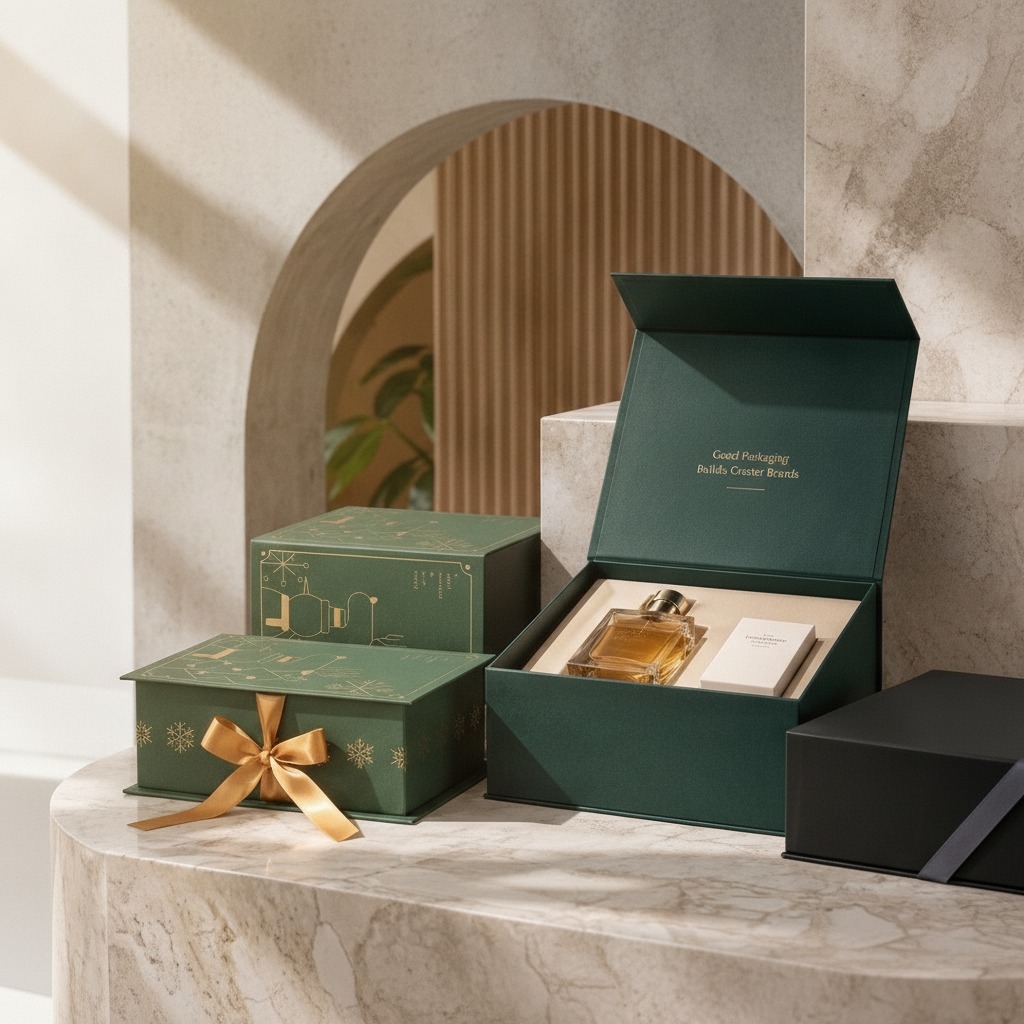
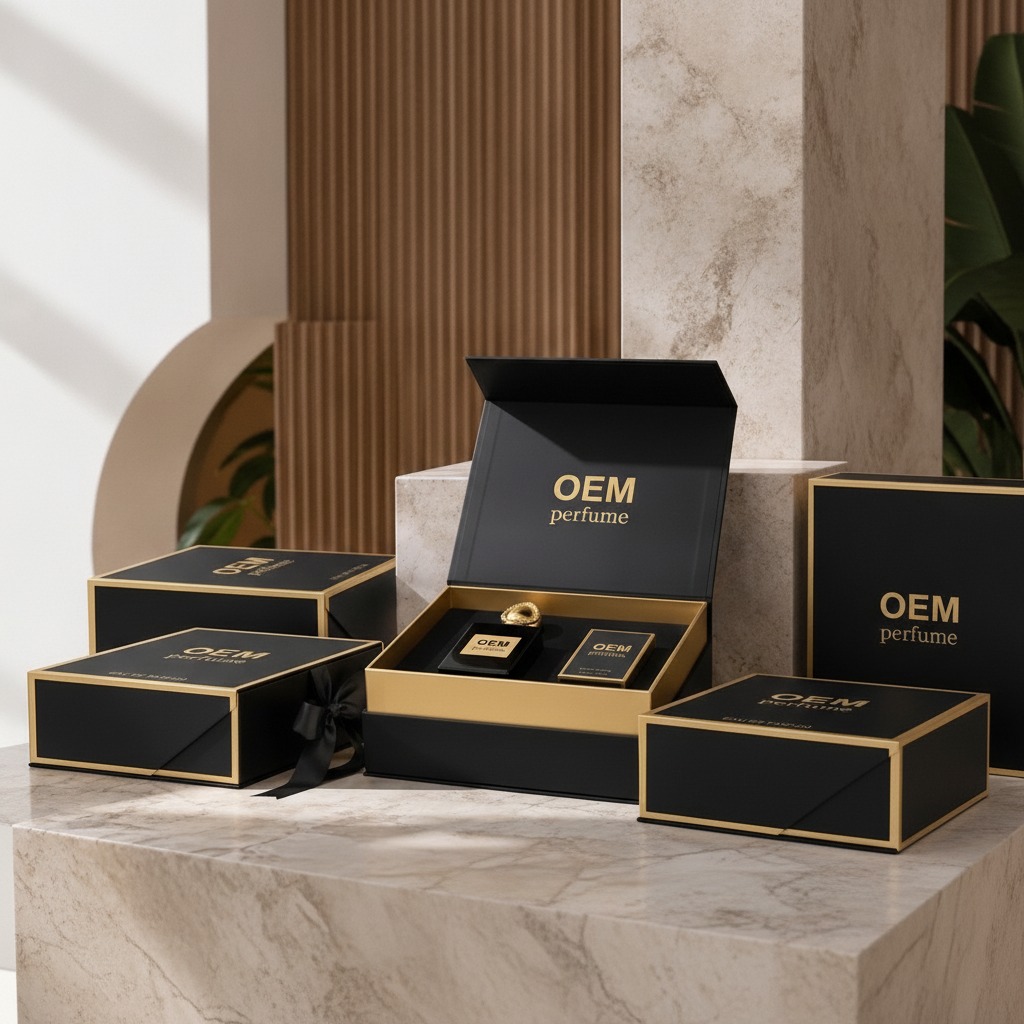
In a hinged rectangular format, the lid is permanently anchored to the base spine, swinging open smoothly to reveal the product staging area. Designers often incorporate concealed magnets embedded directly into the board wall before the final wrap is applied. When executed properly, these closures remain completely invisible to the consumer, offering seamless closure resistance without clunky external clasps.
Inside, the geometry typically features tailored compartments. A primary cavity seats the perfume flacon firmly along its base and shoulders, while a secondary rectangular bay can house a travel atomizer, solid perfume, or branded marketing insert. This dual-product architecture makes the format a natural fit for a seasonal perfume gift box or limited-edition product reveal.
Visual Contrast and Surface Craftsmanship
Visually, deep matte surfaces provide an ideal canvas for contrasting fine-line graphics. A uniform, light-absorbing matte black exterior paired with delicate white or metallic silver filigree gives perfume packaging an immediate sense of quiet drama. The matte coating softens glare under retail spot lighting, allowing intricate borders and sharp typographic branding to stand out without visual vibration.
For gift applications, secondary accents such as a metallic woven ribbon or bow can be affixed to the outer closure. While ribbons lean traditional, they add dimensional texture to the smooth wrap. Sourcing teams, however, must consider the labor equation: hand-tied ribbons add assembly minutes on the pack-out line, whereas pre-tied elasticized loops or factory-adhered bows streamline fulfillment.
Internal Fitments: Securing Heavy Glass
The real unsung hero of perfume box packaging is the interior insert. Perfume flacons are heavy, and standard thin thermoforms often feel cheap or crack under drop impact. A rigid presentation box demands a fitment that grips the perimeter of the bottle precisely.
Depending on production volume and target retail price, inserts generally fall into wrapped paperboard platforms, high-density cut EVA foams, or flocked trays. The opening must match the flacon’s contour down to the shoulder slope. If the recess is cut too loose, the bottle rattles during transit, potentially shearing the pump mechanism or scuffing delicate foil labeling. If the recess is cut too tight, the consumer has to pry the bottle out with their fingernails—a frustrating first impression that destroys perceived luxury.
Supply Logistics: Flat-Pack Versus Pre-Assembled Formats
During procurement, packaging engineers face a fundamental operational fork in the road: shipping rigid boxes fully assembled or sourcing collapsible, flat-folding rigid structures.
Pre-Assembled Rigid Boxes
Pre-erected boxes offer superior structural continuity. The corners are taped and wrapped continuously at the converting plant, eliminating any risk of corner buckling during final fulfillment. The downside is freight efficiency. Shipping pre-erected boxes means paying to transport empty air, which balloons ocean freight container counts and eats up valuable warehouse footprint.
Collapsible (Flat-Pack) Magnetic Boxes
Flat-pack magnetic boxes are engineered with diagonal score lines and peel-and-stick adhesive tabs or internal folding flaps. They ship flat, dramatically lowering inbound freight costs and warehouse storage requirements. However, this shifts assembly labor to your fulfillment center. Brand teams must ensure warehouse staff erect the boxes cleanly so the corners seat squarely without leaving adhesive gaps or misalignment that compromises the magnetic seal.
Procurement Pitfalls to Avoid
When reviewing prototype samples for a custom perfume box, look closely at these recurring production issues:
Magnet Placement and Pull Force: If the board wrap is too heavy or the adhesive layer too thick, the magnetic pull will feel weak, causing the lid to pop open unexpectedly during handling. Request pull-force checks on finished, fully wrapped units rather than bare board mockups.
Corner Crazing: Dark, matte-printed papers—especially saturated blacks—can crack or show pale fiber lines along tight 90-degree fold edges if the paper stock lacks sufficient fiber length or moisture flexibility.
Hinges and Delamination: Hinged lids endure repetitive flex cycles. Ensure the hinge material and wrapping adhesive resist delamination after repeated opening and closing.
Environmental Claims: If your brand specifies FSC-certified materials, request the appropriate chain-of-custody documentation from your converter rather than relying on unverified catalog claims.
Frequently Asked Questions
What information is required to start tooling for a custom perfume box?
Your packaging converter will need 3D CAD files (.STEP or .IGES) of the perfume bottle, including cap and pump dimensions, or physical bottle samples. You will also need to specify whether accessories (like a 10ml travel spray) will share the insert, along with your preferred closure style and target board thickness.
Can magnetic closures interfere with perfume ingredients?
No. The magnets used in secondary rigid packaging are small neodymium or ferrite discs buried within the dense paperboard walls. They have no chemical contact or reactive capability with fragrance oils sealed inside glass or aluminum containers.
How do I choose between matte paper wrap and soft-touch lamination?
Standard matte paper delivers a clean, classic presentation and is less prone to showing fingertip oils. Soft-touch coatings provide an ultra-velvety feel but can occasionally attract fingerprint smudges on deep black backgrounds unless an anti-scuff formulation is specified.
Planning Your Next Fragrance Packaging Run
Balancing luxury presentation with transit survivability requires clear structural specifications before artwork is even placed. Start by testing your bottle dimensions against physical sample mockups, evaluating insert friction fit, and determining whether flat-pack or pre-assembled logistics match your co-packer’s operational capabilities. Reach out to an experienced packaging specialist to request material swatches and unprinted structural prototypes tailored to your flacon's geometry.