The Architecture of the Unboxing Experience
Before a consumer catches the top notes of bergamot, oud, or pink pepper, their impression of a fragrance is dictated entirely by weight, surface texture, and resistance. In premium retail and direct-to-consumer distribution, a perfume box is not merely a transport carton; it is the physical threshold of the scent itself. Fragrance flacons are inherently fragile, sculpted glass objects, often uneven in their mass distribution and prone to shattering if jostled. Sourcing managers and packaging designers are tasked with balancing this extreme protection with high-end tactile theater.
When engineering high-tier perfume packaging, the structural interplay between the exterior board and the interior cavity dictates the perceived value of the product inside. A flimsy folding carton may suit secondary pharmacy shelves, but modern prestige brands gravitate toward rigid presentations that command attention on a dressing table or boutique display counter.

Sensory Anatomy: Hinged Lids and Magnetic Closures
Consider the tactile mechanics of a rigid-style presentation case. The visual impact often begins with a deep, light-absorbing matte black exterior wrap, offset by fine ornamental linework in crisp white or silver and punctuated by warm metallic-gold foil branding. When tied with an optional centered ribbon bow, the exterior leans directly into the visual language of a high-end perfume gift box.
Lift the ribbon or release the front edge, and the functional engineering reveals itself. Rather than relying on a traditional friction-fit slip lid or tuck-end flap, a hinged lid with a concealed magnetic closure delivers a deliberate, damped swing. The satisfying, muffled snap of embedded neodymium or ferrite disc magnets speaks directly to product quality. If the magnet is too weak, the lid yawns open during transit; if it is too aggressive, opening the box requires an awkward two-handed yank that risks jostling the glass flacon within. Calibrating this pull resistance is one of the subtle adjustments that separates standard commercial packaging from a true luxury perfume box.
Interior Engineering: Securing the Flacon
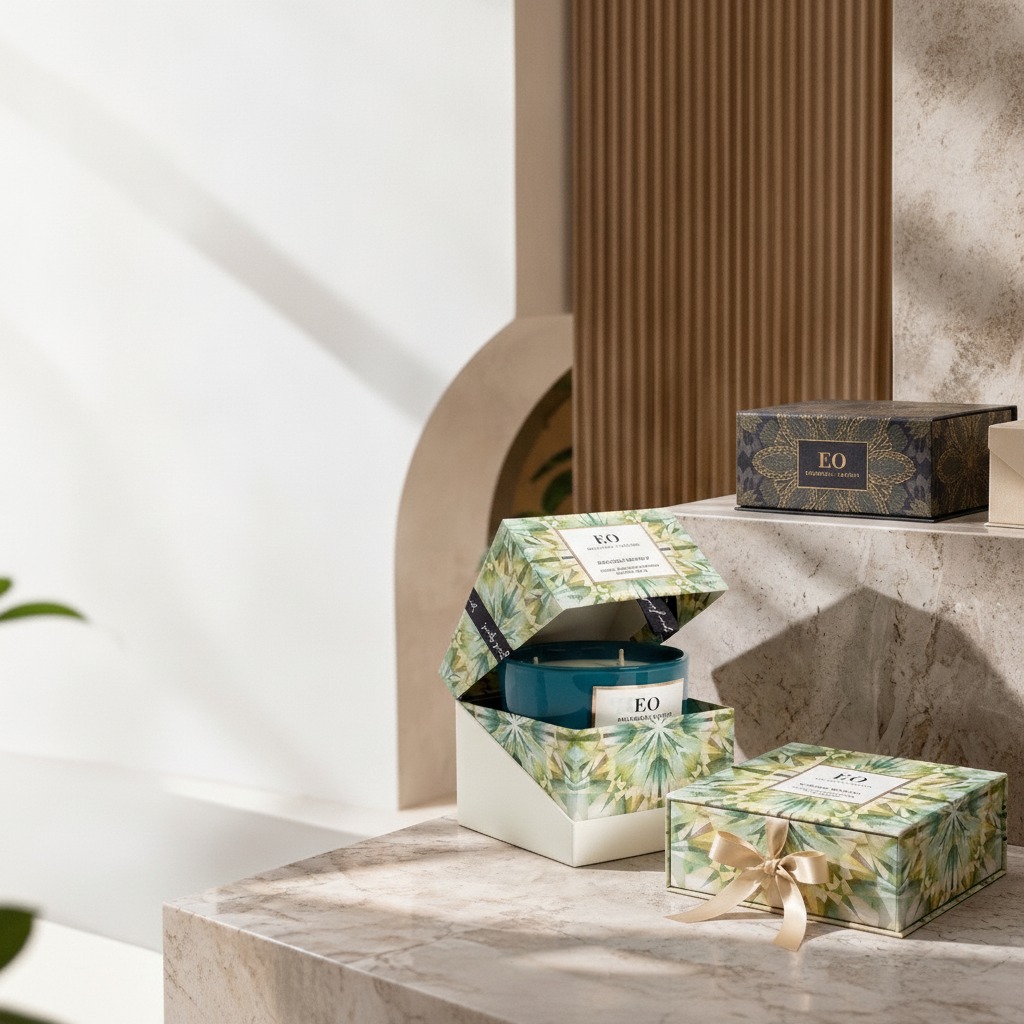
Open the box completely, and the interior architecture takes center stage. A well-designed perfume bottle box must account for the specific geometry of the container—from the heavy glass base to the delicate spray actuator and decorative cap. A custom-fit cavity prevents the bottle from shifting, scuffing its label, or popping loose against the top lid.
In dual-compartment designs, the tray is frequently divided to hold not just the primary bottle, but an accompanying discovery vial, a solid fragrance puck, or a bespoke cap. These internal platforms are typically die-cut from dense paperboard structures or velvet-flocked, high-density foam inserts. While foam provides excellent cushioning and precise edge retention for intricate bottle silhouettes, rigid paperboard inserts offer an all-fiber alternative that simplifies sorting streams at the end of the package's lifecycle. Whichever substrate is chosen, the tolerances must be razor-thin: an extra millimeter of clearance causes rattling, while an undersized recess forces the consumer to pry the bottle out with excessive effort.
Flat-Pack vs. Pre-Assembled Formats: A Critical Logistics Trade-Off
One of the most consequential decisions in specifying a custom perfume box program is choosing between collapsible (flat-pack) rigid constructions and fully pre-assembled rigid boxes. Both formats serve distinct operational realities across the supply chain:
- Pre-Assembled Rigid Boxes: Delivered ready to pack on the filling line. They offer absolute structural integrity, flawless corner joints, and zero manual folding labor on the packaging floor. However, shipping and warehousing pre-assembled boxes means paying to transport and store ambient air, significantly driving up inbound freight costs.
- Collapsible Flat-Pack Rigid Boxes: Engineered with concealed peel-and-stick adhesive tabs or folding corner flaps that lock into place with internal magnets. These arrive flat, cutting freight volumes and warehouse footprint dramatically. The trade-off lies in assembly labor at the fulfillment center and minor visible fold lines along the interior paper joints.
For high-volume retail launches with automated or semi-automated packaging lines, pre-assembled setups usually make operational sense. Conversely, for limited editions, influencer drops, or boutique brands shipping out of third-party logistics centers with strict pallet space limits, collapsible formats frequently offer better overall economics.
Material Realities and Supplier Verification
Executing an immaculate matte finish on dark packaging requires careful handling on the converting floor. Deep blacks show scuffs, white fiber tear at fold lines, and oil marks from handling far more readily than light-colored kraft or coated stocks. Specifiers should insist on scratch-resistant matte laminations or durable aqueous soft-touch coatings, particularly on outer wraps that undergo heavy contact during distribution.
Furthermore, while icons promoting responsible forestry or chain-of-custody tracking are common on sample boards, sourcing teams must remain vigilant. Supplier claims regarding certifications—such as FSC compliance or recycled fiber percentages—should be independently verified via certificate validation numbers before printing claims onto bulk production runs. Sourcing teams should also request unprinted white structural dummies to test fitment with real filled perfume flacons, confirming that wall thickness and hinge strength hold up under real-world drop and vibration conditions.
Frequently Asked Questions
What makes a magnetic closure perfume box preferable to a two-piece lift-off box?
A hinged magnetic box keeps the lid permanently anchored to the base, providing a unified stage for the fragrance bottle and preventing dropped or misplaced lids. The integrated magnet also creates an intuitive, one-handed closing mechanism that feels premium during routine daily use.
Can high-density paperboard inserts protect glass bottles as effectively as foam?
Yes, provided the structural die-line incorporates multi-layered steps or folded shock-absorption walls beneath the bottle shelf. While foam inherently absorbs rapid impacts through cell deformation, engineered paperboard trays can match that protective capacity for standard shipping drops while maintaining an all-paper aesthetic.
How can we prevent matte black packaging from showing scuffs and fingerprints?
Specify an anti-scratch matte film or a specialized soft-touch dispersion coating during the paper-wrapping stage. Standard matte machine varnishes often break down under surface friction during transit, leaving shiny rubbing streaks on dark substrates.
Next Steps for Your Packaging Program
Elevating a fragrance launch begins long before the final print run is scheduled. Evaluate your flacon dimensions, map your assembly and warehousing constraints, and request physical white mockups to test insert tolerances directly. Review sample finishes under both retail and ambient light to ensure your outer wraps, foils, and closures mirror the sophistication of the scent inside.