Tactile First Impressions: Why Fragrance Secondary Packaging Demands Precision
In high-end perfumery, an unboxing is not a casual routine; it is an orchestrated physical ritual. Before a consumer ever depresses an atomizer to release top notes of bergamot or vetiver, their perception of value is anchored by the weight, finish, and closure of the secondary container. Procuring a dependable perfume box requires packaging teams and sourcing managers to balance visual storytelling with rigorous physical constraints: protecting heavy, fragile glass flacons while delivering a flawless shelf presentation.
Fragrance houses face an unforgiving retail environment. A box that sags under the weight of thick-bottomed glass, scuffs during ocean transport, or snaps open awkwardly ruins a brand experience. Sourcing the right perfume packaging requires moving beyond purely decorative mockups into deliberate structural engineering, considering everything from board rigidity and magnetic calibration to warehouse palletization.

Deconstructing the Magnetic Rigid Presentation Box
Among the most enduring form factors in fragrance distribution is the hinged, book-style rigid container with an invisible magnetic closure. It provides the structured heft of a wooden case at a fraction of the weight, wrapped in carefully curated paper stock.
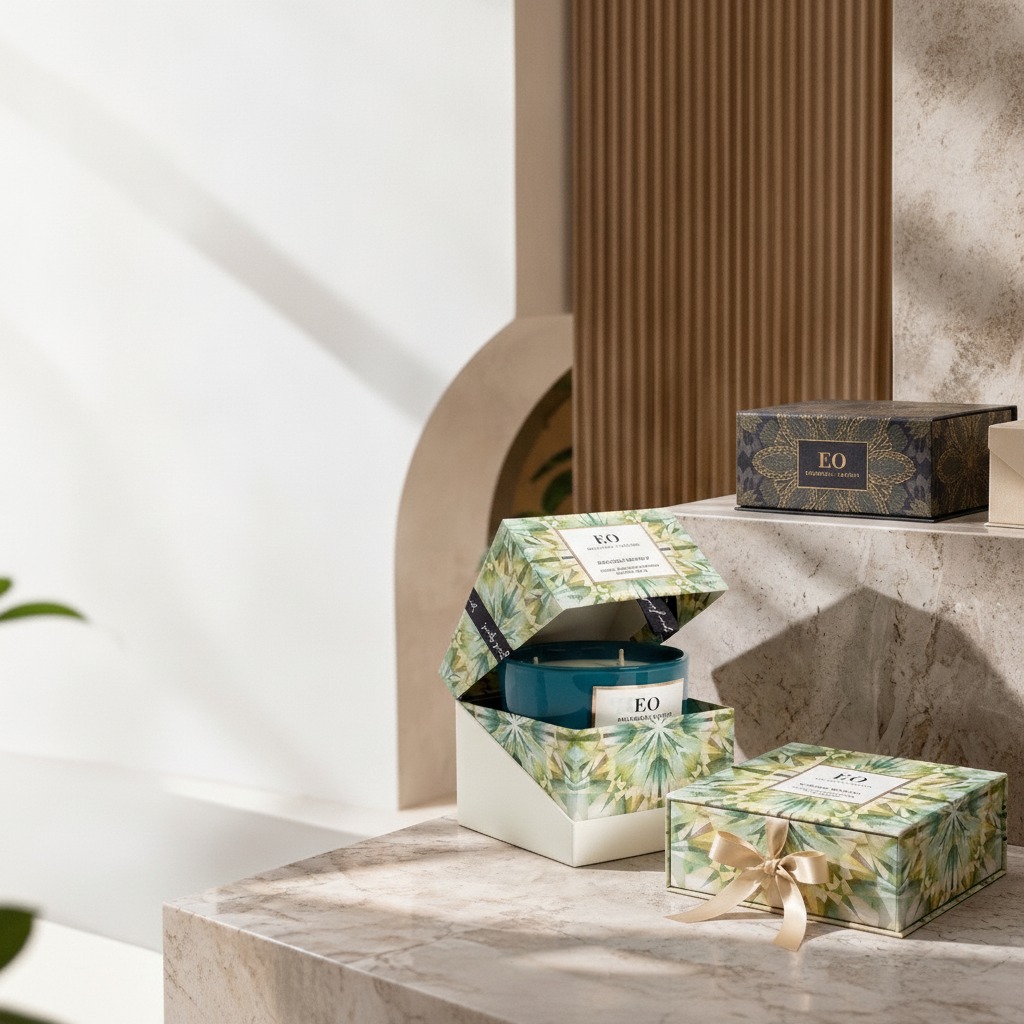
Consider the visual anatomy of a specialized perfume gift box. The exterior might showcase a rich, deep forest-green wrap, its surface treated with a low-sheen matte finish that absorbs studio lighting rather than reflecting glare. Traced across the exterior, precision metallic gold linework frames the brand crest, offering a crisp, slightly raised tactile contrast against the smooth wrapping paper. An optional gold-toned satin ribbon provides an extra touchpoint for holiday collections or influencer seeding kits, requiring hands-on engagement before revealing the contents.
When the front flap lifts, the mechanical subtlety of a concealed magnetic catch becomes apparent. Without visible hardware or exposed metal, two embedded magnets release with a faint, satisfying resistance. Inside, a two-compartment custom insert—often finished in an understated cream or warm bone shade—holds the components securely. One custom recess stabilizes the rectangular glass bottle, arresting lateral movement, while an adjacent secondary bay houses an accordion-folded scent booklet, brand card, or miniature discovery vial. This dual-cavity layout transforms a single bottle sale into a curated promotional set.
Flat-Pack Versus Pre-Assembled: Sourcing and Logistics Trade-offs
A primary architectural fork that operations managers encounter when commissioning a luxury perfume box is whether to buy fully assembled rigid setup boxes or foldable flat-pack structures with adhesive corner tabs.
- Fully Assembled Rigid Setup Boxes: Arrive with corners taped or wrapped under mechanical tension, ready for manual line packing. They offer peerless structural rigidity and zero seam variation on retail display, but you are effectively paying ocean freight to transport trapped air.
- Collapsible Flat-Pack Rigid Boxes: Die-cut with precision scoring lines and pre-applied peel-and-stick corner tape or folding magnetic walls. These dramatically slash inbound freight volume and conserve precious warehouse footprint. However, they introduce line assembly labor at the fulfillment center, and poorly engineered folding creases can show premature paper fatigue after repeated openings.
Evaluating which format works best for your custom perfume box program often comes down to your pack-out facility's automation level, order runs, and regional storage costs.
Material Realities: Where Specifications Make or Break Production
When drafting an RFQ for perfume box packaging, ambiguous specifications almost always lead to compromised samples. A technical procurement brief should demand exactness around three core elements:
1. Greyboard Density and Paper Wrap Selection
The interior skeleton must support glass bottles that often weigh between 150g and 400g empty. Specifying high-density, flat-caliper recycled board prevents bowing under structural pressure. When dark backgrounds like midnight green or obsidian are specified, ensure the paper wrap uses through-dyed pulp or high-pigment offset printing coated with an anti-scuff matte sealant. Dark ink films on uncoated paper are notorious for chalking and burnishing along folding edges during shipping transit.
2. Cavity Tolerances and Insert Material
The insert must perform double duty: cradle the flacon firmly enough to survive vibration tests while allowing easy removal by the end user without excessive clawing. High-density EVA foam wrapped in soft-touch velvet or coated paperboard offers consistent shock absorption. If thermoformed plastic or wrapped paperboard is specified, die-cut tolerances must accommodate slight glass wall variations, which are inherent to automated glass blow-and-blow molding processes.
3. Magnetic Pull Force and Polarity Alignment
Concealed magnets embedded within the board lid require strict assembly controls. If the adhesive dries brittle, or the magnet is set too deep beneath thick facing paper, the closure will feel limp and unsecured. Sourcing teams should request pull-force verification and confirm that magnet pairs are cleanly aligned to prevent asymmetrical closure on the retail counter.
Watch Outs: Certification and Environmental Claims
Suppliers frequently promote badges such as "FSC Certified" on marketing collateral. While sustainable paper sourcing is an imperative across modern beauty retail, sourcing managers must independently verify chain-of-custody credentials. A factory producing an FSC-certified box must be able to trace the raw pulp through certified suppliers, providing verifiable certificate numbers rather than generic logo stamps. Ensure that any environmental claims made on your exterior packaging align with verified documentation, especially when exporting to regions with strict packaging waste and labeling legislation.
Frequently Asked Questions
Can we run different finishes on the same base packaging run?
Yes. It is common practice to standardize greyboard dimensions and insert footprints across a product family while switching outer wrap paper, hot foil stamping plates, or spot coatings to differentiate seasonal fragrances.
How do we prevent dark matte finishes from marking in transit?
Specify a proven anti-scuff matte thermal film lamination over the printed wrap, and consider individual tissue wrapping or glassine sleeves for bulk carton packing during long-distance transit.
Next Steps for Fragrance Sourcing Teams
Before committing to production runs for your next seasonal launch, commission an unprinted white structural dummy (CAD sample) with your exact primary bottle in hand. Validate clearance tolerances, test hinge fatigue, and review shipping cube efficiencies before approving final plate setups and ink mixes.