Why the right perfume box does more work than people think
A perfume box is not just a shell around a bottle. In fragrance, it is often the first physical cue a buyer gets about brand level, scent family, and whether the product belongs in a counter display, a gift set, or a press mailing. For sourcing teams and product managers, that matters because perfume packaging has to do several jobs at once: protect glass, present the product cleanly, and carry enough visual weight to justify the price point.
That is especially true for discovery sets and premium samples. When a box opens to reveal multiple vials arranged in a rigid insert, the packaging is doing the selling before the fragrance even gets tested. The decision is rarely about decoration alone. It is about fit, protection, shelf presence, and how confidently the package travels through retail, fulfillment, or a PR campaign.
What this packaging format is designed to solve
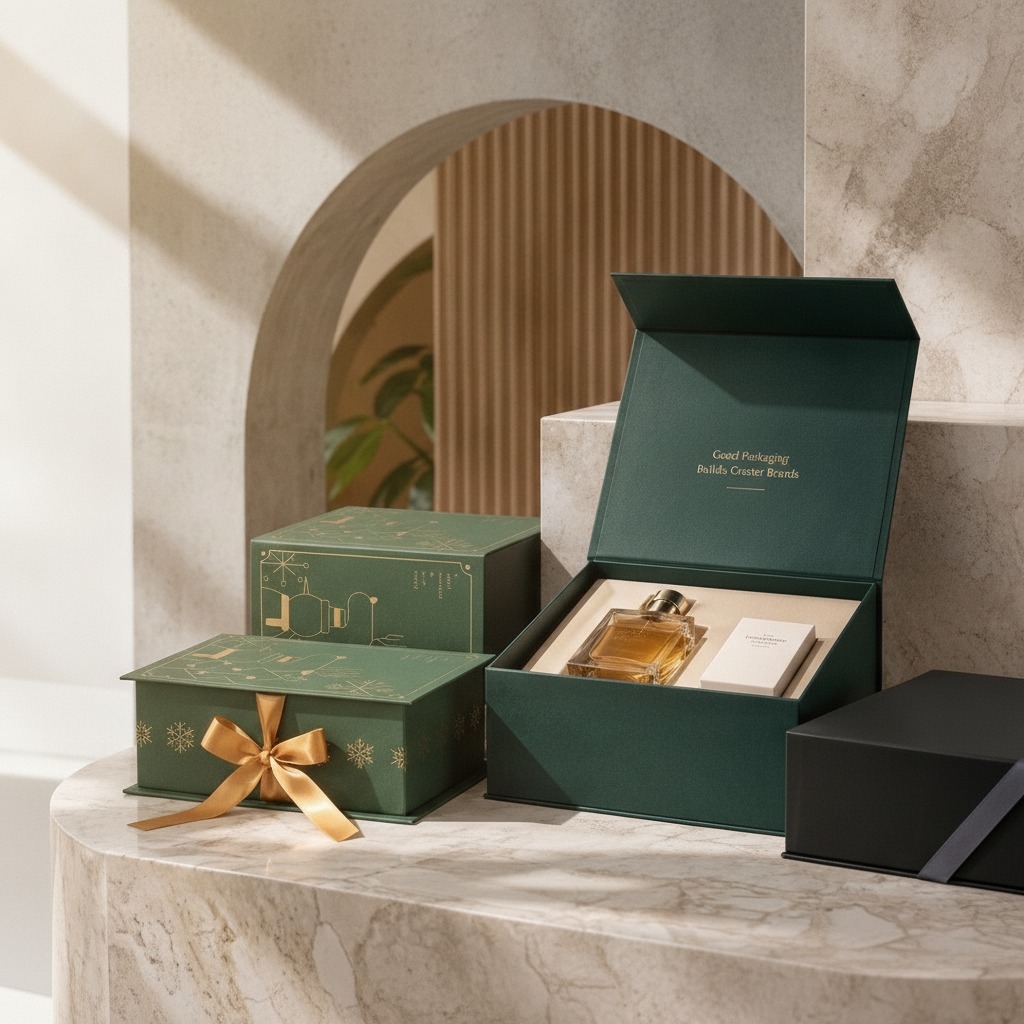
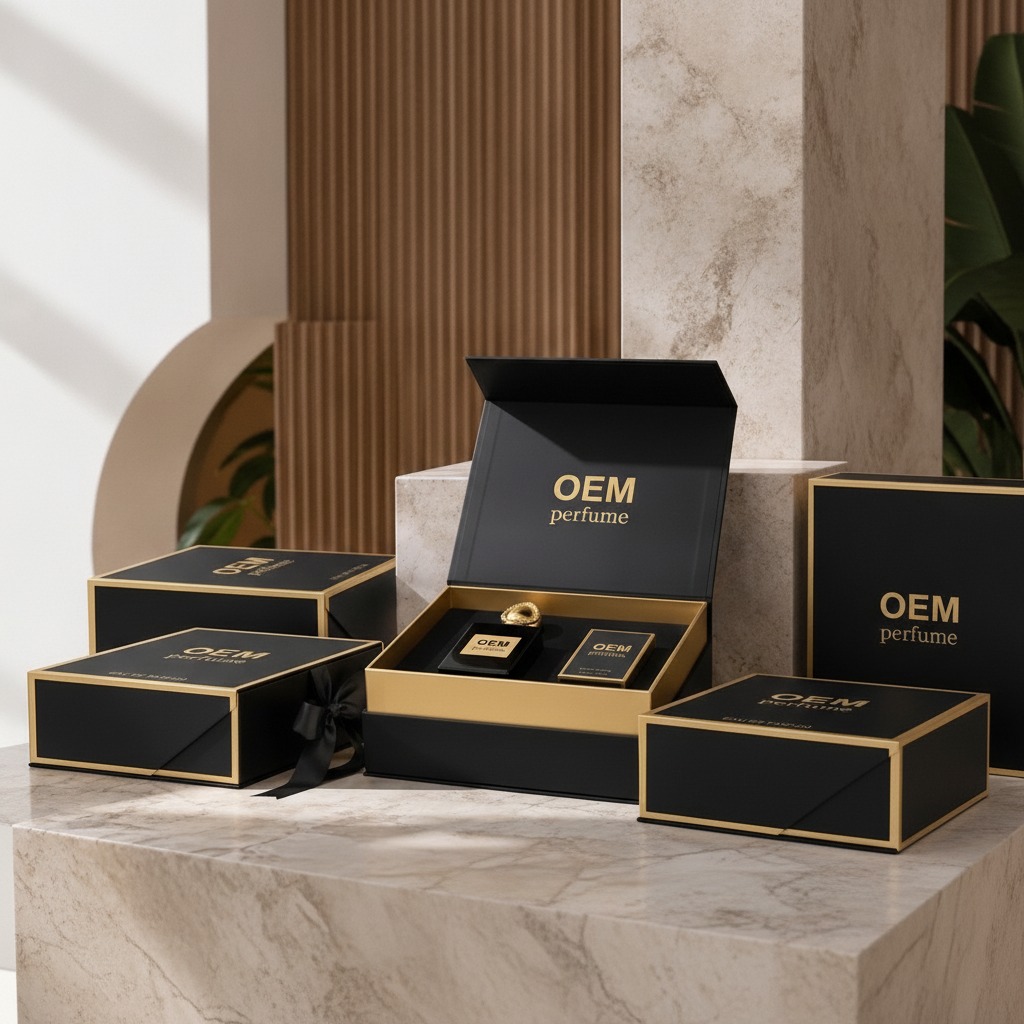
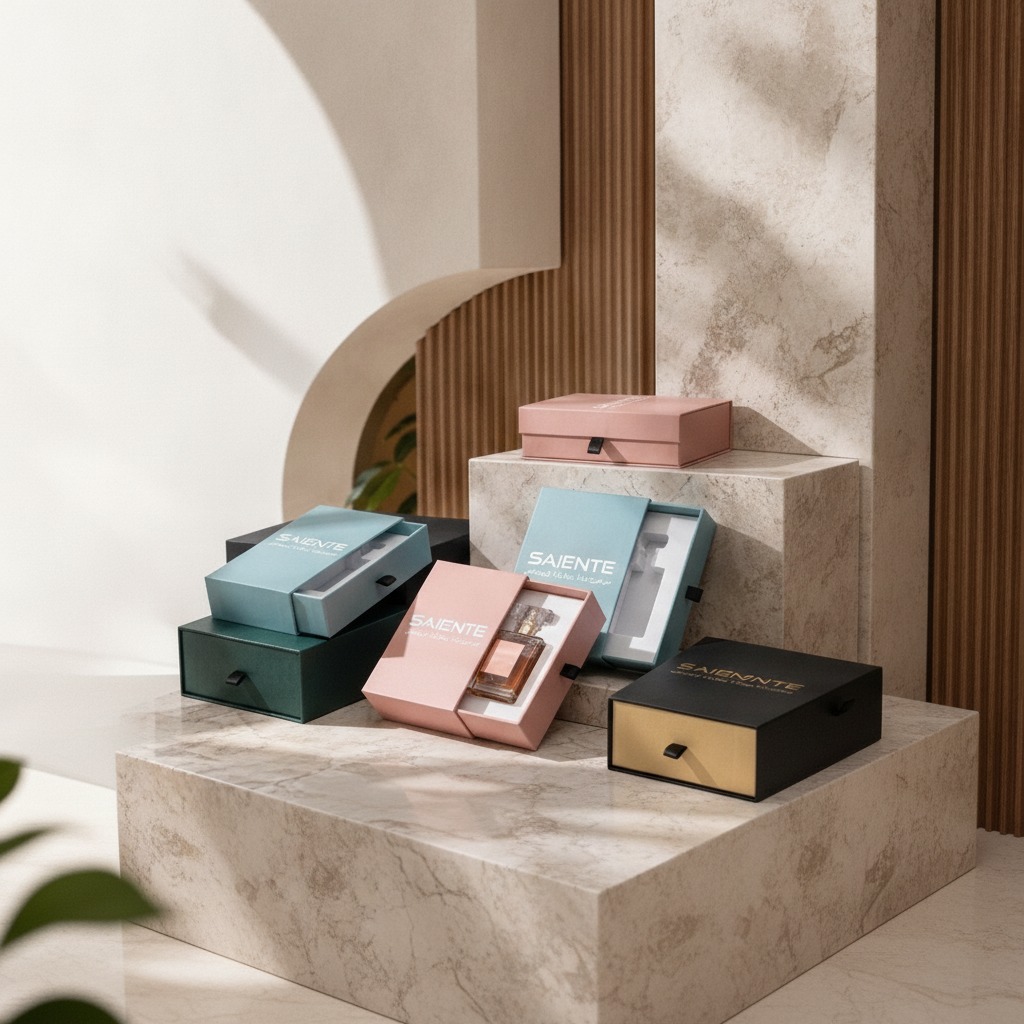
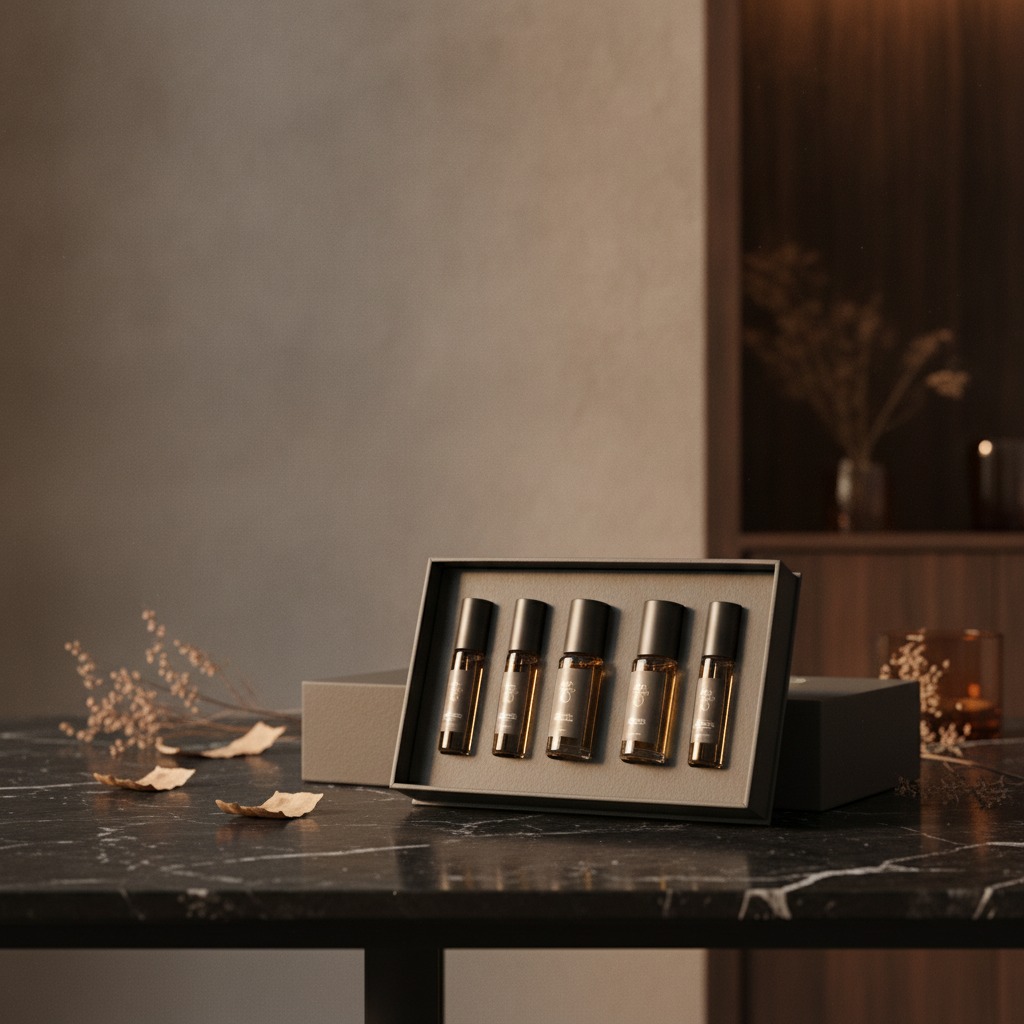
The box style shown in the reference material is a rigid presentation format, often used for perfume packaging when the brand wants a more substantial feel than folding carton can provide. The structure appears to use a setup or folding rigid shell with a hinged lid or magnetic-style opening, plus a compartmentalized insert that keeps bottles from shifting. Some versions also suggest a drawer-style base or pull tab, which can make the unboxing feel more deliberate.
That combination solves a practical problem. Glass fragrance bottles are delicate, atomizer caps can be knocked loose, and sample vials are small enough to rattle around unless they are held tightly. A well-designed insert reduces movement, which lowers damage risk and helps the set arrive looking composed rather than disturbed.
Common perfume box formats buyers evaluate
Rigid presentation boxes
These are the most visually substantial option. They suit luxury perfume box projects, launch kits, and retail gift sets where the exterior needs to feel firm in the hand. The matte textured wrap visible in the sample images is typical of this category and helps the box avoid the slick, mass-market look that some buyers want to leave behind.
Perfume gift box sets
A perfume gift box usually emphasizes presentation first and logistics second, though both matter. These sets often include a full-size bottle, several sample vials, or a mix of both. The visible compartmentalized tray is useful here because it lets the designer create a controlled reveal rather than a loose assortment of bottles.
Custom perfume boxes for launches and PR
For brand launches and media mailers, custom perfume boxes are often built around a story. That story may be expressed through color, interior layout, or decorative panel work such as laser-cut or die-cut lattice patterns. Those details are not merely ornamental. They create a sense of ritual, which is a useful advantage when the package is intended to feel premium before the first spray.
Materials and finish choices that change the buyer’s impression
From the product information, the exterior appears to use hardboard or paperboard wrapped in a matte textured finish. That is a sensible choice for fragrance because it gives the package structure without adding the visual noise of glossy lamination. Interior linings appear to vary between beige, black, dark green, and taupe, which suggests brands are using color to frame the bottle and support different scent collections.
In practical terms, the interior matters almost as much as the outer shell. A pale liner can make glass and liquid colors read more clearly. A darker insert can create contrast and a more dramatic presentation. Either way, the box should hold the bottle securely and avoid the cheap “floating” look that undermines a premium product.
What to look for in perfume packaging box design
Good perfume packaging box design balances show and function. Start with the bottle profile. A narrow vial, a tall atomizer, and a full-size perfume bottle all behave differently in transit, so the insert should be cut around the actual fill format, not guessed from a flat sketch. The reference images show multiple cavity sizes, which is useful if a brand plans a discovery set or mixed SKU pack.
Then look at opening behavior. A hinged lid gives a ceremonial feel. A magnetic close can make repeated opening easier. A drawer-style base can add a sense of discovery, though it also introduces another moving part that must be tested for fit and wear. None of these options is automatically better; the right choice depends on the campaign and the price tier.
Selection criteria that sourcing teams should keep close
When comparing suppliers, ask how the box will be converted, how the insert will be made, and whether the branding space on the lid and inside cover can handle the artwork you need. The visible decorative patterns in the sample boxes suggest there may be options for cutwork, embossing, or printed detailing, but exact process should be confirmed before any order is approved.
Also check whether the supplier can manage both the outer structure and the internal insert. Splitting those jobs across multiple vendors can create alignment issues. A box may look refined on the outside and still fail if the tray is loose or the bottle neck sits too high against the lid. That is the kind of mistake that shows up late, usually after samples are already approved.
Common mistakes in perfume packaging
The most common error is overdesigning the exterior and underdesigning the insert. Another is choosing a finish that fingerprints too easily or scratches during packing. For perfume packaging, the buyer should also be wary of decorative elements that look impressive in renderings but weaken the panel structure in production. A delicate lattice can be beautiful, but only if the surrounding board still protects the contents.
One practical aside: if the box is intended for ecommerce or mail distribution, do not assume the rigid shell alone is enough. The inner fit, bottle retention, and carton protection all need to work together. Fragrance packaging is often judged by the unboxing moment, but it is paid for by surviving shipment.
Quick buyer takeaways
If you need a perfume box for retail, sampling, or PR, the best choice is usually the one that matches the bottle geometry first and the brand story second. A luxury perfume box should feel sturdy in the hand, protect glass without excess movement, and leave enough clean surface area for branding. Custom perfume boxes are worth the extra planning when the set contains multiple vials or a mix of sample and full-size product, because the layout becomes part of the experience.
For teams evaluating fragrance packaging now, the smartest next step is to request a structural sample or a prototype with the exact bottle set you plan to ship. That is the fastest way to catch fit problems, lid interference, and visual imbalance before production becomes expensive.
FAQ: common questions before ordering
Is a rigid box always necessary for perfume?
No. But for premium sets, discovery kits, and presentation-driven launches, it often delivers the right balance of protection and perceived value.
Can one box hold several fragrance bottles?
Yes. The sample layout shows that multi-compartment inserts are practical for discovery sets and mixed-format kits.
What matters most in custom perfume boxes?
Fit, protection, and presentation in that order. If those three are handled well, the branding usually lands better too.
What to ask a packaging supplier next
Ask for insert options, finish samples, and a mockup based on your exact bottle sizes. If you are planning perfume gift box packaging for a launch, ask how the structure will hold up in storage and transit, not just how it looks in a photo. That is usually where the real differences between suppliers show up.