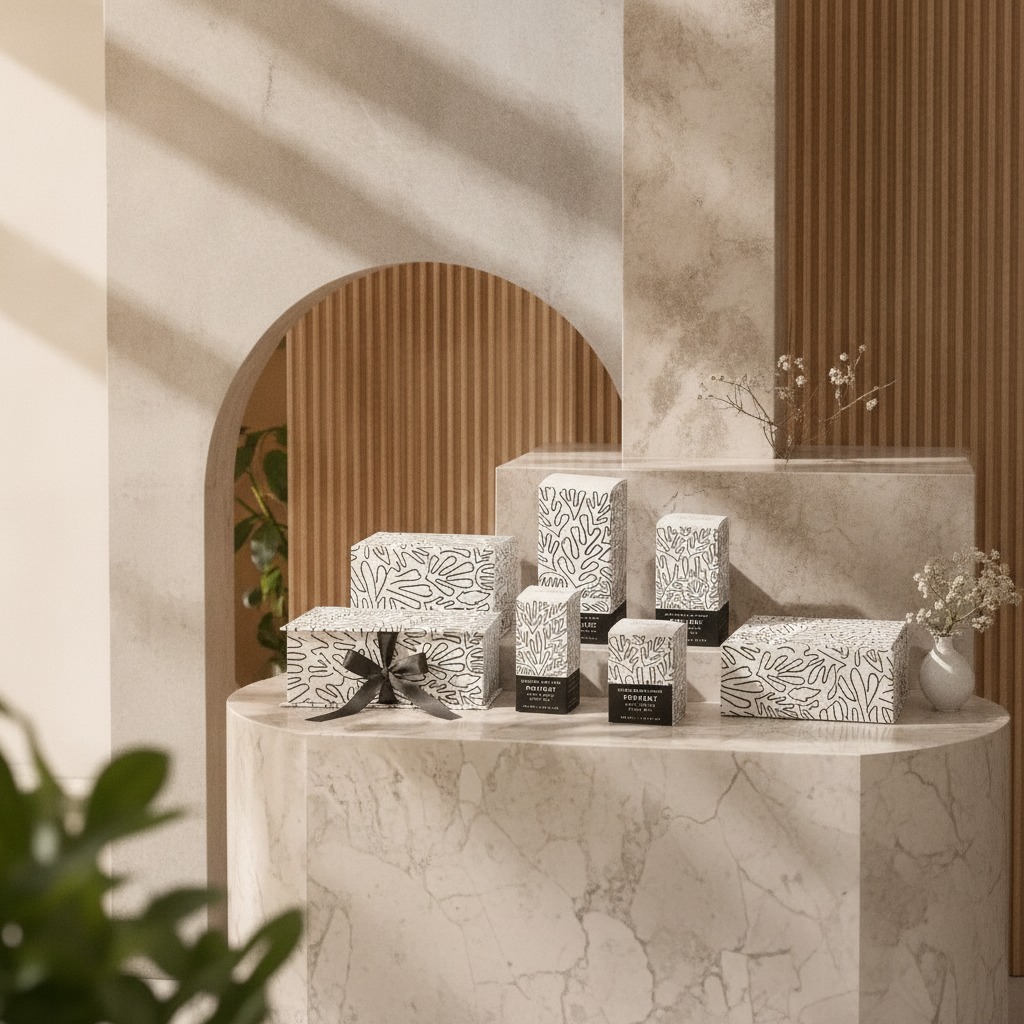
For a fragrance house, the tactile ritual of unboxing often establishes the perceived value of a scent before the atomizer is even depressed. A well-engineered perfume box does far more than shield a fragile glass flacon during ocean freight and courier transit; it serves as a rigid, tactile stage that frames the fragrance. When private-label brands and sourcing managers evaluate secondary packaging, they must balance luxurious presentation against the hard realities of structural rigidity, converting tolerances, and automated assembly.

Developing high-end rigid packaging requires an intimate understanding of paperboard mechanics, edge treatments, and interior geometry. Whether scaling up a boutique launch or negotiating production runs with contract fillers, understanding how these presentation cartons are constructed is the first step toward avoiding costly redesigns downstream.
Unlike folding cartons delivered flat, rigid setup boxes arrive three-dimensional, built on a dense structural core wrapped in premium art paper or specialty stock. In luxury presentation, the book-style or flip-top hinged silhouette remains an enduring standard.
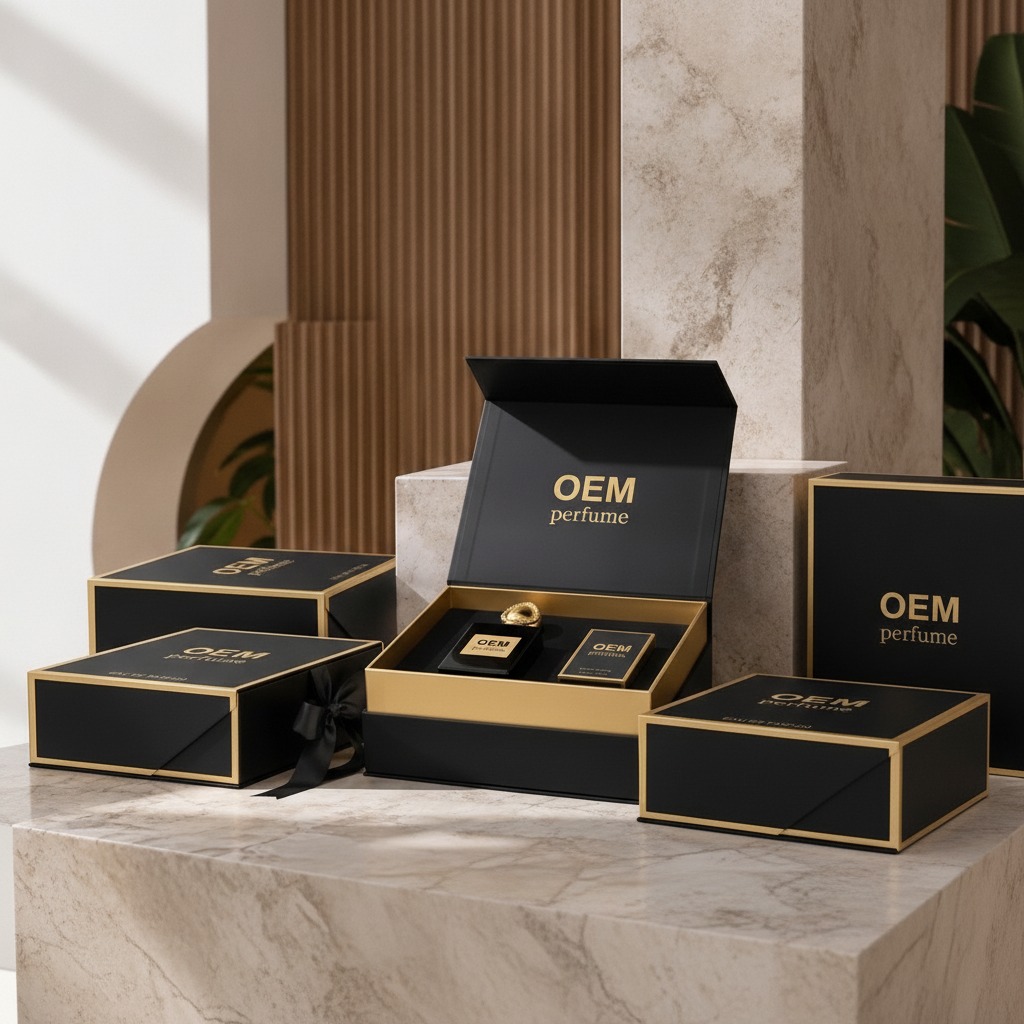
Visually, the contrast between a deep matte black paper wrap and a sharp, metallic gold edge creates an immediate sense of weight and intention. When closed, the exterior exhibits crisp, square corners that resist bowing under compression. Running a fingertip along the perimeter reveals a seamless wrap where the paper folds cleanly over the inner grayboard core without puckering, bubbling, or unsightly white creasing at the scored hinges.
Subtle details define the exterior architecture:
Behind these aesthetic touches lies a practical converting process: v-grooving or die-cutting high-density grayboard, precision gluing, wrapping outer paper stocks under uniform tension, and curing adhesives under controlled humidity to prevent warping.
While visual drama dominates the exterior, the interior engineering determines whether the product survives transit intact. Fragrance bottles present unique packaging challenges: heavy glass bases produce high momentum under drop impact, while fragile pump collars, decorative over-caps, and delicate neck accents can fracture if load is applied unevenly.
In a thoughtfully designed custom perfume box, the interior cavity must cradle the bottle in an upright or secure reclined posture. Sourcing teams typically balance three insert configurations:
Die-cut or CNC-milled EVA foam offers exceptional dimensional stability and drop absorption. Often topped with a laminated paper face or flocked velvet layer, it provides a firm, velvety grip on customized glass shapes. It is particularly forgiving of slight manufacturing variations in glass bottle wall thickness.
Thermoformed plastic inserts wrapped in soft flocking provide crisp contours for complex bottle geometries at high production speeds. However, they lack the solid heft of dense foam and may feel hollow if unsupported beneath the tray.
For brands prioritizing circularity, engineered paperboard platforms and molded dry-fiber inserts offer a plastic-free alternative. They demand tighter tooling tolerances, as paper-based cavities offer less mechanical compliance against irregular glass tolerances.
Regardless of the cavity material chosen, multi-item setups—such as a perfume gift box holding a primary 50ml flacon alongside an accompanying travel atomizer or discovery card—require balanced weight distribution. The insert must prevent heavier components from shifting into secondary collateral during shipping.
When collaborating with an OEM/ODM packaging manufacturer, selecting the correct structural silhouette directly impacts unit logistics, palletization density, and customer unboxing cadence.
Executing an effective perfume box design requires harmonizing the package profile with retail display footprints. A slender vertical flip-top box commands vertical presence on boutique shelves while minimizing shelf-depth requirements.
Procurement managers sourcing secondary perfume packaging at scale frequently encounter discrepancies between aesthetic mockups and bulk manufacturing reality. Keep these procurement safeguards in mind:
First, scrutinize environmental claims. Many suppliers display FSC certification badges on product pages. In practice, procurement teams should request the supplier's specific Chain of Custody (CoC) certificate number and verify that both the base grayboard and wrap papers originate from certified managed forests. Sustainable paper sourcing is increasingly mandated by international retail partners.
Second, beware of digital renders. Polished 3D packaging visualizations routinely conceal structural weaknesses like hinge tearing, adhesive show-through, or weak corner joints. Always commission physical white-body structural dummies to test fitment with your production-run glass bottles before signing off on printing plates and tooling dies.
Finally, test closure mechanisms under environmental stress. If your luxury perfume box incorporates concealed magnets in the lip and wall, evaluate sample boxes in varied humidity chambers. Poorly formulated adhesives can fail when shipped across equatorial sea routes, causing embedded magnets to dislodge or lid paper to delaminate.
True rigid boxes are formed around fixed grayboard panels and cannot fold flat without scoring modifications. While collapsible rigid boxes with diagonal fold lines and corner adhesive strips exist, flagship fragrance packaging generally avoids them because corner joints lack the seamless, solid aesthetic expected in high-end retail.
To generate an actionable quotation, a factory needs three structural baselines: your bottle's exact CAD drawings or physical specimens, target internal dimensions, and desired wrap material specifications (e.g., uncoated black kraft, coated art paper, soft-touch film). If custom foil blocking or interior multi-cavity inserts are required, provide vector die-line files showing stamping surface areas.
Fragrance boxes holding filled glass containers should undergo standard ISTA (International Safe Transit Association) 1A or 2A drop testing. This involves drop cycles across box corners, edges, and flat faces to confirm that the interior insert immobilizes the bottle cap, prevents liquid leakage, and absorbs impact energy without structural bursting of the outer board.
A cohesive packaging suite balances beauty with structural integrity. When planning your next launch, define your bottle dimensions and retail merchandising constraints early. Request physical material swatches, confirm raw material certifications with your OEM partner, and test your structural inserts before approving mass production tooling.
Developing high-end rigid packaging requires an intimate understanding of paperboard mechanics, edge treatments, and interior geometry. Whether scaling up a boutique launch or negotiating production runs with contract fillers, understanding how these presentation cartons are constructed is the first step toward avoiding costly redesigns downstream.
The Anatomy of a Rigid Hinged Presentation Box
Unlike folding cartons delivered flat, rigid setup boxes arrive three-dimensional, built on a dense structural core wrapped in premium art paper or specialty stock. In luxury presentation, the book-style or flip-top hinged silhouette remains an enduring standard.
Visually, the contrast between a deep matte black paper wrap and a sharp, metallic gold edge creates an immediate sense of weight and intention. When closed, the exterior exhibits crisp, square corners that resist bowing under compression. Running a fingertip along the perimeter reveals a seamless wrap where the paper folds cleanly over the inner grayboard core without puckering, bubbling, or unsightly white creasing at the scored hinges.
Subtle details define the exterior architecture:
- Precision Hot-Foil Stamping: Metallic gold script pressed into the lid and along the spine creates tactile depth, catching the light with clean foil release and zero feathering along fine-line typography.
- Gilded or Metalized Edge Profiles: A gleaming gold perimeter accentuates the parting line between the lid and base, establishing a distinct visual break that elevates the overall profile.
- Integrated Ribbon Pulls: A tailored grosgrain or satin ribbon tab extending from the closure rim provides an intuitive touchpoint, allowing the recipient to defeat friction-fit lids without pinching the box edges.
Behind these aesthetic touches lies a practical converting process: v-grooving or die-cutting high-density grayboard, precision gluing, wrapping outer paper stocks under uniform tension, and curing adhesives under controlled humidity to prevent warping.
Interior Engineering: Securing the Bottle Geometry
While visual drama dominates the exterior, the interior engineering determines whether the product survives transit intact. Fragrance bottles present unique packaging challenges: heavy glass bases produce high momentum under drop impact, while fragile pump collars, decorative over-caps, and delicate neck accents can fracture if load is applied unevenly.
In a thoughtfully designed custom perfume box, the interior cavity must cradle the bottle in an upright or secure reclined posture. Sourcing teams typically balance three insert configurations:
High-Density EVA Foam
Die-cut or CNC-milled EVA foam offers exceptional dimensional stability and drop absorption. Often topped with a laminated paper face or flocked velvet layer, it provides a firm, velvety grip on customized glass shapes. It is particularly forgiving of slight manufacturing variations in glass bottle wall thickness.
Flocked Vacuum-Formed Trays
Thermoformed plastic inserts wrapped in soft flocking provide crisp contours for complex bottle geometries at high production speeds. However, they lack the solid heft of dense foam and may feel hollow if unsupported beneath the tray.
Molded Fiber and Paperboard Cavities
For brands prioritizing circularity, engineered paperboard platforms and molded dry-fiber inserts offer a plastic-free alternative. They demand tighter tooling tolerances, as paper-based cavities offer less mechanical compliance against irregular glass tolerances.
Regardless of the cavity material chosen, multi-item setups—such as a perfume gift box holding a primary 50ml flacon alongside an accompanying travel atomizer or discovery card—require balanced weight distribution. The insert must prevent heavier components from shifting into secondary collateral during shipping.
Navigating Structural Choices in Perfume Box Design
When collaborating with an OEM/ODM packaging manufacturer, selecting the correct structural silhouette directly impacts unit logistics, palletization density, and customer unboxing cadence.
| Format | Mechanical Profile | Primary Commercial Application |
|---|---|---|
| Hinged Flip-Top Box | Integrated spine hinge, magnetic or friction closure, internal ribbon support. | Flagship retail eau de parfum, presentation-heavy brand reboots. |
| Two-Piece Shoulder Box | Separate lid and base separated by an exposed structural neck tray. | Classic bespoke niche lines requiring a slow, pneumatic lid-release effect. |
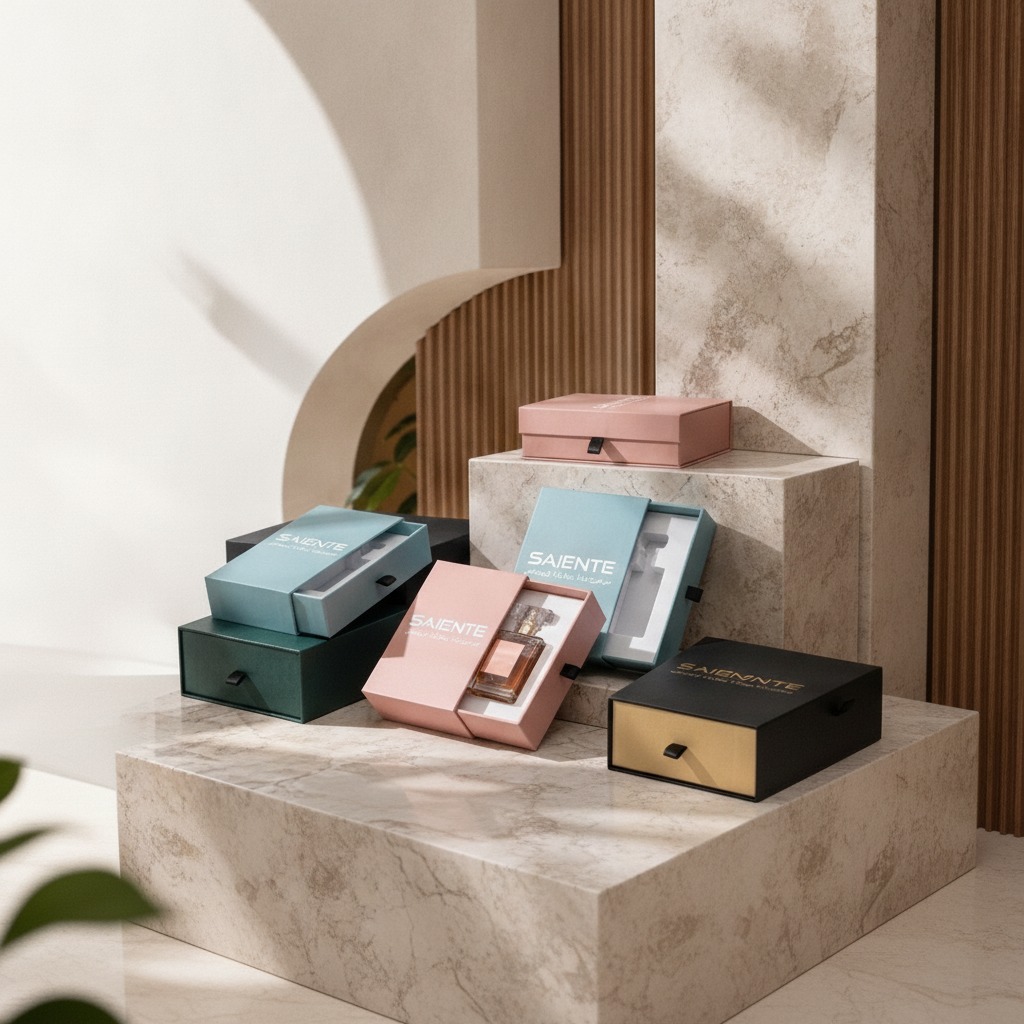
| Flat Presentation Tray | Shallow base with integrated drop-in lid or sliding outer sleeve. | Holiday gift sets, multi-bottle discovery sets, corporate sample programs. |
Executing an effective perfume box design requires harmonizing the package profile with retail display footprints. A slender vertical flip-top box commands vertical presence on boutique shelves while minimizing shelf-depth requirements.
Buyer Advice: Sourcing, Sustainability, and Factory Audits
Procurement managers sourcing secondary perfume packaging at scale frequently encounter discrepancies between aesthetic mockups and bulk manufacturing reality. Keep these procurement safeguards in mind:
First, scrutinize environmental claims. Many suppliers display FSC certification badges on product pages. In practice, procurement teams should request the supplier's specific Chain of Custody (CoC) certificate number and verify that both the base grayboard and wrap papers originate from certified managed forests. Sustainable paper sourcing is increasingly mandated by international retail partners.
Second, beware of digital renders. Polished 3D packaging visualizations routinely conceal structural weaknesses like hinge tearing, adhesive show-through, or weak corner joints. Always commission physical white-body structural dummies to test fitment with your production-run glass bottles before signing off on printing plates and tooling dies.
Finally, test closure mechanisms under environmental stress. If your luxury perfume box incorporates concealed magnets in the lip and wall, evaluate sample boxes in varied humidity chambers. Poorly formulated adhesives can fail when shipped across equatorial sea routes, causing embedded magnets to dislodge or lid paper to delaminate.
Frequently Asked Questions
Can rigid perfume gift boxes ship flat to reduce ocean freight costs?
True rigid boxes are formed around fixed grayboard panels and cannot fold flat without scoring modifications. While collapsible rigid boxes with diagonal fold lines and corner adhesive strips exist, flagship fragrance packaging generally avoids them because corner joints lack the seamless, solid aesthetic expected in high-end retail.
What information is required to receive an accurate OEM/ODM quotation?
To generate an actionable quotation, a factory needs three structural baselines: your bottle's exact CAD drawings or physical specimens, target internal dimensions, and desired wrap material specifications (e.g., uncoated black kraft, coated art paper, soft-touch film). If custom foil blocking or interior multi-cavity inserts are required, provide vector die-line files showing stamping surface areas.
How do drop-test standards apply to rigid perfume containers?
Fragrance boxes holding filled glass containers should undergo standard ISTA (International Safe Transit Association) 1A or 2A drop testing. This involves drop cycles across box corners, edges, and flat faces to confirm that the interior insert immobilizes the bottle cap, prevents liquid leakage, and absorbs impact energy without structural bursting of the outer board.
Taking Your Packaging from Concept to Production
A cohesive packaging suite balances beauty with structural integrity. When planning your next launch, define your bottle dimensions and retail merchandising constraints early. Request physical material swatches, confirm raw material certifications with your OEM partner, and test your structural inserts before approving mass production tooling.