A rigid box manufacturer should help a brand make three decisions before a bulk order: which structure fits the product and retail experience, which materials and inserts can be consistently produced, and which approval and inspection steps will protect the final result. A beautiful sample is useful, but it is not a substitute for a complete specification, a realistic quotation, or a documented quality agreement.
For a jewelry brand launching a ring collection, a rigid presentation box may need a stable hinge and a secure insert. A fragrance company may need a taller box with clearances for a glass bottle and cap. A skincare brand preparing seasonal gift sets may prefer a foldable magnetic construction to reduce storage volume. These projects share the term rigid packaging, yet the engineering, packing operations, and costs are not the same.
This guide explains how overseas brand owners, product developers, importers, and purchasing managers can compare custom rigid box options and evaluate a packaging partner. It also identifies where to request evidence rather than accepting marketing claims. Buyers considering Thinkpacking can explore its custom paper box collection alongside the company's custom packaging development services.
What Does a Rigid Box Manufacturer Actually Supply?
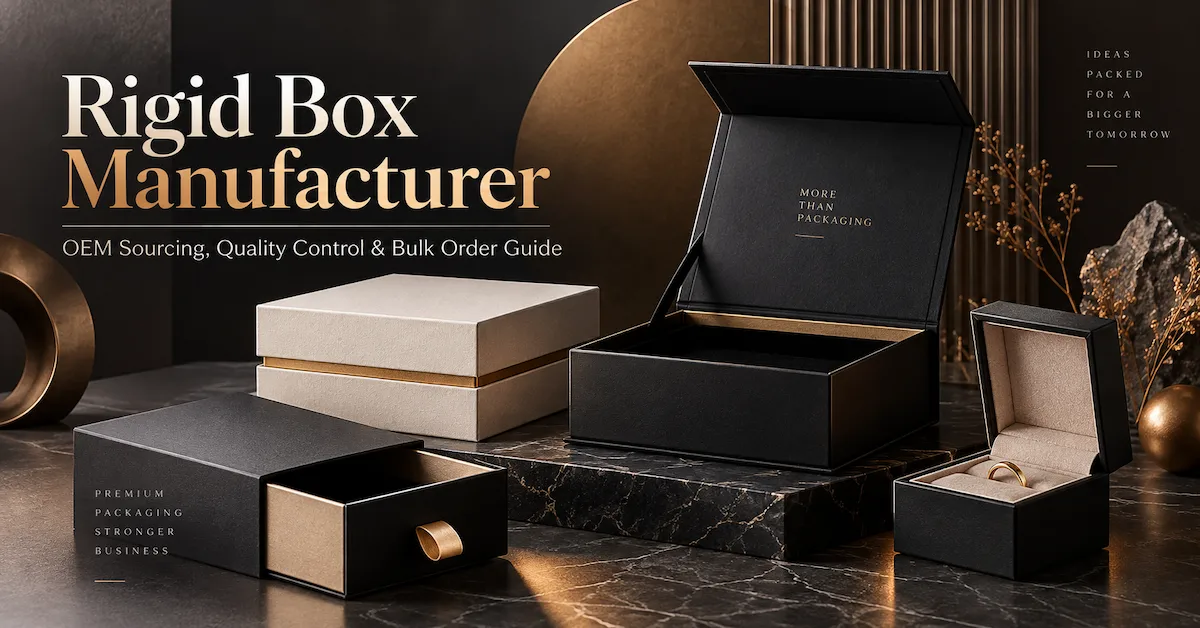
Rigid boxes, sometimes called setup boxes, normally use comparatively thick paperboard or chipboard components that are wrapped with decorative paper or another approved surface material. Unlike a conventional folding carton, a standard setup box generally retains its three-dimensional shape during shipping and storage. Some specially engineered rigid boxes are collapsible, however, and can ship flat before final assembly.
A capable supplier must work across more than the visible outer shell. The project may involve structural drawings, board and wrapping materials, a lid or closure system, internal supports, printing, decorative finishes, sample approval, manufacturing coordination, inspection, and export packing. The specific scope should be stated in the quotation and purchase agreement, because different suppliers may own different parts of the process.
For B2B procurement, the real deliverable is a repeatable packaging specification, not simply a photograph of an attractive box. A useful specification tells the producer what to make, tells an inspector what to check, and gives the buyer a basis for accepting or rejecting a shipment.
Who should use rigid packaging—and who may not need it?
Rigid gift boxes are frequently appropriate for premium jewelry, watches, fragrance gift sets, skincare kits, corporate gifting, and other products where the packaging is kept, displayed, or opened as part of the customer experience. They are especially relevant when an insert is required to organize multiple components or present a product at a particular angle.
They are not automatically the right choice for every order. Lightweight promotional items sold on tight margins may be better served by folding cartons. High-volume direct-to-consumer shipments may need a corrugated shipping box outside the premium presentation box. Products with substantial impact or leakage risks need a validated complete transport package; a rigid retail box alone should not be treated as a certified transit-protection system.
The right starting question is therefore not, “Can you make this look luxurious?” It is, “What must this box do between packing, shipping, retail handling, unboxing, and possible reuse?”
Which Rigid Box Structure Fits Your Product?
Box architecture affects visual presentation, user experience, manufacturing steps, insert design, carton efficiency, and unit cost. A rigid box manufacturer should explain these trade-offs before asking the buyer to approve decorative details.
| Rigid box structure | Typical use | Main advantages | Buying questions |
|---|---|---|---|
| Lift-off lid and base | Jewelry, candles, small gifts | Simple presentation; clear separation of lid and base | How secure is the lid? Is an inner shoulder needed? |
| Shoulder-and-neck box | Premium gift sets, accessories | Guided lid positioning and distinctive opening | What are the neck height, fit, and scuffing risks? |
| Magnetic book-style box | Beauty sets, corporate gifts, fragrance | Hinged opening and integrated closure | How are magnet placement and closure alignment inspected? |
| Drawer or sleeve-and-tray box | Jewelry, accessories, electronics kits | Controlled reveal; room for fitted inserts | Does the tray slide smoothly without falling out? |
| Hinged rigid box | Jewelry and watch presentation | Attached lid; repeatable display angle | How will hinge movement and insert positioning be evaluated? |
| Collapsible rigid box | Seasonal gifts, apparel, beauty kits | Can reduce inbound storage and shipping cube | What assembly steps, tapes, and corner joints are required? |
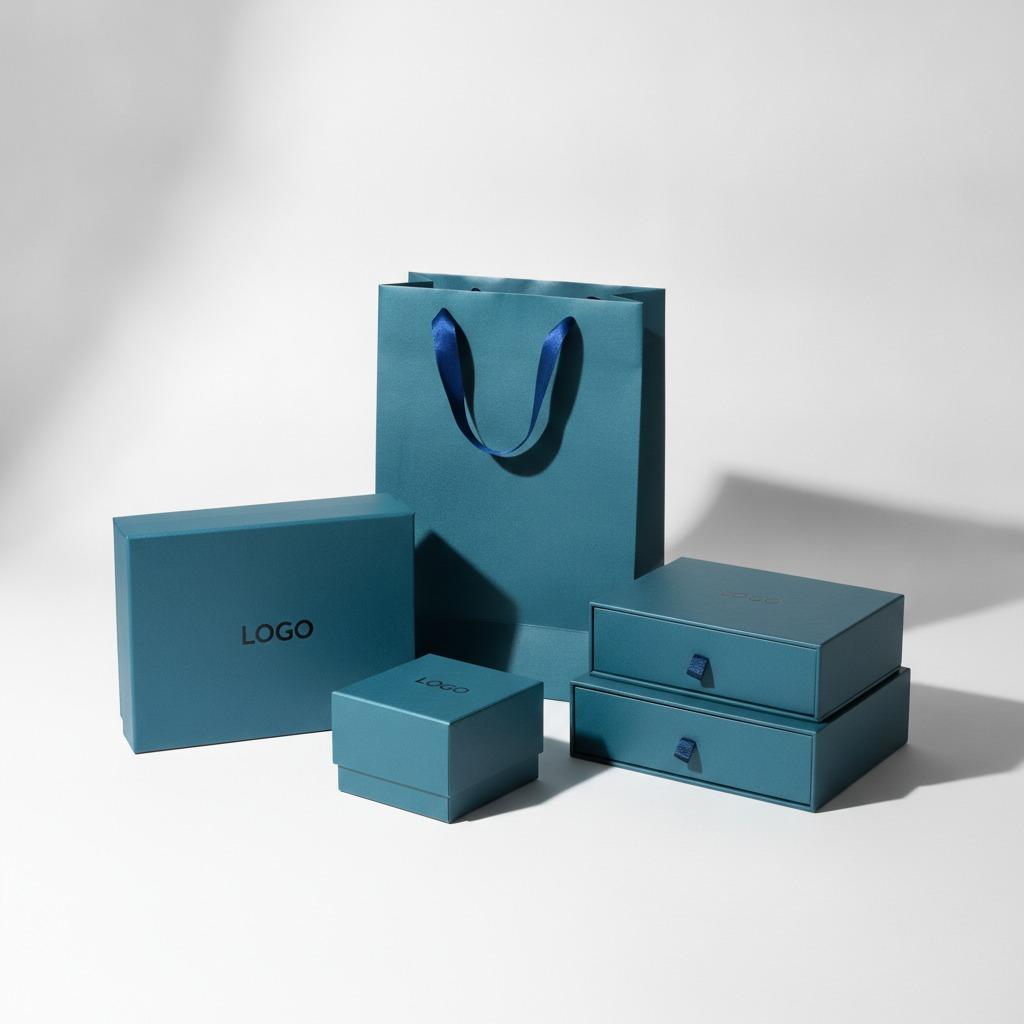
Lift-off and shoulder boxes. A shoulder-and-neck structure has an internal raised wall that helps guide lid positioning. It can create a distinctive reveal, but the producer must control lid clearance, neck alignment, and potential abrasion where the surfaces contact. Thinkpacking's slate blue rigid gift box is a useful reference for discussing this architecture; any exact construction and fit should still be confirmed for the buyer's own project.
Magnetic rigid boxes. Magnetic closures are often selected for premium unboxing, but the closure cannot be specified only by saying “strong magnets.” The buyer needs to review the flap overlap, magnet positioning, closing feel, and whether the assembled box remains aligned after repeated handling. A visible product reference is Thinkpacking's white foldable magnetic rigid gift box.
Drawer boxes. Sleeve-and-tray construction works well for accessories, compact jewelry, and presentation sets. The critical issue is controlled friction: too tight, and the user pulls awkwardly; too loose, and the inner tray can slide out unexpectedly. Compare options with the black slide-out drawer gift box, while specifying whether the approved version must use rigid board or a lighter folding construction.
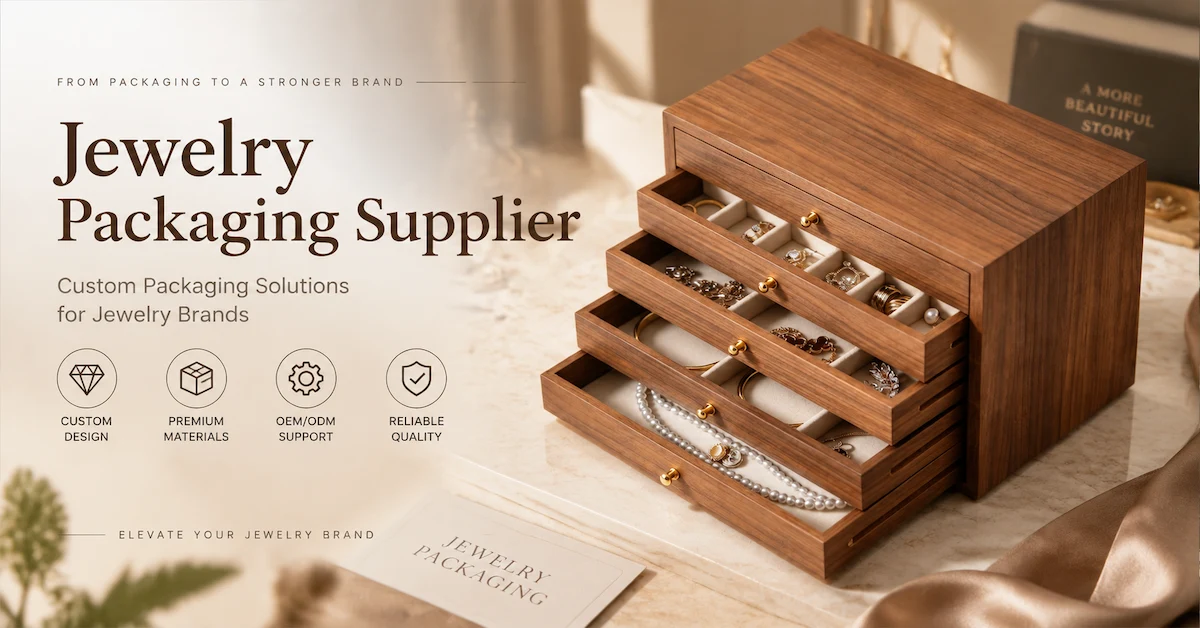
Hinged presentation boxes. For jewelry, the relationship between the hinge, opening angle, lining, and insert matters as much as the outside color. Thinkpacking's linen flip-top jewelry box shows a relevant format combining a rigid structure with a fabric-style exterior direction.
Collapsible rigid boxes. These are not the same as ordinary folding cartons. A collapsible rigid box may still rely on rigid panels, with specially designed joints and assembly steps that allow the structure to fold flat. The saving comes from how many boxes fit into inbound cartons or warehouse space, not from a guaranteed percentage discount. Request assembled and flat-packed packing plans before comparing quotations.
Rigid Boxes vs Folding Cartons vs Corrugated Mailers
Some sourcing errors begin with the word box. A purchasing team may request a rigid box when it really needs a lightweight folding carton, or expect a presentation box to perform as a shipping container.
| Format | Construction principle | Appropriate priority | Limitation to consider |
|---|---|---|---|
| Conventional rigid setup box | Thick board components, normally wrapped and assembled | Form retention and premium presentation | Usually occupies more shipping volume |
| Collapsible rigid box | Rigid panels with engineered folding or joining features | Premium presentation with lower inbound cube | Assembly time and joint quality need evaluation |
| Folding carton | Lighter scored and folded paperboard | Efficient retail packaging and compact shipping | Different load and presentation characteristics |
| Corrugated mailer | Fluted board with liner layers | Distribution, parcel handling, and exterior protection | May not replace a premium interior presentation |
A rigid gift box can sit inside a protective corrugated shipper. A folding carton may be sufficient for a relatively light skincare item. The correct comparison should include the full packaging system, not isolated samples placed side by side on a showroom table.
Buyers who are still deciding between presentation and transit formats can start with Thinkpacking's paper packaging product range and submit both the product dimensions and intended distribution route.
What Technical Specifications Should You Send Before Requesting a Quote?
A rigid box manufacturer can quote more accurately when the brief distinguishes the product's physical dimensions from the finished packaging dimensions. These are not interchangeable.For an insert-based gift set, even a small unplanned change to the bottle, jar, cap, jewelry display card, or accessory can affect the box cavity and overall structure.
| RFQ parameter | What the buyer should specify | Why it matters |
|---|---|---|
| Product dimensions | Length, width, height, weight, and widest protrusions | Establishes the actual space and support required |
| Internal usable box size | Clear internal length, width, and height | Controls product fit, not just outside appearance |
| External size | Target finished outer dimensions, if constrained | Affects shelf footprint, master carton and logistics |
| Box architecture | Lid/base, shoulder, drawer, hinged, magnetic, collapsible | Determines construction and assembly workflow |
| Structural board | Desired performance or approved board reference | Affects form, edge appearance, mass, and material selection |
| Outer wrapping | Paper or fabric direction, texture, color reference | Governs visual and tactile consistency |
| Insert | Material direction, cavity layout, retention method | Controls stability, presentation, and removal |
| Branding | Artwork, print areas, foil, embossing, UV or lamination | Influences production process and approval |
| Pack-out | Assembled or flat, protective wrapping, units per master carton | Influences landed cost and receiving operations |
| Order program | Launch quantity, projected repeats, delivery destination | Allows an appropriate quotation and scheduling discussion |
Why board thickness and grammage should not be confused
A specification such as “heavy greyboard” is too vague for repeat purchasing. Board is often discussed in millimeters, grammage, and grade, but mass per area does not uniquely determine thickness or stiffness. Density, recycled-fiber composition, construction, and supplier variation affect performance. Request a clearly identified material reference and confirm whichever measurements matter to the structure.
For a large magnetic box, additional board weight may improve the feel but also increase inbound weight. More thickness is not always the best answer: closure geometry, panel dimensions, wraps, and support points can be equally important. A finished decorated sample is more informative than a board number viewed in isolation.
Define tolerances instead of assuming them
Ask your rigid box manufacturer to propose measurable acceptance criteria for internal dimensions, lid alignment, external appearance, insert fit, and critical print placement. The appropriate tolerances vary by design and production method; there is no honest universal tolerance that can be promised for every custom rigid box. Agreement before production is more useful than arguing after a shipment arrives.
Materials and Inserts: Where Functional Quality Is Decided
The board core forms the box, but the surfaces and components determine what the customer touches and how the product sits inside it. Thinkpacking's materials and finishes overview identifies paper and board, specialty papers, wrapped surfaces, and internal components as relevant packaging directions.
Wrapped paper and specialty surfaces. Buyers should review how the selected paper behaves around corners, fold lines, edges, and larger panels. A color that appears consistent on a small swatch can look different across a complete box. Texture and coating can also affect rub marks, fingerprints, and the feel of opening and handling.
Fabric-style coverings. These may make sense for jewelry and watch presentation, but texture, edge wrapping, visible seams, and adhesive compatibility must be evaluated on an actual constructed sample. Do not assume all velvet-like or linen-style surfaces have identical abrasion characteristics.
Paperboard inserts. Folded or die-cut paper-based inserts can provide organization with relatively straightforward printing and material coordination. Their performance depends on cavity geometry, tabs, thickness, and the weight and shape of the product.
Foam or formed inserts. These can support irregular items or keep multiple kit components in defined positions. Buyers should assess surface contact, compression, odor concerns where relevant, and whether the product can be removed without excessive force. A fitted insert should not be described as shockproof or protective to a specified test level without validation.
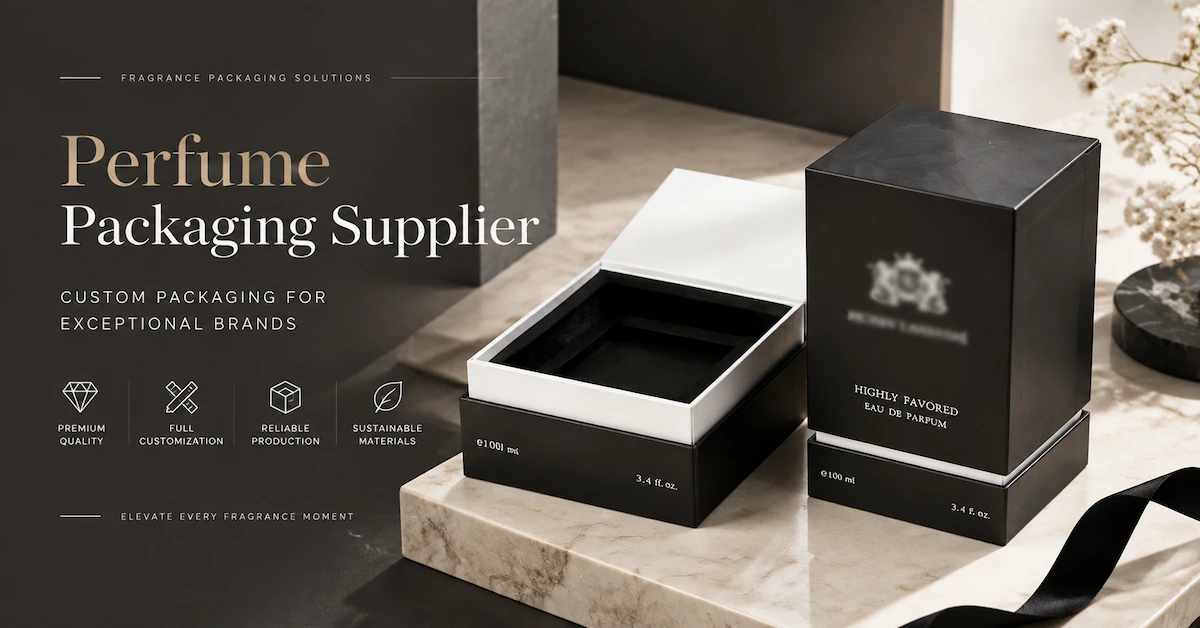
Jewelry, watch, and fragrance fit. Rings require controlled slot fit; watches need a cushion suited to the case and strap; a glass perfume bottle needs secure positioning and clearance around its cap or pump. These problems demand product-specific development. A generic foam tray copied from another SKU is not enough to prove compatibility.
For buyer teams sourcing custom jewelry boxes or custom perfume boxes, the strongest brief includes a physical product sample or an accurately dimensioned technical reference.
Printing and Finishing: Approve the Result, Not Just the Technique Name
Luxury packaging frequently uses foil stamping, embossing, debossing, UV effects, lamination, and textured wrapping papers. Each can make a box more distinctive, but additional decoration also introduces alignment and process-control questions.
| Finish | Visual or tactile purpose | What buyers should check on the sample |
|---|---|---|
| Foil stamping | Metallic or pigmented logo accent | Coverage, edge definition, position, rubbing |
| Embossing | Raised tactile detail | Relief consistency, registration, cracking around artwork |
| Debossing | Recessed detail | Depth, legibility, alignment and surface effect |
| Selected UV effect | Contrast in specified print areas | Registration, gloss contrast and unwanted marks |
| Lamination | Surface look and handling characteristics | Bubbles, edge lifting, scuffs and appearance |
| Specialty paper | Texture and color without elaborate printing | Wrapping consistency, corners and batch differences |
Ask for a printed and decorated approval sample when branding is critical. A flat digital artwork proof establishes text and layout direction; it does not demonstrate how hot foil, wrapped corners, or embossed marks will appear on the finished construction. Similarly, a photo of a shiny metallic box is not a measurement of durability. Thinkpacking's silver mirror rigid gift box can be used as a visual format reference, with the proposed surface and handling expectations separately confirmed.
How to Evaluate a Rigid Box Manufacturer Before Bulk Production
The best rigid box manufacturer evaluation is evidence-led. Company descriptions and sample photographs may be useful starting points, but they do not by themselves establish the capability, consistency, or accountability of a specific order.
1. Ask who controls the actual work
Clarify whether board conversion, wrapping, printing, foil stamping, insert production, final assembly, inspection, and export packing are performed at one production site or coordinated across specialists. Either model can work; the important question is who is responsible for specifications, revisions, corrective actions, and final acceptance. Request project-relevant process evidence where necessary instead of relying on the word factory alone.
2. Look for an actionable sample and revision process
A useful approval process should identify the current dieline version, packaging dimensions, board and wrapping references, finish placement, insert layout, and a physical sample. Any change after approval should trigger a review of the affected elements before mass production. Ask who authorizes revisions and how revised references reach production and inspection personnel.
3. Evaluate communication at the technical level
Can the supplier explain how it will control drawer friction or magnet positioning? Can it tell you which input is missing from your RFQ? Does it distinguish a rough prototype from a fully decorated approval sample? A fast quotation is less valuable when the assumptions behind it are unclear.
4. Request the relevant proof, not unrelated badges
If your project requires a certified material claim, market-specific labeling, food-contact suitability, or a transport test, ask for documentation applicable to the exact material, component, and order. A general company certificate does not automatically prove that a particular finished box meets every market requirement. In particular, do not infer FSC chain-of-custody coverage or food-contact compliance from the appearance of paper packaging.
5. Compare suppliers using the same specification
Create a common comparison sheet. A practical buyer-led scoring model might evaluate product and insert fit, sample quality, production transparency, QC agreement, landed cost, and communication. The relative weighting should reflect your category: a fragrance launch may prioritize fit and component security, while a promotional gift program may prioritize total cost and ease of assembly. The score is your purchasing tool, not an independently verified supplier rating.
A Six-Stage Sampling and Production Workflow
Thinkpacking publicly describes an OEM/ODM packaging workflow and a six-step project process covering briefing, design, sampling, material confirmation, production and quality checks, and delivery coordination. For rigid box procurement, the six steps can be translated into concrete buyer approvals.
Stage 1 — Brief: establish the decision boundaries
Provide dimensions, product weight, photos or physical samples, estimated order quantity, target sales channel, desired presentation, and delivery market. Rank your priorities. A supplier cannot optimize premium appearance, minimum cost, fastest assembly, and smallest shipping volume equally without knowing what matters most.
Stage 2 — Design: choose the box architecture
Review the structural proposal before artwork takes over the discussion. Confirm hinge direction, lift-off fit, drawer motion, magnet placement, insert arrangement, and the proposed packing state. Keep the structural dieline and decorative artwork in clearly managed versions.
Stage 3 — Sampling: use the real product
An unprinted structural sample helps test fit and opening. A decorated prototype helps review color, wraps, foil, lining, and complete presentation. When the project requires both, they solve different questions. Test the sample with the actual commercial product and the real removal sequence, not an approximate object of a similar size.
Stage 4 — Materials: lock the approved references
Confirm the board grade, wrapping direction, insert material, adhesives or assembly components where material to performance matters, and all visible finishing details. Keep the sample identification and approved artwork versions available for reorders.
Stage 5 — Production and QC: check at the right points
Review incoming components, the first assembled pieces, printed and decorated surfaces, structure and assembly, and final packed cartons. These checkpoints should use an agreed inspection plan and evidence suitable for the size and risks of the order. AQL sampling or third-party inspection can be discussed where appropriate, but no particular inspection level should be assumed without agreement.
Stage 6 — Delivery: protect the presentation during export
Confirm protective bags or separators, master carton construction, number of pieces per carton, labeling, handling expectations, and shipment documents. The shipping method and destination can materially change the packaging configuration and landed cost. The goal is for the box to arrive in the condition reflected by the approved sample.
Rigid Box Quality Control Checklist for Purchasing Teams
A rigid box manufacturer should connect visible defects to measurable inspection criteria. The table below is a buyer's recommended inspection plan, not a claim that every Thinkpacking order uses these exact tests or numerical limits.
| Inspection point | Typical defect or risk | Evidence to agree before production |
|---|---|---|
| Incoming board and wraps | Wrong grade, color or surface condition | Approved material reference and incoming check |
| Cutting and construction | Uneven edges or incorrect finished dimensions | Dimension drawing, tolerances and first-piece review |
| Paper wrapping | Corner bubbles, wrinkles, adhesive marks | Decorated sample and appearance criteria |
| Printed logos and foil | Off-center artwork, missing coverage | Artwork file, placement reference, accepted appearance |
| Magnetic or hinged closure | Misalignment, unwanted gaps or inconsistent opening | Functional sample and repeatable check method |
| Drawer mechanism | Excessive friction or loose tray | Fit criteria demonstrated on approved sample |
| Insert and lining | Product movement, scuffing or difficult removal | Actual product fit and removal review |
| Packed finished goods | Compression, abrasion or mixed variants | Carton plan, labels and pre-shipment evidence |
Thinkpacking's published quality control approach identifies incoming materials, sample approval, print and surface work, structure and assembly, and pre-shipment review as quality checkpoints. For an individual RFQ, the buyer should still request the acceptance limits, responsibilities, reporting format, and remedy procedure applicable to that project.
If a shipment is intended for parcel distribution, discuss validation of the complete packaged product rather than treating the presentation box as an independent shipping guarantee. The International Safe Transit Association (ISTA) publishes distribution-simulation test procedures, including Procedure 3A for certain parcel delivery shipments. The chosen method, laboratory, pass criteria, and tested pack-out must be confirmed for the actual distribution conditions; merely mentioning ISTA does not mean a box has passed a test.
What Drives Rigid Box Manufacturing Cost?
A rigid box manufacturer calculates prices across a full manufacturing and logistics configuration: board, covering material, structural complexity, print and finishing, inserts, preparation, inspection, packing, and the scale of the order. A low unit price can become expensive if a design requires substantial assembly labor, takes excessive warehouse space, or produces avoidable rejects.
| Cost driver | What changes the quote | Buyer decision to review |
|---|---|---|
| Size and board structure | Board area, construction method, waste | Can dimensions be optimized without compromising fit? |
| Wrapped paper or fabric | Material type, surface treatment, cutting yield | Is the finish necessary for the intended positioning? |
| Closure design | Magnets, hinge details, shoulder components | Does the customer experience justify the added complexity? |
| Insert system | Cavities, die-cutting, lining, multi-component assembly | Can components be simplified while retaining secure fit? |
| Printing and decoration | Plates, tooling, registration, process passes | Which effects need physical sampling and extra setup? |
| Order quantity and variants | Setup allocation, color changes, SKU handling | Can related SKUs share materials or artwork processes? |
| Pack-out and freight | Assembled volume, flat-pack efficiency, protection | What is the delivered cost per usable box? |
MOQ is a project question, not a universal number
Minimum order quantity may change with box architecture, print method, material procurement, special inserts, and the number of colorways. Rather than asking only “What is your MOQ?”, ask whether the minimum applies per design, size, color, artwork version, or combined purchase order. Request separate prices for a trial volume and the projected repeat-order volume if the project supports both.
Likewise, sample lead time and mass-production lead time are different commitments. The clock may start after artwork approval, receipt of production-ready files, material confirmation, or payment conditions, depending on the agreed terms. Ask the supplier to define exactly what triggers each milestone. Do not base your launch schedule on a generic lead time copied from an unrelated product listing.
Compare landed cost, not just ex-factory unit price
An appropriate internal comparison adds the quoted box and insert price, one-time development or tooling charges where applicable, protective cartons, shipping, duties and taxes where relevant, and the operational cost of assembly or repacking. Divide the total applicable cost by the number of usable boxes received, using consistent assumptions for each candidate.
For collapsible versus assembled rigid boxes, request the supplier's actual master-carton dimensions, packing quantities, gross weight, and assembly instructions. A flat format may reduce cubic volume but can add assembly time and joint-quality risks. The winner depends on your warehouse operation and delivery route, not an advertised generic freight-saving percentage.
Logistics, Sustainability, and Market Requirements
Brand owners increasingly ask for responsible materials, but a sustainability claim must match the real packaging construction. A paperboard core does not automatically make every finished box easily recyclable: coatings, fabric layers, laminated films, magnets, foam, adhesive choices, and local collection systems may affect end-of-life handling.
If an FSC-related claim is important, confirm the supplier's applicable chain-of-custody documentation and the approval rules for the exact product claim. Do not use an FSC logo, claim, or certificate number in finished marketing solely because a sales page says “eco-friendly.” The Forest Stewardship Council's traceability framework is a useful starting point for the questions, but it is not proof of Thinkpacking's certification.
For products involving food or direct contact with cosmetics, verify whether any insert or surface actually touches the product, and assess applicable market requirements for those contact materials. A decorative gift box around an already sealed bottle is not the same regulatory case as a food-contact tray. Regional packaging labeling, extended producer responsibility obligations, and recyclability claims should be checked for the destination market instead of applying one blanket rule worldwide.
A practical sourcing brief should record whether the product will travel as a bulk shipment to a central warehouse, in smaller distributor cartons, or as individual direct-to-consumer parcels. Those distribution paths may need different transit packing, even when the retail presentation is identical.
Common Supplier-Selection Mistakes—and How to Prevent Them
Selecting from photographs alone. Online images show color and form, not tolerances, closure feel, hidden joints, or repeatability. Request a physical, product-fitted sample and written acceptance reference.
Sending only an outside box dimension. A specified external size does not tell the supplier the necessary internal cavity, insert space, or clearance for protruding components. Submit the product dimensions and the way it must be removed or displayed.
Approving unprinted samples for a high-finish project. Structural samples answer fit questions; decorated samples answer color and surface questions. When both matter, approve both.
Comparing unmatched quotations. Different board grades, inserts, protective packing, and delivery terms make price comparisons misleading. Ask each rigid box manufacturer to use the same controlled RFQ.
Ignoring warehouse work. A collapsible box that saves cubic volume may transfer effort to manual assembly. A fully assembled box may cost more to move but simplify fulfillment. Evaluate total operations.
Accepting unsupported compliance language. A claim such as “recyclable,” “food grade,” or “certified” should be backed by relevant documentation and a defined product scope. If the evidence is missing, record the claim as unverified.
Failing to protect repeat orders. Reordering should not mean redesigning. Keep approved physical references, drawings, material specifications, artwork versions, inspection criteria, and any approved substitutions together in the product record.
A Practical RFQ Template for a Custom Rigid Box Manufacturer
A strong RFQ is brief enough to complete but detailed enough to prevent guesswork. Copy the fields below into your supplier email or purchasing sheet.
| RFQ field | Information to provide |
|---|---|
| Brand and product | Product category, target buyer and sales channel |
| Product measurements | Dimensioned drawings or physical sample; weight and sensitive surfaces |
| Preferred structure | Lid/base, shoulder, magnetic, drawer, hinged or collapsible |
| Insert details | Number of items, orientation, cavity needs and material preference |
| Visual direction | Logo artwork, color reference, wrapping material and finishes |
| Order program | Initial order quantity, number of SKUs and projected reorder demand |
| Sampling request | Structural sample, printed sample, approval and revision process |
| Quality requirements | Critical dimensions, appearance criteria, test or documentation needs |
| Packing plan | Assembled/flat, units per carton, protective separators, shipping route |
| Commercial information | Destination, delivery deadline, requested quotation terms and currency |
An email can be straightforward: “We are sourcing a custom rigid box for a premium skincare gift set. Our product dimensions and reference images are attached. Please recommend a suitable box structure and insert, explain the sample-approval stages, and quote the initial order and expected repeat quantity. Please include packing configuration, quotation assumptions, and the documents needed before production approval.”
This is a more useful opening than “Please send your cheapest rigid box price,” because it gives the supplier enough context to recommend an actual packaging system.
How Thinkpacking Supports Custom Rigid Box Projects
Thinkpacking presents its work as connected packaging development for jewelry, beauty, fragrance, and lifestyle brands, covering structure and visual direction, physical sampling, material coordination, production communication, quality review, and export delivery. Its OEM & ODM page explains the distinction between executing an existing specification and developing a packaging direction from a product and brand brief.
For buyers with approved dielines, the discussion can begin with a detailed OEM specification and the required sample. For newer brands, it may begin with the actual product, a packaging reference, desired opening experience, and target quantity. Thinkpacking's process emphasizes reviewing the physical sample before moving through production and inspection; this is valuable because rigid box performance depends on the combined structure, surface, closure, and insert, not one component alone.
Relevant examples include the white foldable magnetic rigid gift box, black drawer-style paper gift box, and linen flip-top jewelry box. These are design references rather than promises that every material, quoted MOQ, or schedule applies to a new order.
To start a practical review, contact Thinkpacking with your product dimensions, desired box structure, artwork or reference images, target quantity, insert requirements, destination market, and proposed delivery date. The team can discuss the appropriate development and quotation steps based on the information supplied.
Frequently Asked Questions About Rigid Box Manufacturers
What is the difference between a rigid box and a folding carton?
A conventional rigid box uses relatively thick board components and normally retains its assembled shape, while a folding carton usually uses lighter scored paperboard that folds flat. Collapsible rigid boxes are a separate hybrid structure, combining rigid panels with a flat-shipping design. The choice depends on presentation, fit, logistics, and cost.
Can a rigid box manufacturer supply custom sizes and inserts?
Custom rigid packaging commonly allows structural dimensions, wrapping materials, decorative finishes, and product-specific inserts to be developed. The buyer should supply product measurements, orientation, sensitive surfaces, and any necessary removal clearance. Final feasibility is confirmed through design and sampling rather than a general promise of compatibility.
What is the typical MOQ for custom rigid boxes?
There is no universally reliable MOQ for every rigid box design. Minimum quantities depend on materials, printing processes, tooling, construction, and order variants. Request a quotation for your defined size, artwork, insert, and quantity, and check whether the minimum is per SKU or per complete purchase order.
Are collapsible magnetic rigid boxes always cheaper?
No. They may reduce inbound cubic volume and warehouse space, but they can require additional joining components and assembly labor. Compare both formats using actual pack-out dimensions, assembly steps, defects, and landed cost. A flat-pack saving should be demonstrated by a project-specific packing plan.
How do I check bulk production quality against my sample?
Agree on the approved physical sample, artwork, material references, dimension tolerances, functional closure checks, surface appearance standards, and pre-shipment packing configuration. Ask for documented stage checks and a mutually agreed inspection method. If product fit is critical, use an actual product or an agreed fit gauge for the inspection.
How long do rigid box samples and bulk production take?
Timing depends on design maturity, structural development, printed finishes, materials, order size, revision rounds, and production scheduling. Ask for separate estimates for structural sampling, decorated approval, material procurement, production, inspection, and export preparation, with clear start conditions.
Can rigid paper boxes be described as recyclable or FSC-certified?
Not automatically. Finished-box recyclability depends on all components and local recycling systems. FSC-related claims require applicable certification and approved claim handling. Ask for current, product-relevant evidence before printing environmental statements on retail packaging or sales materials.
What information should I send to request a rigid box quotation?
Send product dimensions and weight, target box style, insert arrangement, preferred visual finishes, artwork or examples, initial quantity, projected repeat orders, destination, and delivery needs. If you do not have a finished dieline, say so; a development-oriented supplier can discuss what must be established during the OEM or ODM process.
Conclusion
The right rigid box manufacturer is the one that can translate your product requirements into a clear structure, an approved physical sample, a realistic cost model, and repeatable quality checkpoints. For premium jewelry, fragrance, beauty, and gifting programs, that means evaluating box architecture, insert fit, surface workmanship, pack-out, and total landed cost together—not choosing a supplier solely on the lowest unit price or the most impressive product photograph.
Start with your product dimensions and intended customer experience, then compare manufacturers using the same specification and sample-approval criteria. If you are planning a custom rigid packaging project, review Thinkpacking's custom packaging capabilities and submit your requirements for a quotation.A precise brief gives both your team and your packaging partner a better foundation for a successful bulk order.