Why paper packaging still wins in food retail and gifting
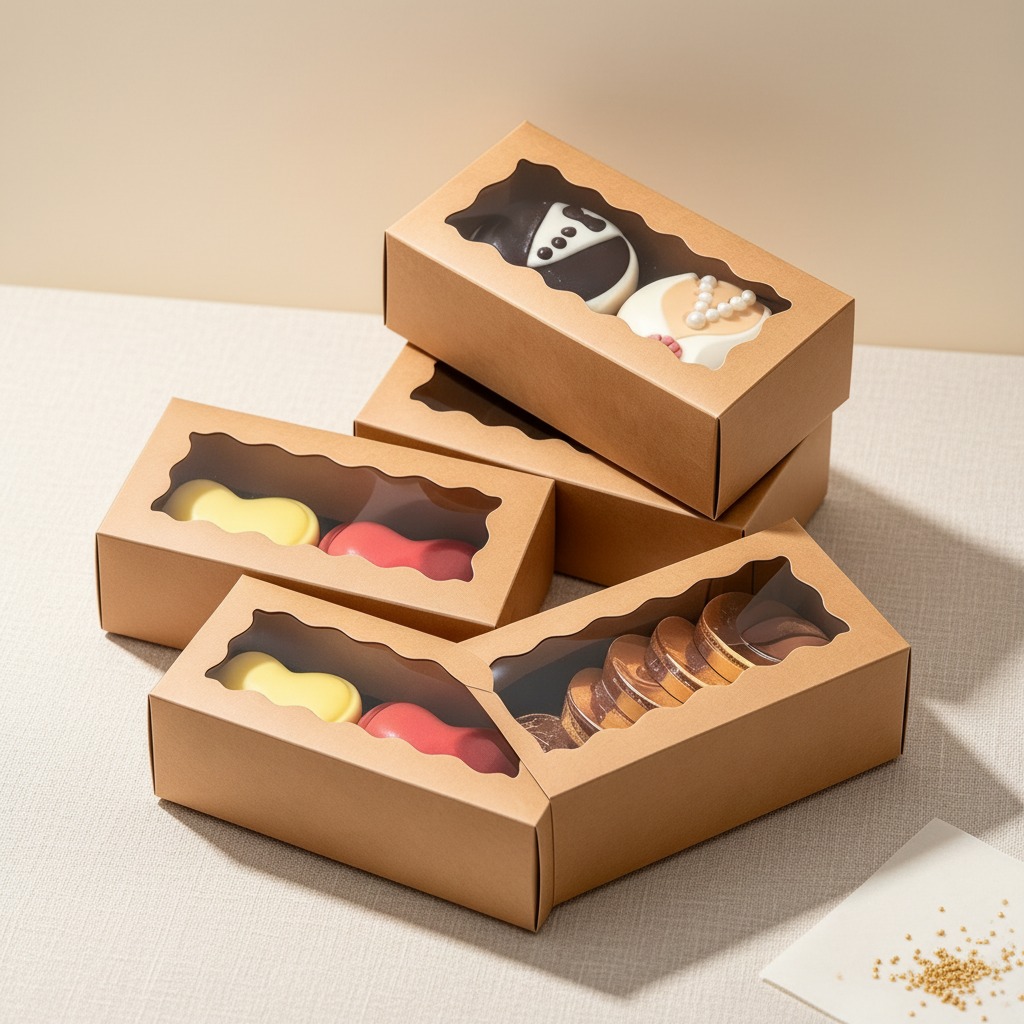
For many buyers, paper packaging is not just a materials choice; it is a merchandising decision. When a confectionery brand, bakery, or gift supplier needs a box that protects small items and still lets the product do the selling, paperboard is usually the first material on the table. That is especially true for small paper packaging boxes with a clear window, where the customer can see chocolates, cookies, macarons, or other treats before opening the lid.
The appeal is easy to understand. Paper packaging materials bring a familiar, tactile feel. Kraft surfaces look natural rather than glossy. A rectangular folding carton stacks neatly in storage and on retail shelves. And a windowed lid gives the buyer a quick visual check on color, shape, and arrangement. In a category where presentation affects perceived freshness and value, that matters more than people sometimes admit.
What this box format is designed to do
The product style shown here is a small rectangular paperboard box with a natural kraft look and a clear window in the lid. It is the sort of carton you see in bakery counters, boutique chocolate shops, holiday gift packs, and sample assortments. The body appears to be a flat-fold folding carton, likely formed by scoring and die-cutting, then assembled into a rigid-enough sleeve or tuck-end style box.
The window is doing a lot of quiet work. It reduces the need for overprinting, lets customers inspect the contents, and creates a more premium display without changing the basic paper structure. For many brands, that is the sweet spot: simple construction, clean presentation, and enough product visibility to support impulse buying.
Quick buyer takeaways
If you are evaluating paper packaging for small food items, the key question is not simply “paper or plastic?” It is how the box performs in shelf appeal, handling, and shipping. A kraft folding carton works well when the product is light, neatly arranged, and not exposed to excess moisture or rough transit. If the items are delicate, a tray or insert may be needed inside the box, though that depends on the layout.
One practical caution: windowed cartons can look elegant on a display table, but the window material and closure method need to be checked for your actual use case. Not every clear film behaves the same way, and not every box style is suitable for humid environments or long-distance shipping. That is the kind of detail that can be overlooked in sample approval and then cause headaches later.
Paper packaging materials and structure: what matters most
Kraft paperboard appearance
Kraft paper packaging has a specific visual language. It feels earthy, restrained, and artisan-friendly. That makes it a strong fit for baked goods and confectionery brands that want a handmade or natural image. In this kind of retail carton, the matte surface also helps the box read as more premium than a thin, slick sleeve would.
Die-cut window and film patching
The window opening is a functional and visual feature. It needs clean die-cut edges, good alignment, and a film patch that sits flat enough not to wrinkle the lid. In paper packaging manufacturing, that means the carton is not just folded; it is built through a sequence of cutting, scoring, folding, and window patching. Small errors show up quickly in this format because the buyer can see the front face immediately.
Flat-pack efficiency
Another advantage is shipping efficiency before assembly. Folding cartons generally arrive flat, which saves space in storage and lowers handling burden. For brands that pack by hand, that matters. The box should open and form cleanly without fighting the fold lines. If a carton requires too much force, line workers will notice long before the customer does.
Where recyclable paper packaging fits—and where it may not
Many sourcing teams start with recyclable paper packaging as a baseline requirement, and that is understandable. Paperboard is widely accepted in packaging programs, but a windowed carton is a hybrid construction. The board may be recyclable in principle while the window film changes the final disposal picture. Because the exact film and board grade are not identified here, it would be wrong to assume any specific recycling outcome.
That is why buyers should ask for material clarification early. If your brand promise depends on eco-friendly paper packaging, you need to know whether the window film is compatible with your sustainability claims. “Looks green” is not the same as verifiably recyclable, and customers are getting sharper about that distinction.
How to choose the right box for your product
Start with product geometry. These boxes are suited to small, neatly arranged items: a few chocolates, a row of macarons, assorted cookies, or miniature gift sets. Next, consider how the product is displayed. If the contents vary in color or shape, the window becomes part of the sales argument. If the contents are uniform and sealed, the visual benefit is smaller.
Then look at handling. Retail display packaging has different demands from e-commerce shipping packaging. A paper box can do both, but not always by itself. Lightweight sweets may ship well if there is additional outer protection. For courier networks, the box should not be expected to absorb every impact on its own.
Finally, ask how much branding you need. The unprinted kraft surface shown here is a strong blank canvas for stickers, stamps, labels, or a later print run. That can be useful for seasonal products or small-batch launches, though it also means the buyer must plan the branding layer instead of assuming the carton will carry it.
Common mistakes buyers make
The first mistake is choosing by appearance alone. A box can look excellent on a countertop and still be awkward in filling or stacking. The second is ignoring the window film, which often gets treated as a minor component even though it affects optics, disposal, and sometimes product protection. The third is failing to match the box style to the product count. A 2-piece assortment and a 6-piece assortment do not want the same internal layout.
There is also a tendency to under-specify sample approval. With paper packaging boxes, buyers should check fold memory, edge cleanliness, window alignment, and how the finished box sits on a flat surface. Small defects are surprisingly visible in kraft packaging because there is nowhere for a heavy print design to hide them.
Practical next step for sourcing teams
If you are comparing paper packaging suppliers, ask for a sample that matches your actual product dimensions, filling method, and storage conditions. Confirm board grade, closure style, window material, and whether custom print is available if you need it. For food applications, also verify any compliance or food-contact details directly with the supplier rather than assuming them from the product photo.
For bakeries, chocolatiers, and gift brands, this style of kraft window box remains a dependable workhorse: simple, shelf-friendly, and visually honest. The right version will frame the product instead of competing with it. That is often exactly what the customer wants to see.