For independent watch labels, contract manufacturers, and retail jewelry buyers, secondary packaging carries an outsized burden. A mechanical timepiece might deliver flawless timekeeping, but if the packaging arrives with a sloppy corner wrap or a chemical odor that clings to the strap, customer perception drops instantly. Vetting a reliable watch box supplier is less about admiring glossy catalog renderings and far more about understanding how board rigidity, hinge tension, lining adhesives, and cushion geometry behave over thousands of production units.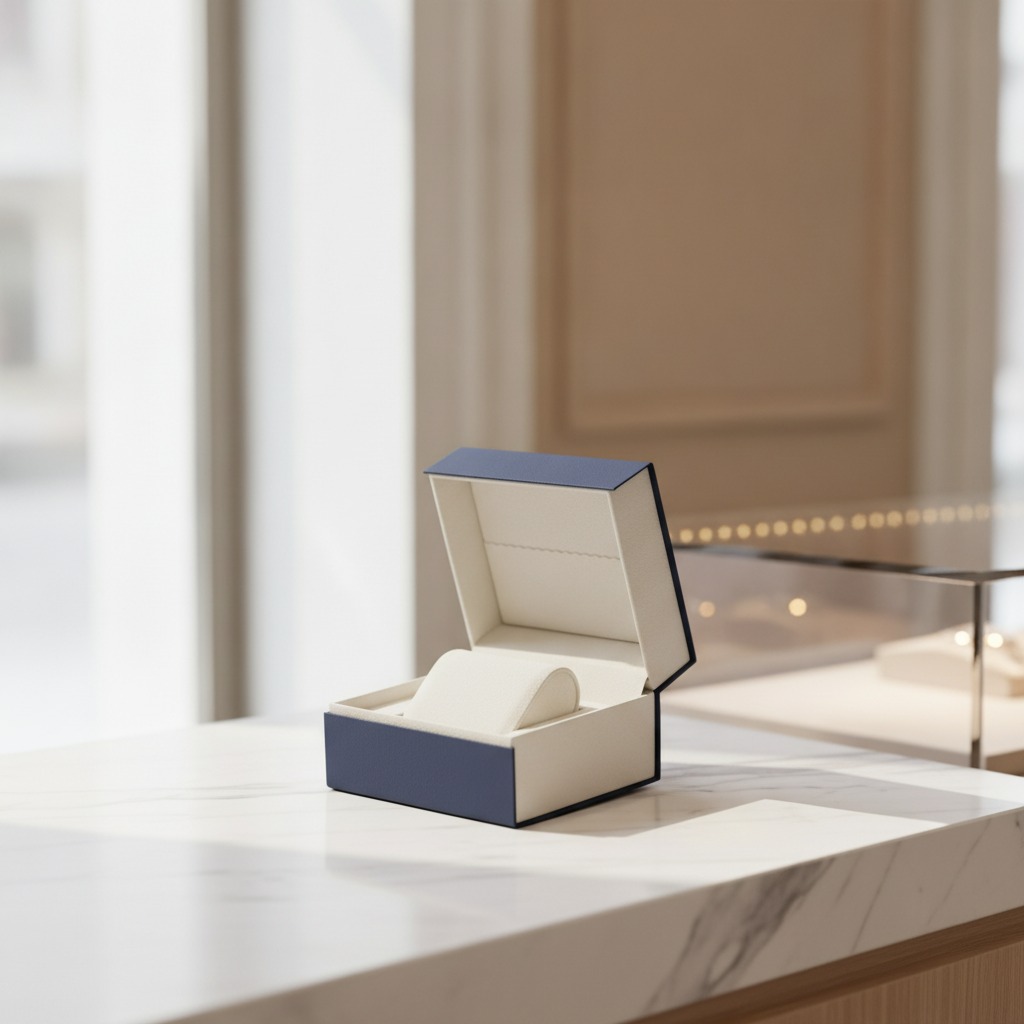
Whether sourcing an off-the-shelf design or engineering a fully custom OEM program, procurement teams must navigate the physical realities of rigid box converting. The classic single-watch clamshell format remains an industry baseline for good reason, yet subtle manufacturing choices dictate whether it feels like a luxury presentation piece or disposable freight.
The Anatomy of a Rigid Single-Watch Box
Most single-watch gift boxes utilize a rigid setup box construction. At its core, the structure depends on heavy paperboard—typically chipboard or dense greyboard—that provides structural integrity without excessive shipping weight.
In a clamshell format, the lid is permanently affixed to the base along a rear hinge line. This configuration offers distinct operational advantages over a traditional two-piece lift-off lid. It creates a cleaner point-of-sale display in duty-free counters and boutique showcases, keeps components unified during e-commerce fulfillment, and gives the end-user a dedicated tabletop repository for the watch.
However, a hinged structure puts localized stress on the spine wrap material. If the supplier cuts corners on the exterior hinge reinforcement or uses an adhesive that turns brittle in dry warehouse conditions, repeated cycling will cause the hinge to split or rack diagonally. Sourcing managers should inspect how the exterior wrapping paper or leatherette bridges the joint between the lid and the lower tray.
Exterior Wraps and Interior Linings: Material Selection
Visual appeal hinges heavily on substrate pairing. A common, highly versatile combination features a deep navy blue exterior paired with an ivory or cream interior. This creates a high-contrast backdrop that allows metallic dials, polished bezels, and varied strap leathers to stand out cleanly.
Exterior Coverings
Suppliers generally offer two primary paths for wrapping the exterior rigid board:
- Specialty Coated Paper: Often embossed or treated with a matte coating. Specialty paper delivers sharp edge definition and holds up well against minor surface scuffs, making it a dependable choice for volume production.
- PU or Vinyl Leatherette: Provides a softer, tactile feel and a faux-grain leather aesthetic. While visually premium, low-grade synthetic wraps can be prone to stretching unevenly over box corners during wrapping, leading to loose pleats along the perimeter edges.
Interior Lining and Cushioning
The interior must protect polished cases and anti-reflective crystal coatings from abrasion. Common lining materials include flocked paper, micro-suede, or soft-touch polyurethane (PU).
Inside the box, watch retention generally relies on a cylindrical or rounded pillow-style cushion. The cushion must perform a dual role: it needs enough compressibility to fit watches adjusted to smaller wrist sizes without straining bracelets, yet enough rebound memory to keep heavier automatic tool watches from sliding forward and impacting the lid during transit. A frequent oversight during sourcing is failing to specify cushion core material—reconstituted scrap foam will compress unevenly over time, whereas high-density cut foam or a formed hollow core wrapped in padding yields consistent tension across the production lot.
Evaluating Supplier Details and Hidden Traps
When reviewing pre-production samples from a prospective watch box supplier, look beyond the exterior face. The interior roof of the lid often tells you more about production discipline than the outer shell. Many well-designed presentation boxes incorporate a flat lined panel on the inner lid, sometimes featuring a horizontal slit or card pocket intended for warranty booklets, chronometer certificates, or brand inserts. Check whether this pocket is glued cleanly without excess adhesive squeezing into the opening, which can permanently bond the pocket shut.
Another critical factory variable is adhesive curing and off-gassing. Rigid boxes require extensive solvent- or water-based gluing to adhere the outer wrap and inner lining to the board core. If a supplier packs completed boxes directly into master shipping cartons before the glue has fully cured, volatile organic compounds (VOCs) become trapped inside the microclimate of the closed clamshell. Upon unboxing, customers are greeted with an aggressive chemical smell, and in worst-case scenarios, prolonged contact with trapped solvents can cause tarnish on unlacquered bronze cases or chemical haze on synthetic strap materials. Always clarify drying and aeration protocols with your packaging vendor.
Specifying Requirements for Sourcing
To secure accurate quotes and avoid costly sample revisions, provide the factory with precise parameters upfront:
- Internal Clearances: Provide the exact dimensions of your largest watch head, including the crown, bezel thickness, and crystal dome. A 44mm case with a high-domed sapphire requires substantially more lid clearance than a 38mm dress watch.
- Closure Mechanics: Clarify how the lid should stay closed. Options include friction fit, hidden neodymium magnets embedded in the front lip of the board, or mechanical snap buttons. If using magnets, ensure they are adequately shielded or positioned to prevent potential magnetization of mechanical watch movements.
- Branding Applications: Determine whether your logo application involves hot-foil stamping, blind debossing, or precision silkscreening. Highly textured exterior leatherettes may distort fine-line foil stamps, whereas smooth matte papers hold crisp deboss edges much better.
Frequently Asked Questions
Can I use the same box size across an entire watch collection?
Yes, provided the interior cushion is flexible enough to accommodate different case diameters and strap lengths. However, if your line ranges from ultra-thin quartz dress models to thick 300-meter dive watches, a single universal cushion may hold the dress watch too loosely while causing the diver's case to press directly against the inner lid panel. You may need two cushion thicknesses within identical outer shell dimensions.
What should I watch out for regarding cushion firmness?
Request cushion samples tested with both closed metal link bracelets and opened two-piece leather straps. If the cushion is too rigid, retailers will struggle to close butterfly deployant clasps around it. If it is too soft, heavy steel watches will sag to the bottom of the tray when displayed upright in a showcase.
How can I verify board durability without laboratory testing?
Perform a straightforward corner-drop and pinch test on pre-production samples. Pinch the sidewalls firmly between your fingers; there should be no hollow creaking or noticeable deflection. A solid greyboard core will maintain straight, parallel edges without bowing inward along the wider side panels.
Next Steps in Sourcing
Before signing off on tooling or large purchase orders, commission a functional unbranded prototype from your shortlisted watch box supplier. Load your heaviest production watch onto the cushion, secure the clasp, close the box, and subject it to a rough transit test. Verifying that the internal clearances, hinge resistance, and materials withstand shipping shocks on a sample run is the most cost-effective insurance policy your brand can buy.