When a customer handles a cosmetic gift box, the sensory feedback begins well before the formula touches their skin. The structural rigidity of the paperboard, the whisper of air escaping as a fitted lid glides open, and the reflective glimmer of a champagne-toned exterior all communicate formula value. For sourcing managers and beauty brand packaging engineers, shifting from standard folding cartons to a custom gift box requires balancing these delicate presentation nuances with the unyielding realities of structural protection and automated assembly.

The Geometry of High-End Secondary Packaging
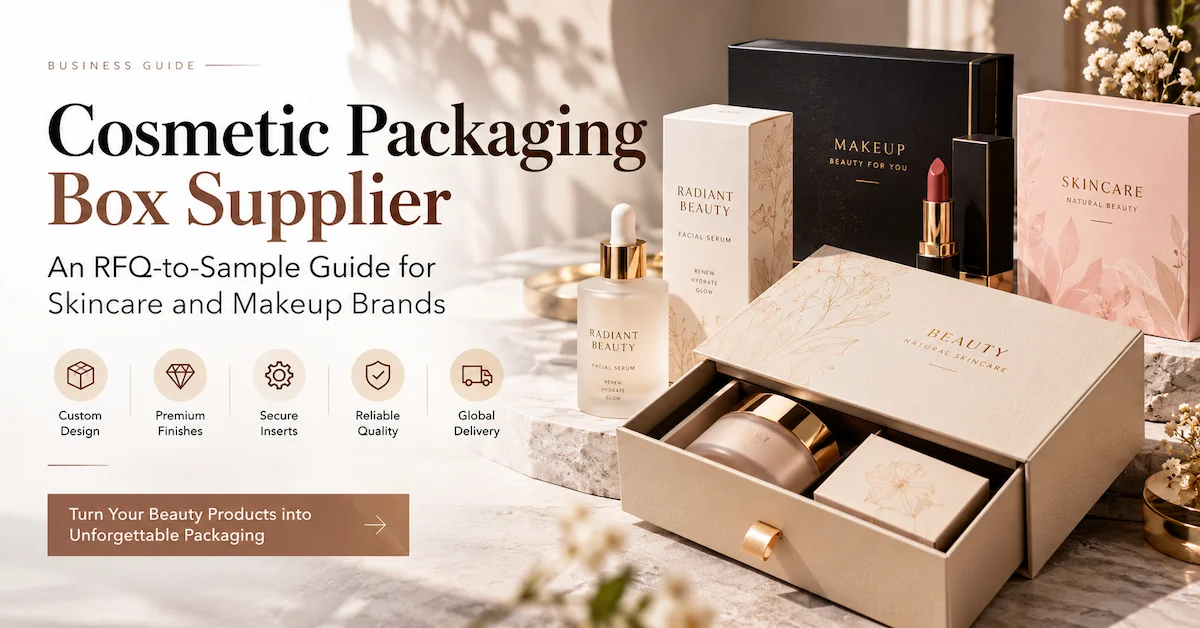
Consider the architecture of a stepped-base rigid container engineered for high-end skincare. Unlike standard collapsible cartons, these gift boxes rely on heavy paperboard structures wrapped in treated specialty papers. Straight panels meet at razor-sharp right angles, forming crisp, clean edges that convey architectural discipline.
In contemporary cosmetic setups, the base frequently incorporates a tiered, stepped platform. This reveals a slight inset border even when the lid is seated, adding visual depth to retail shelves. When the lid is lifted, the interior reveals a cylindrical cosmetic jar seated flush within a recessed black cradle. The contrast between a glowing, metallic-finished jar and a deep, light-absorbing interior cavity creates an immediate visual anchor. It holds the product upright, perfectly framed, inviting the consumer to interact with the container as a centerpiece rather than an afterthought.
Materiality: Navigating Metallic Surfaces and Board Cores
Achieving the champagne or pale-gold sheen often seen on a luxury gift box involves subtle manufacturing decisions. Packaging buyers typically choose between three distinct routes: cold- or hot-stamped foil wrapping, metalized film lamination, or specialty metallic lacquers applied over coated board.
Each path carries trade-offs that sourcing teams must evaluate during the sampling phase:
- Foil Stamping and Lamination: Offers an unmistakable mirror-like reflection or rich brushed texture, but thin substrates can highlight micro-imperfections in the underlying greyboard. Any grain irregularities or dust trapped during wrapping telegraph directly through the shiny surface.
- Metallic Inks and Lacquers: Deliver a smoother, softer satin sheen that hides board imperfections slightly better and handles fold lines with less risk of cracking, though they sacrifice true mirror-like reflectivity.
- Substrate Integrity: High-density rigid paperboard must maintain dimensional stability against warehouse humidity shifts. Warping at the lid perimeter will immediately ruin the smooth friction-fit tolerance that consumers expect from a premium gift box.
A quick buyer note regarding sustainability claims: While marketing materials frequently reference FSC-certified paper stock for rigid boxes, procurement teams should always request the formal chain-of-custody documentation before printing claims on export-ready packaging. The certification of the outer paper does not automatically certify the composite assembly once adhesives, foil layers, and synthetic insert materials enter the bill of materials.
Insert Engineering: Protecting the Primary Container
A loose jar inside a decorative shell leads to transit scuffing, misaligned shelf displays, and a poor tactile impression upon opening. Inside a well-designed personalized gift box, the insert performs a dual engineering role: mechanical shock absorption and visual staging.
Cosmetic jars—whether crafted from heavy glass, metallized plastic, or aluminum shells—carry significant mass relative to their footprint. The internal cavity must grip the jar's lower perimeter securely without requiring excessive extraction force from the consumer. A recessed black insert creates dramatic visual contrast against champagne exterior panels, but material selection matters. Dense, die-cut foam provides clean sidewalls and impact dampening, though buyers pursuing plastic reduction often explore molded pulp lined with dyed paper stock or folded structural paperboard platforms. Whichever route is chosen, verify that the jar's metallic coating does not suffer from rub-burnishing or adhesive transfer against the insert walls during drop and transit vibration simulations.
Common Sourcing Traps in Bulk Production
Moving a custom gift box project from an approved physical prototype to a production run of tens of thousands of units introduces several quality traps that can stall fulfillment lines:
Friction and Vacuum Lock: A lid that slides open with a slow, controlled drop is desirable, but tight assembly tolerances paired with glossy interior liners can create a vacuum seal. If the customer must shake the box violently to release the base, the luxury experience vanishes. Specifying minor air-relief channels or a marginally wider clearance avoids this nuisance.
Color Shift Across Packaging Components: Sourcing the outer gift box from a rigid box specialist while sourcing the metallized cosmetic jar from an injection molder or glass coater almost guarantees a finish mismatch unless a unified master color sample is established. A pale champagne exterior paired with a yellow-gold jar cap creates an accidental two-tone palette that degrades brand cohesion.
Dimensional Bulking in Logistics: Rigid setups do not fold flat. The volumetric weight of fully erected, stepped-base boxes occupies substantial container space during ocean and air freight. When calculating landed unit costs, ensure that logistics costs reflect the volume of empty space inside the assembled shells.
Frequently Asked Questions
Can rigid presentation boxes be shipped flat to reduce shipping costs?
True rigid boxes with stepped bases and wrapped board platforms cannot be knocked down flat; they ship fully assembled. However, collapsible rigid formats utilizing hidden magnetic corner flaps are an alternative if freight volume is a primary constraint, though they feature visible diagonal crease lines on the wrapped edges.
How do we ensure our brand logo aligns properly on metallic paper surfaces?
Metallic papers and laminates have low surface absorbency. Surface graphics—whether screen-printed, embossed, or debossed—require precise curing profiles and registration controls. Debossing without ink can create an understated, elegant contrast against reflective paper, while UV screen printing ensures clean edge definition on opaque logos.
What information is needed to initiate an accurate quote for custom rigid packaging?
Supply the primary container's exact outer dimensions (including cap clearance), preferred exterior paper treatment, target insert material, structural base style, and projected order quantity. Providing a physical jar sample to the packaging manufacturer is always preferable to 2D drawings for achieving tight insert tolerances.
Evaluating Your Next Cosmetic Packaging Run
Developing secondary packaging that enhances a product line requires treating the box as an engineered system, not merely decorative wrapping. For skincare and makeup brands planning seasonal collections or elevated retail lines, finalizing primary jar dimensions early allows structural engineers to calibrate insert depths, edge clearances, and board thickness before bulk tooling begins.