Tactile Sophistication with Custom Blind Embossed Stickers
In high-end packaging, traditional ink printing often struggles to convey genuine artisanal prestige. Over-glossed laminates and loud color schemes can cheapen an organic, boutique, or heritage brand identity. Sourcing blind embossed stickers eliminates visual noise by relying on the interplay of pressure, light, and shadow to command buyer attention. Rather than hiding a premium container beneath heavy pigments, custom blind embossing transforms natural stock into a sculpted dimensional badge that communicates understated luxury at first touch.
Product Overview: Dimensional Purity and Geometry
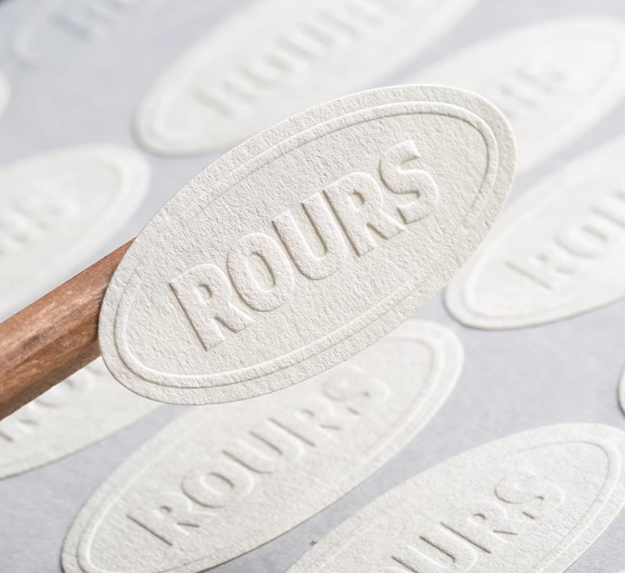
Blind embossed pieces achieve their character through mechanical deformation of the substrate rather than chemical colorants. Inspired by precision-pressed formulations and dry-fiber relief surfaces, these seals feature crisp perimeter borders and tactile typographic profiles. Whether produced in clean elliptical formats, classic ovals, or custom contoured shapes, the shallow layered profile creates subtle micro-shadows that frame your brand mark. The resulting aesthetic mimics high-density pressed pulps and refined stone-matte tablets, offering an immediate textural contrast against smooth glass, unvarnished wood, or kraft folding cartons.
Material Options and White Textured Paper Labels
Selecting the correct substrate determines the crispness and structural permanence of your tactile design. For projects demanding an organic, dry-powder or fibrous touch, our white textured paper labels serve as the foundation. These uncoated stocks accommodate deep tooling without fiber rupture, yielding a dry, powder-soft surface feel that remains completely glare-free.
Substrate and finish selections typically include:
- Heavyweight cotton and cellulose pulps with fibrous, matte surfaces for maximum relief retention.
- Uncoated off-white and natural cream stocks that preserve a minimalist, organic visual balance.
- High-tack permanent, removable, or moisture-resistant adhesives tailored to specific container materials.
- Optional dry-wax or water-based barrier coatings to maintain tactile grain while protecting against moderate ambient handling.
Tooling and Manufacturing Mechanics
Translating detailed vector geometry into crisp relief requires balanced press settings and calibrated metal tooling. Blind embossing relies on paired male and female dies, typically CNC-machined from brass or photo-chemically etched from hardened magnesium. During the stamping stroke, controlled pressure forces the fibrous substrate into the recessed cavity of the die. Because no ink or foil masking is present to conceal alignment shifts, precision plate registration is paramount. The process compresses paper fibers along the perimeter rim while lifting central lettering, generating a distinct stepped profile that resists flattening over the product life cycle.
Target Applications and Market Versatility
Because dimensional relief projects authenticity, blind embossed stickers integrate seamlessly across diverse manufacturing and packaging sectors:
- Luxury Cosmetics and Bath Amenities: Ideal for sealing custom soap packaging, botanical scrubs, and artisanal solid bath care collections.
- Specialty Packaging and Seals: Providing closure seals for premium presentation boxes, envelope folds, and luxury promotional items.
- Guest Hospitality: Establishing clean, branded focal points on VIP amenity kits and resort merchandise.
- Boutique Specialty Goods: Adding distinct brand badges to confectionery boxes, organic candle vessels, and sustainable wellness goods.
Procurement Considerations and Customization Guidance
When specifying artwork for custom blind embossed stickers, line weight and bevel geometry require closer attention than standard graphic printing. Stroke widths must allow the paper fibers to draw cleanly into the female die without shearing. Flat-face embossing delivers a solid architectural look, while multi-level or sculpted radius edges create softer transitions suitable for script and monogram marks.
Packaging engineers should evaluate surface energy on target containers. Textured glass or porous wood containers may necessitate heavier adhesive coat weights to ensure full contact behind the compressed relief areas. Requesting sample sheets of our white textured paper labels allows your development team to test adhesive anchorage and evaluate shadow contrast under native retail lighting.
Elevate Your Brand Presentation
Understated design speaks louder than heavy ink coverage. By standardizing your product lines with blind embossed stickers, you achieve a unified, sculptural brand presence that elevates shelf value while reducing ink consumption. Contact our technical production team today to review your artwork, explore tooling options, and obtain production-grade prototypes for your next packaging cycle.