Why a wine box is doing more work than it looks
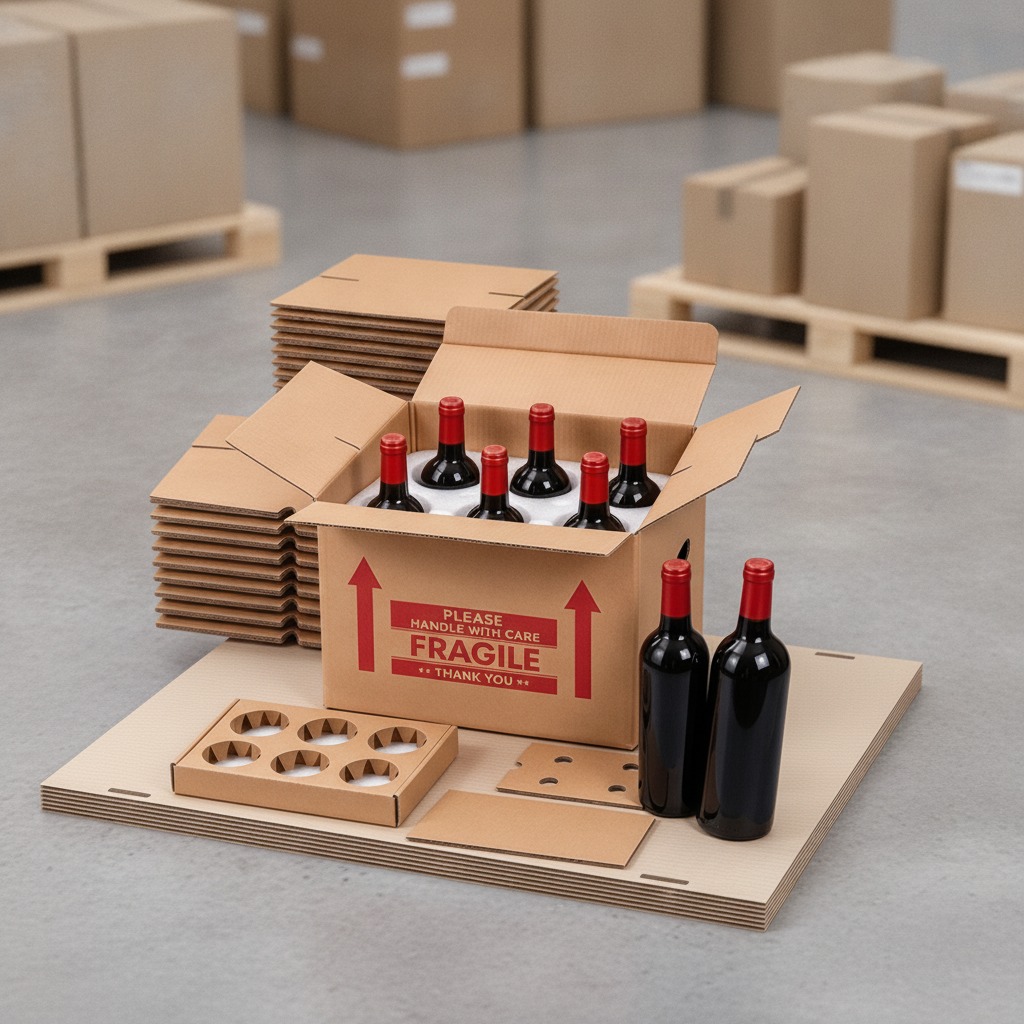
A wine box is not just a carton with a picture on it. For wineries, e-commerce teams, and sourcing managers, it is the last line between a good bottle and an avoidable breakage claim. In the photo, the packaging is doing several jobs at once: separating bottles, cushioning them, signaling fragility, and folding flat for storage when it is not in use. That combination matters more than many buyers admit at first glance.
If you ship wine regularly, the box you choose affects damage rates, labor at pack-out, warehouse space, and even the customer’s first impression when the carton lands on a doorstep. That is why the right specification is usually less about looks and more about how the carton behaves under real handling: stacking, vibration, corner impacts, and hurried human hands.
What stands out in this style of wine shipping packaging
The example shown is a corrugated cardboard wine shipping and packing box with internal bottle dividers. The outer carton is brown kraft, uncoated, and marked with clear red warning graphics, including “FRAGILE” and “PLEASE HANDLE WITH CARE.” Those messages are practical, not decorative. They tell downstream handlers what is inside and how to treat it, even if no one reads the fine print.
Just as important is the internal structure. The visible bottle separators keep bottles from knocking against each other. That spacing is one of the simplest ways to reduce glass-to-glass contact during transit. An open box in the image appears to hold six bottles, though buyers should avoid assuming every variant shares the same capacity. The packaging family also includes flat-pack cartons in the background, which is exactly what many fulfillment operations want: less storage volume before assembly and simpler bulk shipping from the supplier.
Why inserts matter as much as the outer carton
A sturdy outer shell without a decent insert is only half a solution. The insert, whether it is molded pulp, foam-like material, or a die-cut corrugated structure, controls movement inside the box. Movement is what turns routine transport into chipped labels, abraded shoulders, or broken necks. The exact insert material in this example is not certain, and that uncertainty is worth noting when you compare suppliers. Ask for samples and inspect how the bottles sit, how much side play remains, and whether the insert resists collapse after handling.
Wooden wine box, wine crate, or corrugated carton?
Buyers often use these terms loosely, but they point to different use cases.
A wooden wine box has a premium, giftable feel and is often chosen for presentation or special editions. A wine crate suggests heavier duty, sometimes reusable packaging, and can carry a more rustic, cellar-style identity. A wine gift box is usually aimed at retail presentation rather than shipping abuse. By contrast, this corrugated style is built for logistics first: warehouse packing, e-commerce fulfillment, winery direct shipping, and multi-bottle transport.
That distinction matters. If your goal is a custom wine box for gifting, you may care more about print quality and surface finish. If your goal is a personalized wine box for a holiday campaign, structure may still matter, but the unboxing experience gets more attention. If your main problem is breakage, the quieter, less glamorous answer is usually better: stronger separators, better fit, and clearer handling instructions.
What sourcing teams should check before ordering
There are a few practical questions worth asking before placing a purchase order:
Does the carton fold flat cleanly, or does it spring open and waste pack-out time?
Do the inserts hold bottles upright without forcing them so tightly that loading becomes awkward?
Is the print useful enough for warehouse staff and carriers, or is it mostly branding?
Will the box stack neatly in storage and on pallets, or does the geometry invite crushing at the corners?
Those questions sound basic, but they catch many mistakes early. A box that looks good on a sample table can behave very differently once a team is packing hundreds of units under time pressure.
Common mistakes buyers make with wine packaging
One mistake is overbuying presentation and underbuying protection. Another is assuming one insert pattern works for every bottle shape. Bordeaux bottles, Burgundy bottles, and heavier specialty bottles do not always sit the same way. Shoulder shape, neck height, and diameter all change the fit.
A second mistake is treating handling labels as decoration. They are not magic, but they do help, especially in mixed-carrier environments and warehouse transfers. Also, do not overlook the human factor: if a carton is hard to assemble, people will assemble it badly. That is where small failures begin.
Buyer guidance for e-commerce, wineries, and gift programs
If you are buying for shipment, start with protection and assembly speed. If you are buying for a winery retail program, consider whether the carton needs to serve as both shipper and presentation packaging. If you are sourcing for a seasonal campaign, you may want a custom wine box or wine gift box with print that reinforces the brand without making the carton fragile or difficult to stock.
For higher-touch programs, a personalized wine box can be worthwhile, but only if the base structure is sound. A pretty carton that fails in transit is expensive branding.
What to request from a supplier
Ask for structure drawings, bottle fit samples, and photos of the assembled carton with the exact bottle type you plan to ship. If there are multiple versions, compare the inserts side by side. The supplier should be able to explain how the outer corrugated box is converted, how the die-cut components are used, and whether the insert is corrugated or molded protective packaging.
If your team is evaluating a wine crate or a wooden wine box for premium presentation, use the same discipline: check fit, closure, handling, and storage footprint. Packaging decisions age badly when they are made by appearance alone.
Next step for buyers
Before you commit to volume, request a sample run and test it with your actual bottle, your actual label, and your actual shipping path. The right wine box is the one that survives the route with the product intact and the pack line still moving at a sensible pace.