When a customer purchases a fine timepiece or a high-karat pendant, the unboxing experience shouldn't end with a flimsy cardboard slipcase and a disposable velvet pouch. Sourcing teams frequently treat presentation packaging as an isolated cost line item rather than an extension of the product itself. This is an expensive mistake. Specifying a well-engineered wooden jewelry box that accommodates mixed categories—such as pairing a dedicated watch well with tangle-free necklace storage—transforms an accessory from a consumable packaging afterthought into an enduring branding asset that sits permanently on a buyer's vanity.
The Strategic Shift Toward Multi-Category Organizers
Traditional retail packaging is notoriously fragmented: one flat box for a tennis bracelet, a bulky cube for a watch, and miniature envelopes for earrings. This fragmented approach clutters inventory, bloats freight volume, and leaves the end user scrambling for a separate vanity organizer. Consumers today expect combined utility.
By transitioning to an integrated jewelry and watch organizer, brands can serve two distinct B2B needs simultaneously: premium bundled retail packaging and standalone, high-margin private-label merchandise. A case that securely isolates a metal wristwatch alongside fragile chain links solves the real-world frustration of transit scuffs and tangled jewelry, providing immediate functional justification for a higher price point.
Deconstructing the Functional Architecture
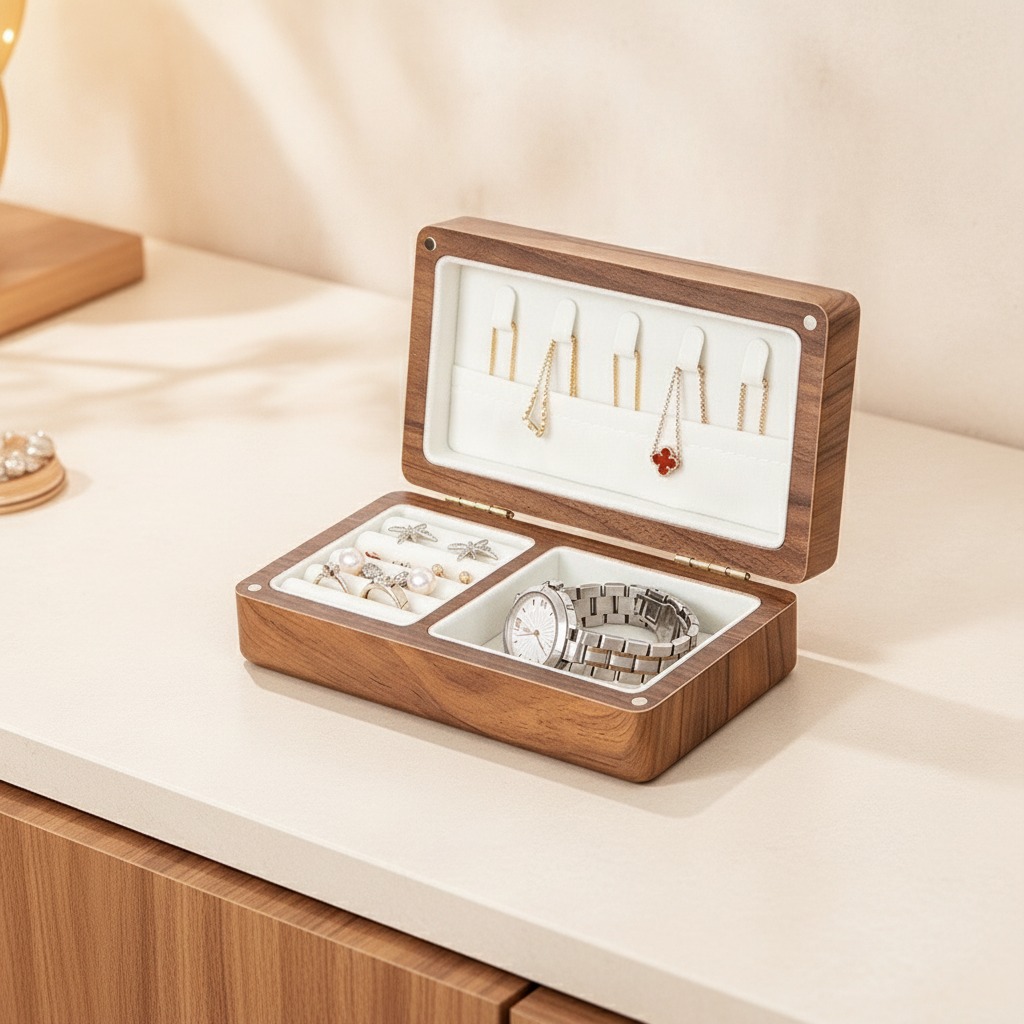
A hybrid case must balance spatial efficiency against surface protection. When evaluating a dual-purpose jewelry box, sourcing teams should examine three primary physical zones:
1. The Vertical Lid Architecture
Necklaces and fine chains present the highest risk of knotting during transit and storage. An effective lid design utilizes individual top-mounted hanging notches or tabs paired with an elasticized lower pouch. This lower retaining pocket serves a specific mechanical purpose: it captures the slack of the chain and prevents heavier pendants from swinging downward to impact watch crystals or ring settings in the base compartment when the lid closes.
2. The Segmented Base Geometry
The base requires deliberate zone separation. In a compact footprint, this typically means a two-tier division:
- A deep, open well: Sized specifically to accommodate a men's or women's wristwatch on a display cushion or lying flat, preventing clasp friction against adjacent items.
- Padded divider sections: Compact slots fitted with soft-touch partition walls to organize stud earrings, signet rings, or small brooches without letting metal hardware clatter together.
3. Joinery, Corners, and Hardware
Rounded outer bevels soften the profile and decrease corner-crush damage during multi-unit shipping compared to sharp 90-degree edges. Pay particular attention to the rear hardware: low-profile metal butt or stop hinges must bear the weight of a loaded lid without skewing out of square. If the factory uses misaligned hinge screws or under-gauged plate stock, the lid will rack sideways over time, ruining the perimeter seam alignment.
Material Realities: Substrate, Veneer, and Interior Soft Goods
Product renders often look identical, but physical factory execution differs wildly in quality depending on the bill of materials. While solid timber offers prestige, it also carries the risk of environmental movement, grain cracking, and warpage if exported across varying humidity zones. For large-scale production, an engineered board or MDF core faced with a figured wood veneer often delivers superior dimensional stability while maintaining the rich, medium-brown grain aesthetic that luxury buyers expect.
For the interior, plush upholstery—whether faux leather, microfiber, or woven textile—serves both presentation and protection duties. Sourcing managers must issue clear advisories here: check with your manufacturing partner regarding the adhesives used to secure interior linings. Cheap solvent-based glues can off-gas inside a sealed box, reacting with silver alloy and accelerating tarnish before the customer even receives the piece. Water-based, low-VOC bonding agents are an absolute requirement for jewelry-safe packaging.
Common Sourcing Traps to Avoid
Before issuing a purchase order for mass production, keep these operational hazards on your radar:
- Ignoring watch clearance: Ensure the watch cavity depth accounts for oversized cases and thick leather or steel deployant clasps. If the watch compartment sits too shallow, the lid lining will press down directly on the watch bezel, risking scratches if dust particles settle inside.
- Neglecting pocket retention tension: A lid pouch with insufficient elastic tension will drop chains into the base tray the moment the box is tipped into a travel bag.
- Under-specifying fitting tolerances: In cases utilizing small corner alignment studs or friction fittings, loose manufacturing tolerances will result in an annoying rattle when handled.
Frequently Asked Questions
Can this style of case be used for direct-to-consumer shipping?
Yes, provided the outer carton has adequate corner buffering. Because the box features a wood-grain finish and precision-hinged lid, it should be sleeved in an unprinted dust bag and secured inside a corrugated mailer with close-fitting foam or pulp inserts to avoid exterior scuffing during courier handling.
Is a dedicated watch slot necessary for a general jewelry line?
It depends on your demographic, but modern styling trends show consumers increasingly mix statement timepieces with rings and layered chains. Offering a multi-compartment jewelry box immediately expands your customer utility compared to single-purpose boxes that end up shoved into a drawer.
Next Steps for Sourcing Teams
If you are planning your next seasonal rollout or upgrading your retail accessory catalog, re-evaluate your packaging budget. Transitioning to a finished, multi-compartment organizer provides a tangible upgrade in unboxing theater and post-purchase customer retention. Request a physical prototype from your casing supplier to test hinge rigidity, pocket tension, and lining softness under real-world handling before committing to full-run tooling.