Why a Premium Portable Oval Jewelry Box matters in real buying decisions
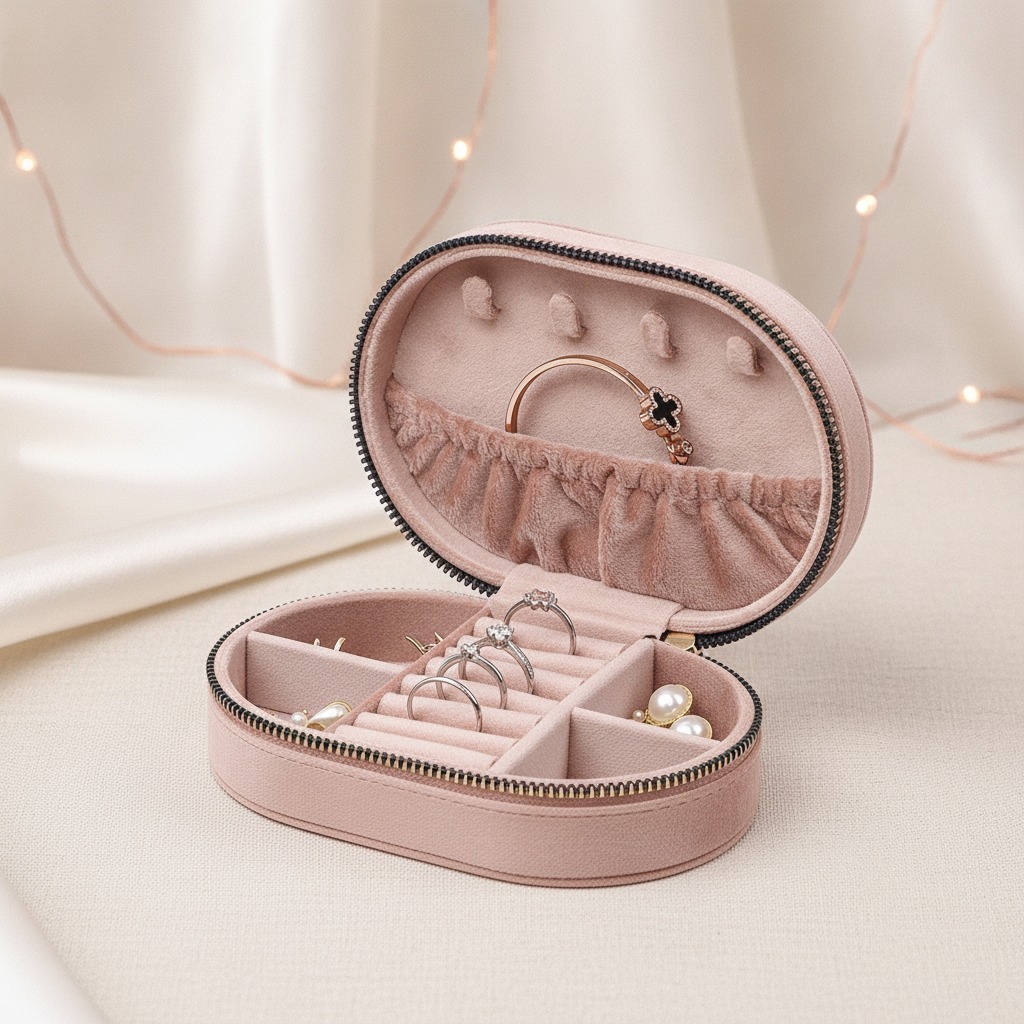
A Premium Portable Oval Jewelry Box looks simple at first glance, but that simplicity is usually the point. For buyers in jewelry retail, gift packaging, travel accessories, or small goods sourcing, the challenge is rarely finding a container. The real challenge is finding one that protects delicate pieces, keeps them separated, and still feels polished enough to support the product value.
This kind of jewelry case is designed for small items that misbehave in transit: rings rolling loose, earrings disappearing into bag corners, thin necklaces knotting together, and bracelet clasps scratching neighboring pieces. A compact oval format can solve several of those problems at once, especially when the interior is divided into dedicated sections rather than one open cavity.
The model described here appears to combine a soft pink quilted exterior, a zip closure, and a lined interior with ring rolls and small accessory compartments. That combination is not flashy, but it is practical. And in sourcing, practical often sells better than decorative.
What this type of jewelry case is built to do
For most buyers, the decision is less about style and more about use case. A portable oval case is usually chosen when the product needs to move: weekend travel, trade show packing, retail gifting, or daily countertop organization.
The visible structure suggests a sewn-and-assembled accessory case with a padded shell, textile lining, and zipper attachment. That matters because the build method influences how the case feels in hand and how well it resists light bumps. A rigid shell can offer more crush resistance, while a softer shell may be lighter and more flexible in luggage. Since the exact construction is not specified, buyers should treat the current description as a starting point and confirm what matters most for their application.
Likely practical functions
- Ring storage with dedicated slots
- Earring separation to reduce tangling
- Small compartment storage for pendants or chains
- Gift-ready presentation for jewelry sets
- Travel organization for short trips or carry-on use
Key design details buyers should notice
The oval geometry is not just a visual choice. Rounded edges reduce snagging in bags and make the case easier to handle quickly. A zippered closure adds a basic layer of security, though it should not be mistaken for a hard lock or a waterproof seal. That is an important distinction, especially for sourcing teams comparing “protective” with “fully protective.” Those are not the same thing.
The quilted diamond pattern on the lid and the pink-toned interior give the item a finished, giftable appearance. In jewelry packaging, presentation affects perceived value. A plain insert can do the job, but a case like this signals more care. For retailers, that can help justify a higher ticket or improve the customer’s unboxing experience.
The interior layout appears especially useful. Ring rolls in the center are a standard solution because they hold bands upright and reduce movement. Side pockets or split sections can keep chains from crossing over one another, while lid tabs for earrings or straps are helpful for tiny components that would otherwise vanish.
How to evaluate a jewelry organizer before you buy
If you are sourcing a Premium Portable Oval Jewelry Box, the right questions are fairly straightforward:
- Does the interior layout match the jewelry types you expect?
- Is the shell soft enough for lightweight travel, but firm enough to protect against compression?
- Is the zipper smooth and secure, especially around curved edges?
- Is the lining soft enough to reduce scratching?
- Will the exterior finish hold up to handling and retail display?
One practical caution: many jewelry organizers look more substantial in photos than they feel in hand. If the product will be used for heavier necklaces or multiple large pieces, confirm the internal depth and pocket sizing before placing volume orders. The same case that works well for earrings and rings may feel cramped for bulkier items.
Common mistakes when selecting portable jewelry storage
The most common mistake is choosing appearance over layout. A case can look premium and still be awkward if the compartments are too shallow or the ring rolls are undersized. Another error is assuming “portable” automatically means “travel-ready for everything.” It may be excellent for carry-on essentials and still unsuitable for bulk storage or high-impact shipping.
Buyers also sometimes overlook closure quality. A decorative zipper is not enough if the slider binds or the teeth do not align cleanly along the curved edge. On a small case, hardware quality has an outsized effect on day-to-day usability.
Who this style suits best
This style is a good fit for:
- Jewelry brands looking for gift packaging with a usable afterlife
- Retailers needing compact point-of-sale accessory storage
- Travel accessory assortments aimed at women’s bags or personal care kits
- Promotional gift programs where presentation matters, but volume and cost control still matter
It is less suitable when the customer needs hard-shell protection, water resistance, or large-capacity storage. Those buyers should look elsewhere.
What to ask before placing an order
Because several details are not visible here, it is sensible to confirm the basics with the supplier: exact dimensions, material composition, shell firmness, internal capacity, and whether the exterior is genuine leather or synthetic. Those details affect not only price positioning, but also how you describe the product to your own customers.
If you are comparing multiple options, ask for interior photos and a sample close-up of the zipper and stitching. For a small case, workmanship is easier to see than to guess.
Next step for buyers
If your use case is compact, organized, and presentation-focused, a Premium Portable Oval Jewelry Box is a sensible category to source. It is not trying to replace a full jewelry armoire. It is doing a narrower job: keeping small pieces separated, protected, and ready to carry.
That narrower job is often exactly what the market wants.