Paper Packaging for Presentation, Shipping, and Retail: What Buyers Should Look For
Paper packaging does a lot more work than people give it credit for. In one plant, it has to protect a product on the way out; in a shop, it has to look clean under bright lights; at a gift table, it needs to feel considered, not improvised. The same basic material family can become paper packaging boxes, paper shipping boxes, or a more decorative presentation box depending on how it is built and finished. That flexibility is exactly why it stays central to so many buying decisions.
For sourcing teams and product managers, the real question is not whether paper packaging is useful. It is which type fits the job without overspending on structure or underbuilding the pack. A white rigid-looking box with a matte or satin surface, paired with ribbon or a bow, tells a very different story from a plain kraft shipper. Both can be the right answer. They just solve different problems.
Why paper packaging remains a practical choice
Paper-based packs sit in a useful middle ground. They are easy to convert, relatively familiar to buyers, and adaptable across retail, gifting, and transport. A blank white box can be turned into a branded presentation piece with a label, foil stamp, sleeve, or simple ribbon. Kraft paper packaging, by contrast, often carries a more natural, utilitarian look and can signal restraint or environmental intent without much decoration.
That said, “paper” is not one thing. Paperboard, carton, and corrugated board behave differently. A cosmetics box, a jewelry tray, and a shipping case may all be made from paper-derived materials, but they are not interchangeable. Choosing too light a structure can leave a product dented or crushed. Choosing too heavy a structure can make the pack expensive and awkward. The best packaging decision usually comes from matching the board grade and construction to the product’s fragility, display value, and route to market.
Quick comparison: what different paper packaging styles are trying to do
Paper packaging boxes
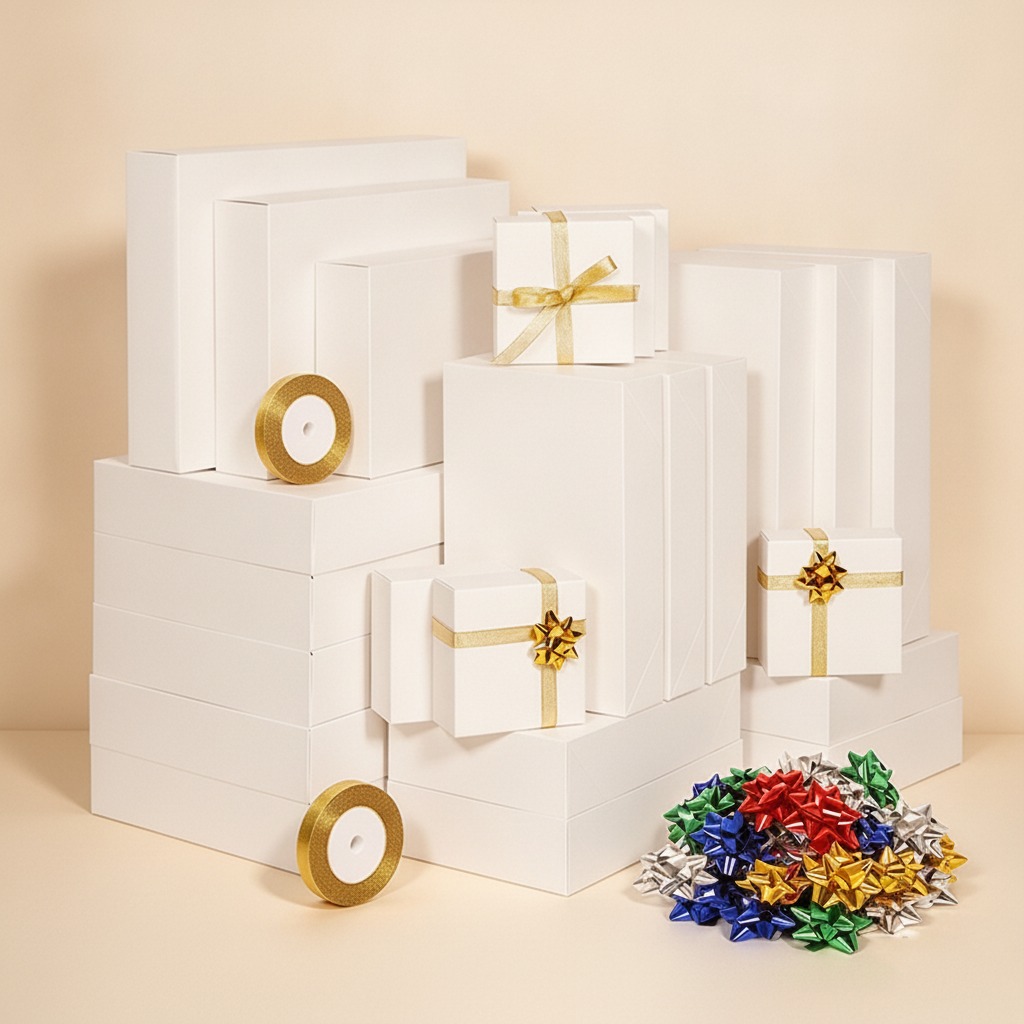
These are often used when presentation matters as much as containment. In the product set described here, the visible white boxes appear to be clean rectangular formats with flat surfaces and minimal decoration. That style works well for gifts, accessories, small consumer goods, and branded sets because it offers a calm, ready-to-finish canvas.
Paper shipping boxes
Shipping boxes are more about protection and stacking than display. They are typically chosen for parcel networks, warehouse handling, and longer transit. Buyers usually prioritize stiffness, closure security, and crush resistance over visual finish, although branding still matters on the outside.
Kraft paper packaging
Kraft paper packaging tends to be favored when a plain, earthy appearance is useful. It is often associated with a more sustainable packaging paper story, though buyers should be careful not to assume every brown paper pack is automatically the greener option. Material mix, coatings, adhesives, and transport efficiency all matter.
Eco-friendly paper packaging
This label is used broadly, sometimes loosely. In practice, buyers should ask what makes the pack “eco-friendly”: recycled content, simpler construction, reduced plastic use, or easier recovery after use. Good intent is not enough. A well-designed pack still has to arrive intact and do the job on shelf or in transit.
What the visible box-and-ribbon style suggests
The coordinated white boxes, metallic ribbon rolls, and decorative bows point toward gift packaging and presentation supply use. This is the kind of set often seen in retail gifting, seasonal promotions, weddings, and corporate events. The boxes appear blank, which is a strength, not a weakness. Blank surfaces are easier to brand, easier to photograph, and easier to adapt across product lines.
For buyers, that means the packaging can carry several roles at once: product container, presentation layer, and merchandising support. A small box tied with a gold bow feels finished immediately. In a retail setting, that can shorten assembly time and improve perceived value. In a procurement setting, it may also simplify SKUs if multiple sizes share a common visual system.
Selection criteria that matter in real purchasing
Start with the product itself. Is it delicate, heavy, irregular, or high-value? A rigid-style presentation box may suit jewelry or cosmetics, while paper shipping boxes are better for items that travel through distribution channels. Then look at the finish. Matte and satin surfaces feel restrained and premium, while kraft finishes carry a more natural tone.
Next, consider assembly. Some packaging looks elegant in photos but slows down pack-out on the floor. If the box needs to be folded, lined, tied, or fitted with accessories, make sure the labor is realistic. Ribbon and bows add charm, but they also add handling time. That is fine for gifts and special events; it is less fine for high-volume fulfillment unless the process is designed around it.
Finally, think about printability and merchandising. White paperboard surfaces are especially useful when the buyer wants labels, custom artwork, or seasonal graphics. Kraft paper packaging can also print well, but the visual effect is different. Neither is universally better. The right choice depends on the brand tone and the product journey.
Common mistakes buyers make
The first mistake is treating all paper packaging as if it has the same strength. It does not. The second is selecting a beautiful box and then discovering it does not stack well, close consistently, or protect the product corners. The third is over-specifying decoration. Metallic bows and ribbon can add value, but only when they support the retail story. Otherwise, they become cost and labor without much return.
Another frequent miss is ignoring the full pack system. A box, insert, ribbon, label, and outer shipper should be considered together. That matters especially when a product moves from warehouse to shelf to customer. A visually strong presentation box may still need a plain paper shipping box around it for transit protection.
Buyer advice: ask for samples and judge them in use
When comparing suppliers, ask for samples that reflect the actual use case, not just a showroom piece. Open and close the box several times. Check whether edges stay crisp. See how ribbon sits against the surface. If the package will be stacked, test that too. Small flaws show up quickly when a box is handled repeatedly.
It also helps to review whether the proposed pack uses paperboard, carton, or a more rigid construction. The terminology is often loose in catalogs, so a buyer should not rely on names alone. One supplier’s “gift box” may be another supplier’s folding carton. That difference changes cost, appearance, and performance.
FAQ: a few practical questions buyers ask
Is paper packaging only for low-cost products?
No. Paper packaging is used everywhere from commodity goods to premium gifts. The structure and finish determine the positioning.
Are kraft paper packaging options always more sustainable?
Not automatically. They may support a lower-plastic or simpler-material approach, but the full material build matters.
When should I choose paper shipping boxes instead of presentation boxes?
Use shipping boxes when protection and logistics come first. Use presentation boxes when appearance, gifting, or shelf appeal carry more weight.
Next step for sourcing teams
If you are comparing paper packaging for retail, gifting, or shipment, define the pack’s job before you define its look. Then request samples, check assembly time, and verify how the box behaves in real handling. The best paper packaging is usually the one that looks simple after a lot of decisions have been made correctly.