Why a Two-Tier Jewelry Box Still Matters on a Modern Dresser
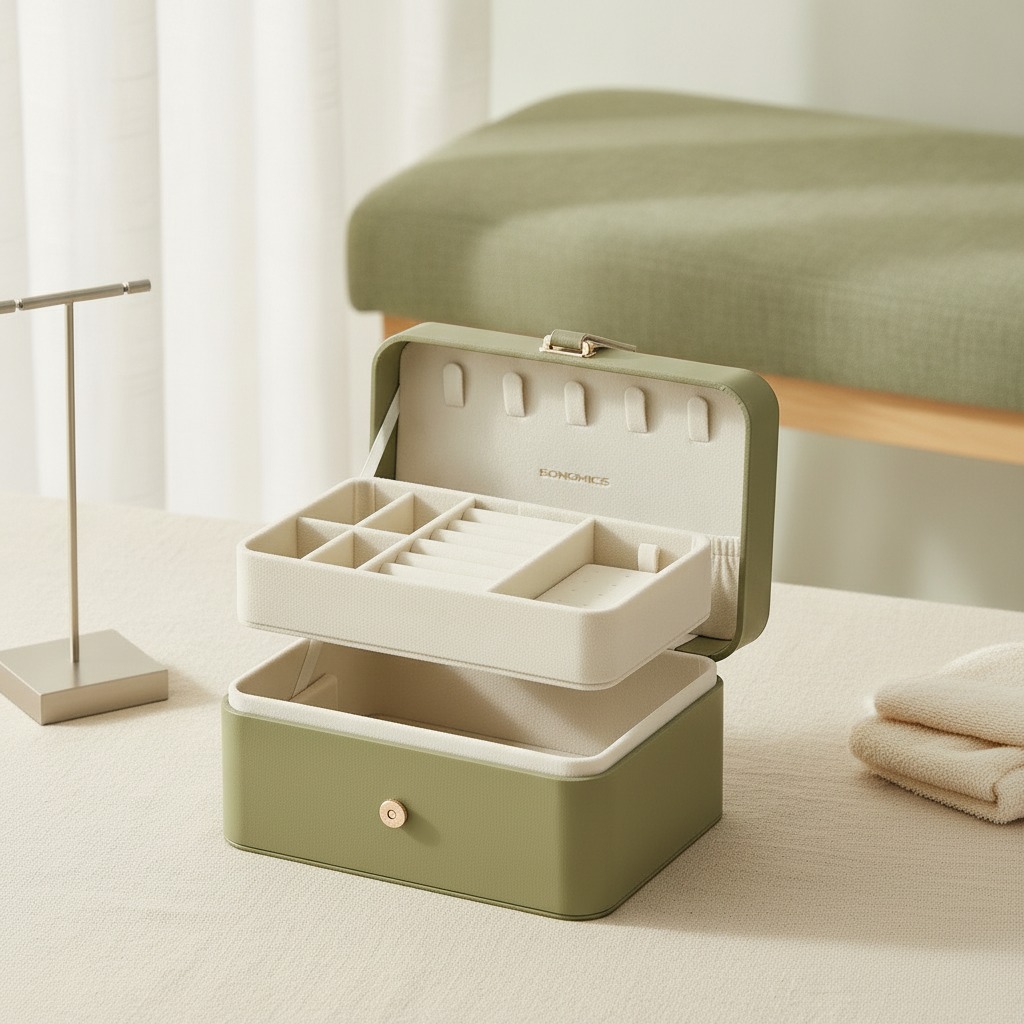
An
Olive Green Two-Tier Jewelry Box with Necklace and Ring Compartments
is not just a decorative accessory. For many buyers, it solves a small but constant problem: keeping mixed jewelry organized without letting chains knot, studs vanish, or rings get scratched in a crowded drawer. That matters whether you are buying for personal use, retail merchandising, gifting, or a product line aimed at everyday home organization.
The appeal of this style is straightforward. A compact tabletop format gives jewelry a fixed home, while the two-tier layout separates higher-value or frequently worn pieces from smaller items that need more careful sorting. In practical terms, that means less time untangling necklaces and less chance of misplacing earrings when the morning routine is already moving too fast.
What the Layout Actually Does Well
This box style combines several storage functions in one enclosure. The olive-green exterior gives it a restrained, furniture-like look, while the light beige interior makes the contents easier to see. That contrast is more than cosmetic. In a soft-lined interior, small items stand out better than they do against a dark cavity, especially under bedroom lighting.
The visible structure includes a hinged lid with a front clasp closure, a removable upper tray, and a lower storage area divided into smaller compartments. There are also ring rolls or narrow slots, which are useful for keeping bands upright and preventing them from sliding into one another. For earrings, pendants, and small charms, the small compartment sizes help separate delicate pieces that would otherwise tangle together.
The lid itself does some of the work. The presence of hanging hooks and an elastic pocket or pouch area gives the box a second storage mode for necklaces and bracelets. That is often where lower-cost jewelry organizers fall short: they offer tray space, but no real way to suspend chains. Here, the lid helps reduce chain tangling by keeping necklaces hanging rather than coiled.
Who Benefits Most from This Type of Organizer
This kind of jewelry box fits a few buyer profiles particularly well.
For personal users, it is a dresser-top organizer that keeps daily wear items within reach.
For gift buyers, the olive green finish gives it a more mature and less flashy appearance than many pastel or glossy alternatives.
For sourcing teams and product developers, it represents a familiar, proven category with clear feature expectations: compact form, divided storage, soft lining, and closure hardware.
If you are evaluating it as a product concept, the best thing about the format is that it serves both display and storage. It looks neat enough to sit out, which increases the odds that users will actually keep jewelry inside it instead of scattering pieces across countertops and nightstands.
Key Construction Points Buyers Should Check
The exact core material is not specified here, so it is worth being careful with assumptions. Visually, the box appears to be a fabricated hard-shell structure with a covered exterior and a padded or flocked interior. That is a common approach in jewelry box manufacturing because it allows a rigid shape without exposing the underlying board or casing.
When comparing similar products, buyers should look at:
1. Hinges and clasp feel
The lid should open smoothly and close securely without wobble. A front clasp is useful, but it should not feel flimsy. On small organizers, cheap hardware is often the first failure point.
2. Interior finish
Soft lining matters because jewelry surfaces are unforgiving. Rings can pick up scratches, plated pieces can wear faster, and chains can snag on rough seams.
3. Tray fit and compartment sizing
A removable upper tray is helpful only if it lifts out cleanly and does not shift around during use. Compartments that look generous in photos can become cramped in practice, so spacing should be judged against actual item mix.
4. Necklace storage design
Hooks inside the lid are a stronger choice than loose open space. Even then, buyers should be realistic: very long or bulky necklaces may still need careful placement to avoid overlapping.
Common Mistakes When Choosing Jewelry Storage
One mistake is choosing for appearance alone. Olive green has a calm, premium feel, but a box still has to work for the wearer’s real collection. Someone who owns mostly rings and studs needs different compartment geometry than someone who wears layered chains every day.
Another common miss is overestimating capacity. A two-tier organizer can hold a useful mix of pieces, but it is not a bulk storage solution for an entire inherited collection. It is better understood as a daily-use or small-collection box.
A third issue is security assumptions. The clasp is a closure, not necessarily a lock. If a buyer needs true theft resistance, travel security, or moisture protection, this type of desktop jewelry box should not be treated as a substitute for a safe or sealed container.
What Makes the Olive Green Finish Useful in Retail
From a merchandising point of view, olive green sits in an interesting space. It feels quieter than jewel tones and less generic than white or black. That can help it blend into home interiors while still looking intentional in product photography. Beige interiors also photograph well because they show compartment layout clearly, which is helpful for online listings where function needs to be understood quickly.
The shape is practical too. Rounded corners soften the visual profile, and the rectangular footprint is easier to place on dressers, vanities, and shelves. It is the kind of object that should disappear into a room without looking plain, which is often exactly what buyers want from storage products.
Buyer Advice Before Ordering or Listing
If you are sourcing this style, ask for confirmation on the material build, lining type, and hardware spec before making claims in a catalog or product page. Avoid stating water resistance, capacity, or security performance unless those details are verified. Those are easy claims to make and annoying ones to retract.
For retail teams, the best selling angle is usually not luxury. It is organization with a neat presentation: separate rings from earrings, suspend necklaces to cut tangling, and keep frequently worn items visible but protected.
For end users, the simplest test is whether the box matches the rhythm of daily use. If the pieces you reach for most often can be stored, found, and removed quickly, the organizer is doing its job.
FAQ: Quick Questions Buyers Tend to Ask
Is this mainly for jewelry or for other small items too?
It is designed primarily for jewelry, but the smaller compartments can also hold similar small accessories.
Does the two-tier layout really help?
Yes, especially when the upper tray is used for smaller items and the lower area is reserved for rings, earrings, or pieces you want separated.
What should a buyer verify first?
Check the clasp, tray fit, interior lining, and necklace-hook arrangement. Those details determine everyday usability more than exterior color alone.
A Practical Next Step
If you are evaluating an Olive Green Two-Tier Jewelry Box with Necklace and Ring Compartments for purchase, merchandising, or private-label development, start with use case, not style. Ask what the user actually needs to store, how often they will open the box, and whether the necklace area is genuinely functional for their collection. That small bit of discipline usually separates a pretty organizer from one that becomes part of the routine.