When specifying a rigid packaging box for multi-component kits or high-value hardware, packaging engineers often get caught between two competing priorities: cosmetic presentation and mechanical retention. A container built for retail display needs clean sightlines, tactile surfaces, and deliberate reveal mechanics. At the same time, if the internal cavities fail to account for part tolerances or if the lid hinge fatigues after repeated openings, the user experience deteriorates immediately. Sourcing managers need to evaluate how these structural and material elements work together before approving production tooling.
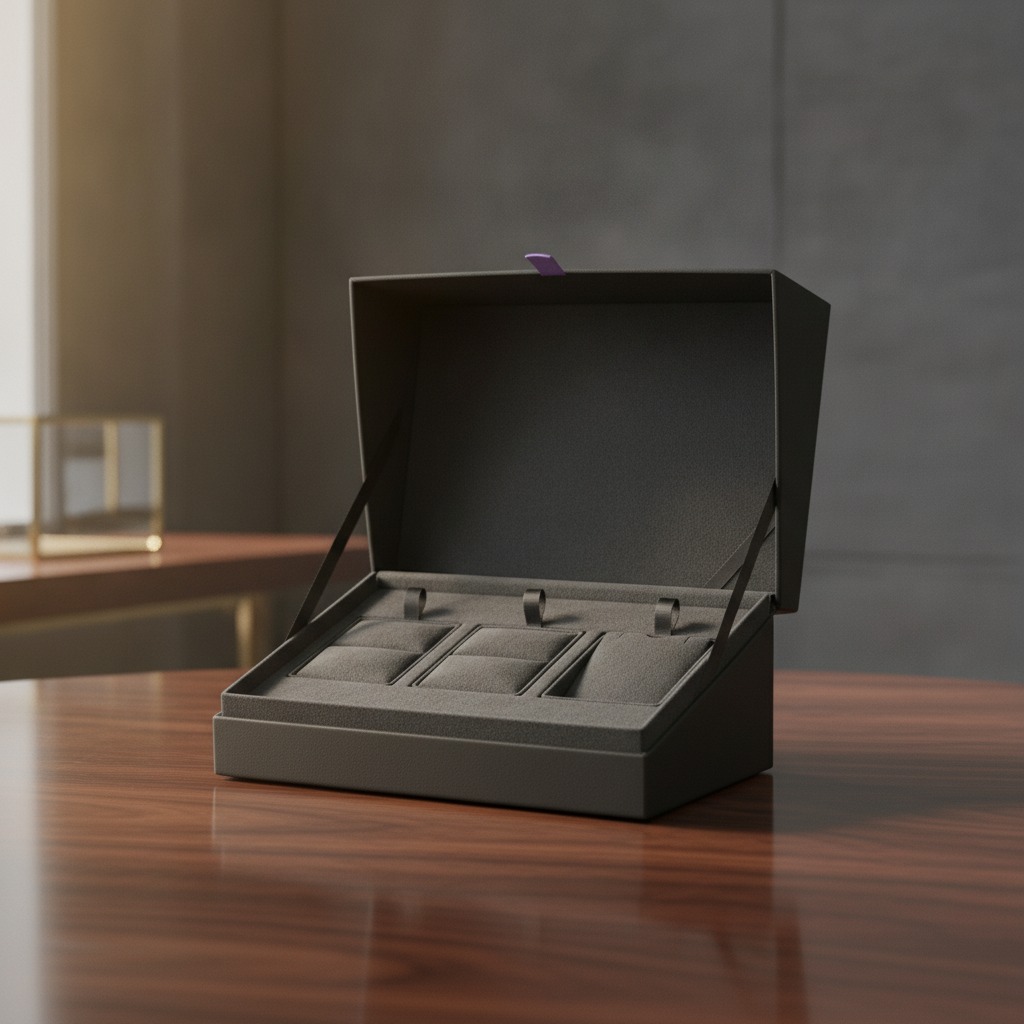
Anatomy of a Hinged Multi-Cavity Rigid Box
Presentation-grade rigid packaging differs significantly from standard folding cartons or corrugated mailers. The typical construction relies on a dense structural core—frequently heavy chipboard or a molded composite—wrapped in a textured paper, coated synthetic, or woven textile outer layer. This approach provides dimensional stability and sharp perimeter corners that hold their shape under shelf-stacking loads.
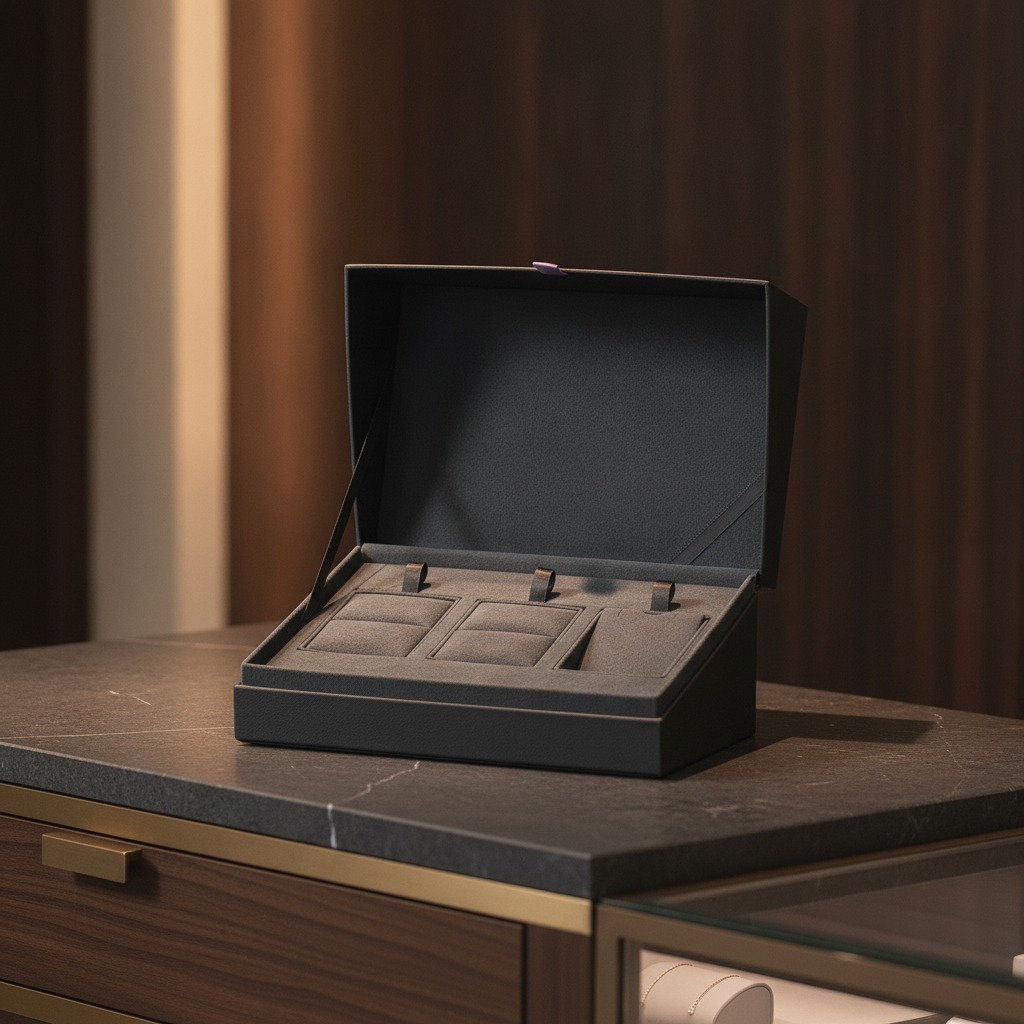
For sets designed to remain in the box during use or storage, the lid architecture is critical:
- Upright Hinged Lid: Rather than a standard lift-off (telescope) cap, an integrated hinge maintains alignment and keeps the lid upright when opened. This is often reinforced with internal fabric stay-ribbons on both flanks to prevent the hinge from overextending and tearing the exterior wrap.
- Integrated Pull Features: High-wall bases can create tight seals against the lid. Small textile pull tabs, positioned along the edge, provide the necessary mechanical leverage for smooth opening without requiring the user to pry at seams with their fingernails.
- Angled or Stepped Walls: Interior side walls may feature subtle bevels or draft angles to guide component placement while softening visual break lines inside the chamber.
Interior Cavity Design and Part Retention
The interior architecture shown in multi-piece presentation boxes—such as those featuring three distinct recessed bays—requires deliberate clearance management. When holding sets of tools, chronometers, precision instruments, or luxury lifestyle accessories, the insert must isolate each item to eliminate surface-to-surface abrasion.
Stepped and Layered Inserts
Milled EVA foam, thermoformed plastic trays, or wrapped pressed-board inserts are standard options here. Stepped interior recesses allow components of varying heights to sit flush along a uniform plane. For sensitive products, lining these cavities with a soft-touch textile—such as a micro-suede, velvet, or flocked finish—provides scratch protection. However, sourcing teams must confirm the adhesive system used beneath this lining: wet-glued laminations can off-gas volatile organic compounds (VOCs) within a sealed box, potentially tarnishing polished metals or degrading delicate optical coatings if left unchecked in transit.
Secondary Retention Straps
Gravity-fit cavities alone are rarely sufficient for shipping. Loop-style retention straps or elasticized bands positioned across the upper perimeter of each cavity provide downward pressure to hold items in place during inverted handling. When designing these, pay close attention to the stitch or anchor point beneath the insert tray; poor anchoring will cause straps to pull loose after minimal cycles.
Sourcing and Production Considerations
Before committing to production runs for custom rigid packaging, specify the following parameters with your packaging fabricator:
Tolerance Stack-Up: A rigid box shell has tight dimensional variance, but textiles and wrapped boards introduce thickness deviations. Ensure your insert manufacturer works from physical component samples, not just nominal CAD step files. A cavity that is 0.5 mm too narrow can cause fabric binding, while an oversized recess will rattle.
Lid Stay Placement: Verify that the interior ribbon stays do not fold inwards across your products when the box closes. If the ribbon slack drapes directly over the cavity area, it can pinch against components or prevent the lid from seating flush.
Adhesive and Seam Durability: The mitered corners of deep-base boxes experience significant tensile stress during handling. Request white-box or unprinted structural mockups to inspect corner adhesion, checking for bubbling along the interior hinges or peeling at the return edges.
Frequently Asked Questions
What determines whether to use a foam insert versus a wrapped board insert?
Foam (such as high-density EVA or polyethylene) offers superior impact absorption and precise CNC or die-cut profiles for irregular shapes. Wrapped board inserts yield a more seamless, furniture-grade appearance for flat or rectilinear products, but they provide minimal drop cushioning and have higher tooling setup requirements.
How can we prevent chemical off-gassing from damaging contents?
Specify water-based or hot-melt adhesives with low VOC profiles for all interior flocking and board wraps. If the packaging encloses silver, brass, or sensitive electronics, specify an accelerated aging or tarnish-exposure test with the assembled packaging before clearing mass production.
Next Steps for Specifying Your Packaging
Start by compiling physical samples of all three items intended for the cavities, accounting for their maximum manufacturing tolerances. Request an unlined structural prototype from your converter to validate hinge geometry, ribbon-stay clearance, and cavity depths before finalizing exterior wraps or decorative surface treatments.