Beyond the Dial: Why Executive Timepieces Depend on the Presentation Case
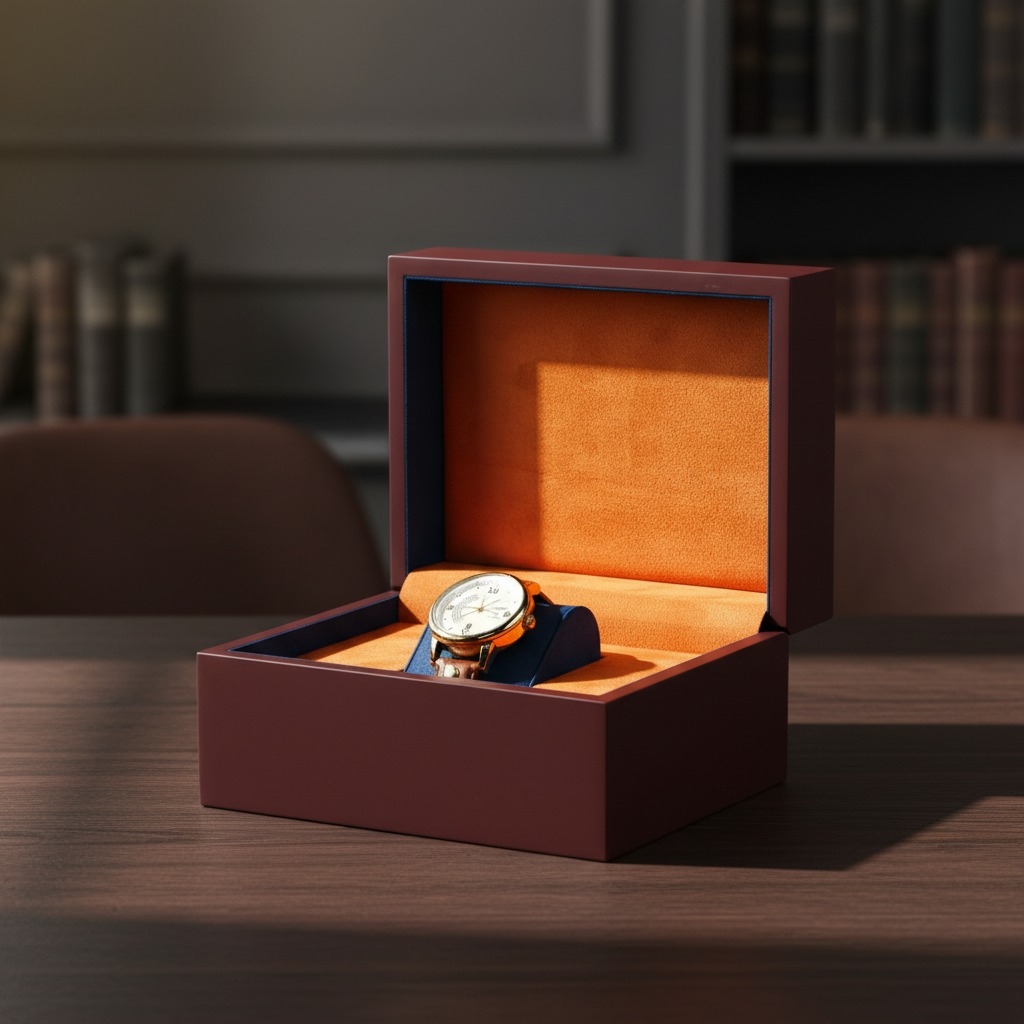
When a procurement team or luxury retailer commissions an executive desk timepiece, the conversation almost always starts with the dial: the tone of the gold-tone bezel, the clarity of the Roman numerals, or the sweep of the hands. That focus is understandable, but it misses a critical commercial reality. For an executive recipient, luxury hospitality client, or retail customer, the tangible weight of ownership begins the moment their hands touch the housing. Investing in a Custom Wooden Lacquered Watch Storage Box or hinged desk-display case is not an auxiliary packaging expense; it is the physical framework that establishes perceived value before the movement even ticks.
Too many brand managers undermine high-tier timepieces by treating the presentation box as an afterthought—defaulting to flat-pack paperboard or thin, generic synthetic shells. When a finely balanced mantel or desk clock arrives in lightweight packaging, the psychological equity evaporates. A lacquered wooden case, by contrast, conveys permanence, gravity, and bespoke craft. It informs the buyer that what sits inside is an heirloom or a centerpiece, not a novelty.
The Architecture of an Effective Display Case
Unlike standard packaging meant to be discarded post-purchase, a high-grade presentation case serves as a permanent architectural mount. In many executive environments, the timepiece remains housed directly inside the open box on a desk, bookshelf, or boardroom credenza.
Achieving that presence requires deliberate physical detailing:
- Exterior Depth and Contrast: High-gloss lacquered surfaces reward ambient light. A rich burgundy exterior accented with contrasting dark blue perimeter paneling creates architectural presence. The lacquer must be fully cured and polished flat to avoid the orange-peel texture that plagues low-cost contract runs.
- The Interior Well: The interior cannot merely be a hollow void. A fitted recess—often draped in a contrasting velvet-like or high-nap orange textile—creates immediate visual drama against a classic light dial and metallic bezel. This color tension makes the timepiece visually pop the second the lid swings open.
- Hinged Stability: Because the piece is intended for display while open, the lid angle and hinge resistance matter. A flimsy stamped hinge will allow the open lid to wobble or lean backward at an uncalibrated angle, throwing off the center of gravity and spoiling the presentation.
Procurement Pitfalls: What Sourcing Teams Overlook
Sourcing a custom wooden lacquered watch storage box or display housing demands vigilance regarding material stability. Wood substrates naturally expand and contract with atmospheric humidity. If a manufacturer rushes the kiln-drying phase or applies thick lacquer over unstable medium-density fiberboard or uncured timber, micro-fissures and warping will appear along the joints months after delivery.
Another common failure point is interior chemical interaction. Lacquers and flocking adhesives emit volatile organic compounds (VOCs) as they set. If presentation cases are packed and sealed in polybags before fully off-gassing, trapped chemical vapors can tarnish brass-plated bezels, fog interior crystal surfaces, or degrade synthetic seals. Sourcing managers must demand strict curing protocols between final topcoat application and final assembly.
Evaluating Functional Purpose: Static vs. Display-Ready
Before issuing a request for quotation (RFQ), clarify whether your product is purely intended for transit and storage, or if it acts as the primary desk display cradle. A transport-heavy design requires deeper recesses, thicker perimeter walls, and snug foam tolerances to withstand handling. A display-oriented case, however, prioritizes low front lip profiles so the full face of the dial remains unobstructed when viewed from a seated desk position.
For luxury corporate gifting, the case often remains open permanently. In that context, exterior corner alignments, uniform reveal gaps, and the tactile snap of the closure are scrutinized daily. Skimping on the exterior lacquer work or settling for uneven textile pleating in the central clock mount signals compromised standards across the entire product line.
A Direct Approach to Sourcing
If your organization is assembling an executive timepiece line or upgrading a retail catalog, do not isolate the horological component from its casing. Sourcing a dedicated custom wooden lacquered watch storage box alongside your clock assembly ensures that finish depths, dimensional clearances, and color contrasts work in concert rather than conflict.
When briefing your manufacturing partner, insist on physical strike-offs that pair the fully lacquered box shell with the exact textile interior and clock mounting hardware. Reviewing these elements together under natural light is the only reliable way to guarantee that your finished piece commands the desk space it deserves.