For brand managers and packaging engineers developing presentation packaging, specifying a Custom White Leather Watch Box introduces immediate trade-offs between aesthetic impact and practical floor-to-shelf reality. White presentation cases convey a clean, premium visual language that stands out against the industry's default palette of black, walnut, and navy. However, producing a crisp, pristine white rigid case requires precise control over wrapping tension, adhesive selection, and hardware alignment. Small defects that would disappear on dark leatherette stand out vividly against a bright, textured white surface.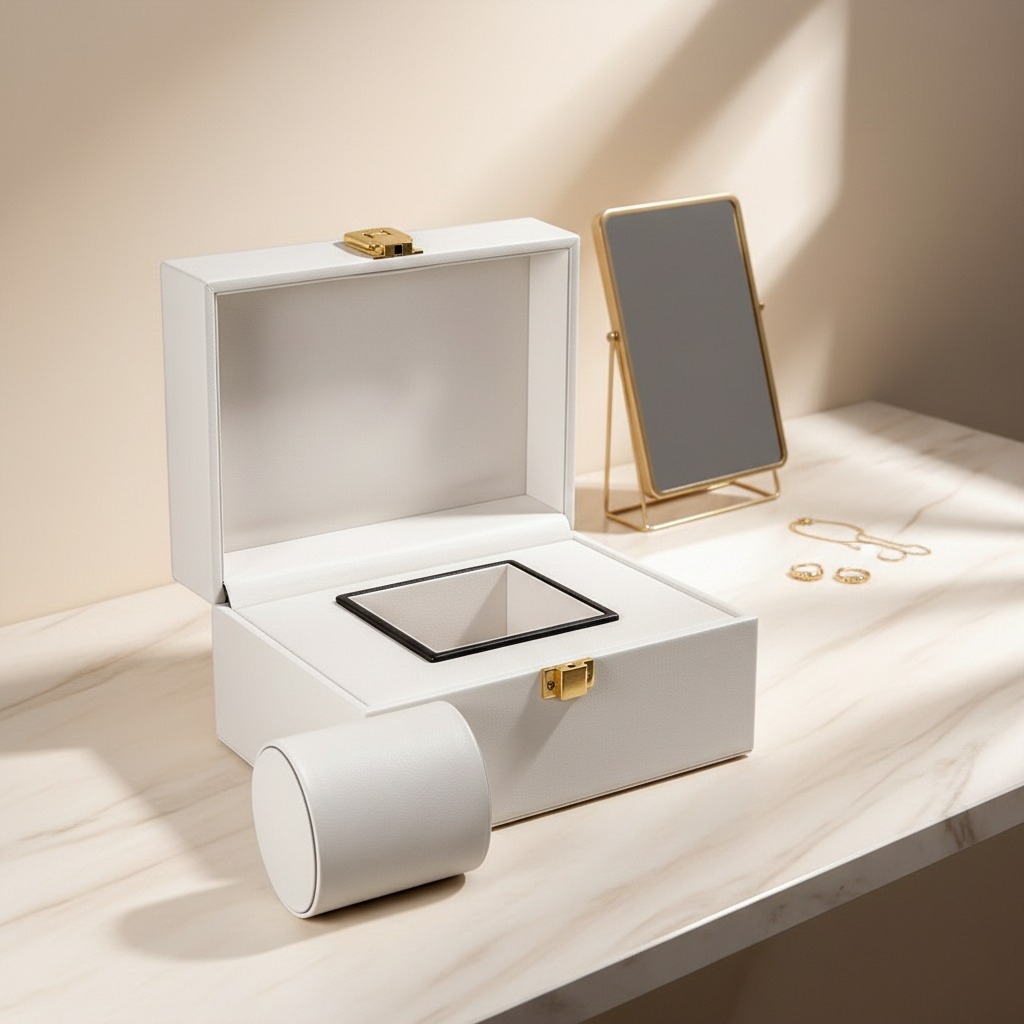
Whether you are sourcing presentation packaging for high-end boutique timepieces or curated jewelry collections, evaluating the physical architecture of the case before approving tooling runs is essential. Here is a technical look at the structural mechanics, material considerations, and specification risks typical of this style of rigid presentation box.
Deconstructing the Physical Architecture
Most high-end watch packaging in this format relies on a rigid-wall structure wrapped in an outer decorative sheath. While specific dimensions vary by brand specification, the foundational layout generally features a shallow base, a deep hinged lid, and dedicated internal cavities.
Hinged Lid and Metal Hardware
A core mechanical element in this profile is the hinged lid secured by a mechanical front clasp. In many luxury mockups, gold-tone metal hardware is chosen to contrast against the white exterior. Beyond cosmetic appeal, sourcing teams must inspect how the clasp attaches to the substrate. Tension clasps, tongue-in-groove snaps, or spring-loaded closures must be aligned within tight tolerances; if the rigid board bows even slightly during wrapping or glue curing, the front latch will bind or fail to seat cleanly.
Interior Recess and Cylindrical Elements
Interior fitment dictates product protection. A common design feature consists of a central rectangular recess alongside a padded cylindrical roll or cushion. In watch packaging, a padded cylinder typically serves as a bracelet cuff, wrapped to hold the watch band in tension so the case sits upright toward the buyer. Depending on the final spec, this piece may be permanently anchored or removable to allow modular use between strapped watches and linked bracelets. Sourcing teams need to clarify early on whether this insert relies on a high-density foam core, a hollow wrapped tube, or a softer polyfill construction.
Material Realities: Leather vs. Leatherette Wrapping
While design briefs often call out leather, high-volume production typically evaluates three distinct covering materials, especially when managing white finishes:
- Polyurethane (PU) Leatherette: Offers predictable grain consistency, superior resistance to ambient moisture, and consistent color matching across dye lots. It wraps cleanly around tight 90-degree corners without excessive thinning.
- Bonded Leather: Uses reconstituted leather fibers with a polymer backing. It provides a more authentic back-touch but can be prone to micro-cracking along deep hinge creases if flex fatigue is high.
- Full-Grain or Split Genuine Leather: Delivers authentic luxury appeal, but natural grain variation and minor surface inclusions make high-yield production of pure white boxes challenging and expensive.
Regardless of the selected wrap, the adhesive used to bond the covering to the inner substrate—typically medium-density fiberboard (MDF) or dense greyboard—demands rigorous scrutiny. In white packaging runs, low-grade water-based adhesives can cause yellowing as they off-gas or cure, bleeding discoloration directly through the textured surface within weeks of warehousing.
Critical Inspection Points for Sourcing Managers
When reviewing first-article samples from a packaging manufacturer, focus quality checks on these common failure points:
- Corner Miters and Seams: Look closely at the bottom edges and the perimeter of the lid. If the white wrap is pulled too tightly over sharp edges, the coating thins out, exposing the darker substrate underneath.
- Hardware Plating Integrity: Inspect the gold-tone clasp and hinge rivets for tool marks, scratching, or uneven electroplating. White cases draw the eye directly to metal accents, making plating pits or tarnishing immediately obvious.
- Insert Clearances: Verify the tolerance around the central recess. If the padded cylinder is removable, it must slide in with gentle friction. Too tight, and the user risks tearing the surrounding wrap; too loose, and the timepiece rattles during logistics transport.
- Protective Over-Packaging: White cases cannot survive shipping in bulk master cartons without individual protection. Always budget for an outer two-piece cardboard sleeve or folded kraft mailer to prevent scuffing and dust contamination during transit.
Frequently Asked Questions
Can this style of box support heavy steel sports watches?
It depends on the substrate. If the chassis is built from 9mm to 12mm MDF, the box provides ample structural rigidity for substantial timepieces. If constructed from lightweight chipboard, heavy watches may shift or deform the interior base over time.
How do you prevent dirt and oil staining on white display boxes?
Request a protective topcoat or stain-resistant PU formulation during material sourcing. For retail display, staff should handle white presentation boxes with cotton gloves to prevent skin oils from embedding in the grain over time.
Next Steps for Development
Before issuing a purchase order for a custom white leather watch box, request an unbranded white-box mock-up alongside a material swatch card. Validate the mechanical action of the clasp and drop-test the fitted insert with a weighted dummy watch to confirm retention before committing to production tooling.